


Scientists Found a Giant Hole in the Ocean Filled With 1,700 Mysterious Viruses
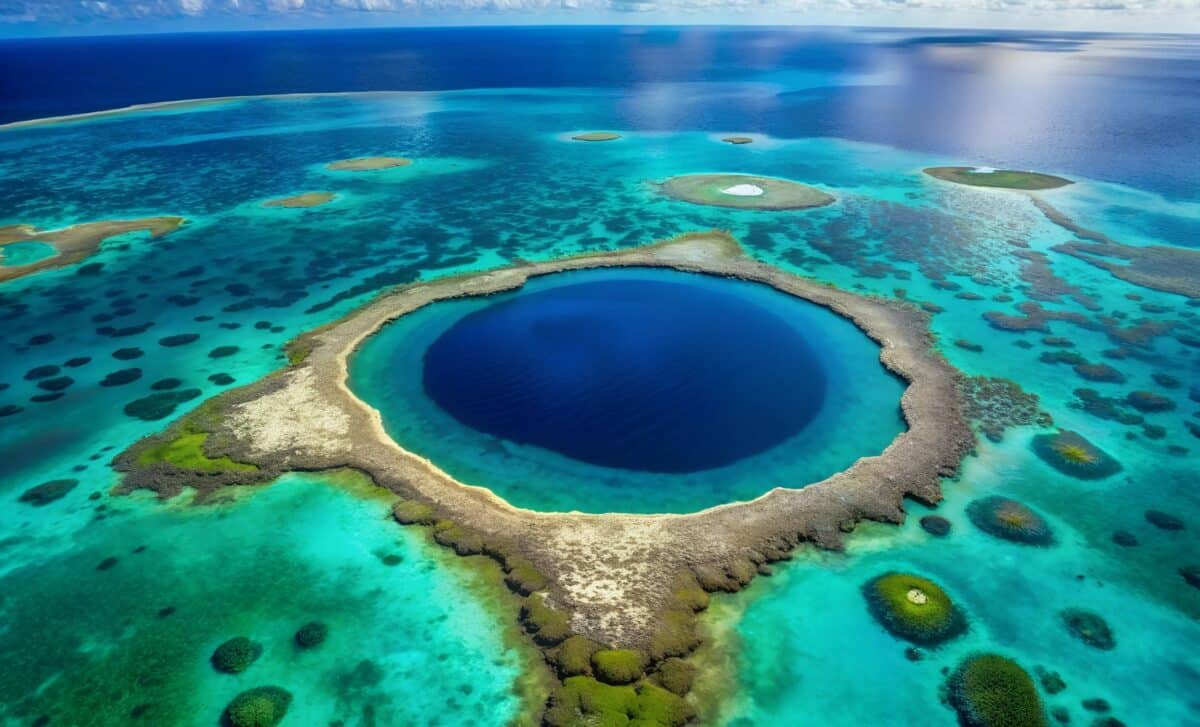
Far out in the South China Sea, a massive underwater sinkhole plunges nearly 1,000 feet straight down. It’s called the Dragon Hole, and it’s a strange, silent world where oxygen vanishes and sunlight never reaches. Yet somehow, deep inside, life finds a way, just not the kind we’re used to. First charted by Chinese scientists in 2016, the Sansha Yongle Blue Hole quickly drew attention for being one of the deepest known sinkholes on Earth. But its real mystery lies inside.
Deeper than Deep and Built to Last
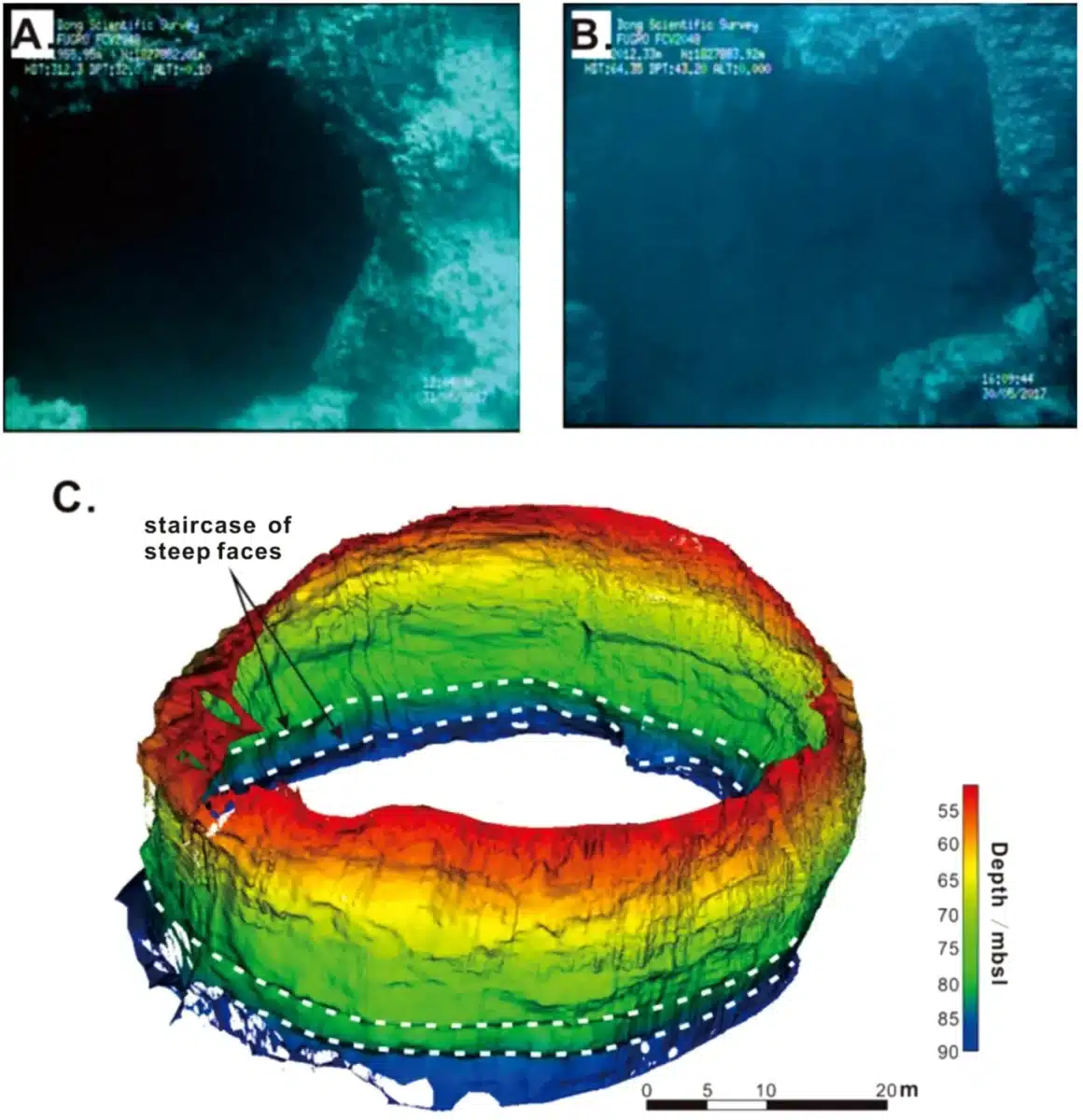
At 301 meters (998 feet) deep and 162.3 meters (535 feet) wide, the Dragon Hole is one of the largest ocean sinkholes ever recorded. As reported in a study published in Nature, researchers believe it formed during a period when sea levels were much lower. Rainwater slowly dissolved the limestone below, carving out steep walls in a kind of underwater stair-step shape. Later, when sea levels rose, the hole flooded and became what it is today.
What makes the Dragon Hole truly unusual is how still it is. Because the opening is narrow and the sides are steep, the usual ocean mixing doesn’t happen. Water from the surface doesn’t reach the bottom, and fresh oxygen doesn’t make it in. Chinese researchers from the First Institute of Oceanography found that oxygen levels drop sharply below the surface and vanish completely well before the midpoint. This creates several distinct zones in the water, each with its own chemistry and life forms.
Life Without Oxygen Or Light
Below 100 meters, everything changes. No fish, algae or plants survive past that point. But according to Environmental Microbiome, bacteria fill the gap, thriving in complete darkness by using chemical reactions to produce energy. In the first deep layer, known as Anoxic Zone I, sulfur-oxidizing bacteria are everywhere. Two types, Thiomicrorhabdus and Sulfurimonas, make up nearly 90 percent of all microbial life in this section.
Deeper still, past 140 meters, researchers identified Anoxic Zone II. In this area, nitrate disappears and hydrogen sulfide begins to build up. The bacteria there shift to a new kind of metabolism known as sulfate reduction. Species like Desulfatiglans, Desulfobacter and Desulfovibrio become dominant. Green sulfur bacteria such as Prosthecochloris also appear, along with other rare microbes like Chloroflexi and Parcubacteria. Each group is specially adapted to the harsh, oxygen-free conditions.
A Sealed World Full Of Surprises
In the lab, researchers managed to grow 294 strains of bacteria from samples taken inside the hole. More than 22 percent of the anaerobic bacteria they found had never been identified before.
Scientists also looked at the viruses living in the hole. They discovered 1,730 distinct types, mostly from phage families like Caudoviricetes and Megaviricetes. But deeper in the anoxic layers, the viral landscape changes. Many of the viruses found there couldn’t be linked to any known group. These unknown viruses could play a big role in how microbial life functions in extreme environments.
First Appeared on
Source link






