


Scientists Found a Hidden “Oasis” Two Meters Below Earth’s Driest Desert
A microbial ecosystem discovered beneath Chile’s Atacama desert is challenging assumptions about where life can survive. Buried two meters below the surface, these organisms suggest that if life exists on Mars, it may be hidden underground rather than exposed at the surface.
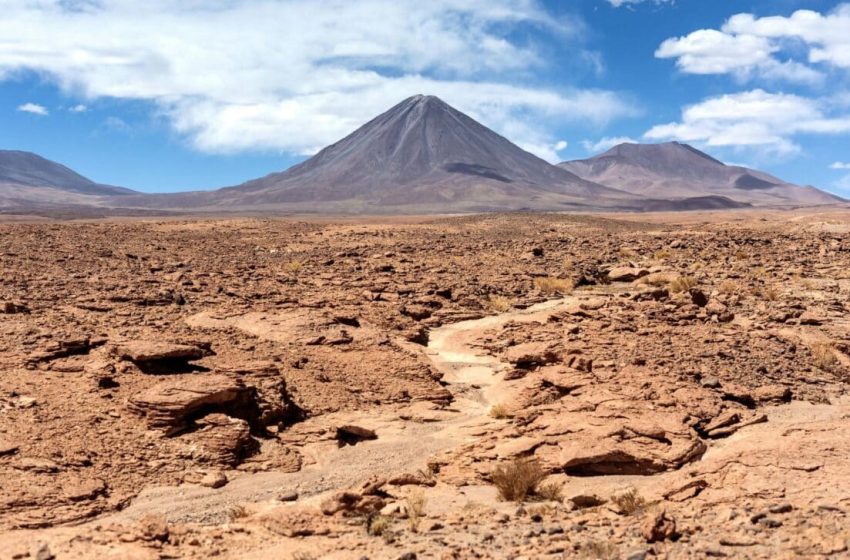
The Atacama desert is often described as the closest terrestrial match to Mars. Its extreme dryness and salt-laden soils mirror conditions observed on the Red Planet, making it a key testing site for astrobiology experiments.
For years, scientists have focused on surface exploration in the search for extraterrestrial life. Findings from the Atacama are now shifting that focus, pointing toward subsurface environments where water and protection from radiation may allow organisms to persist.
Life Found Deeper in the Atacama Desert
A team led by Victor Parro of the Centre for Astrobiology in Madrid collected soil samples from depths reaching five meters. Their analysis revealed the presence of bacteria, archaea, and DNA at around two meters below the surface.
According to the study published in Astrobiology, this layer represents a “kind of oasis” in an otherwise inhospitable desert. Previous research had only identified microbial life within the top 30 centimeters of soil, making this deeper detection a notable shift. The Atacama desert receives rain only a few times per century. Despite such conditions, microorganisms manage to survive through microscopic films of water that form on salt crystals.
“For these microbes, the most important thing is to get some water,” Parro said. “If they have some water, they have everything they need to live.”
Built for Planetary Exploration
The findings emerged during tests of SOLID (Signs of Life Detector), an instrument designed to identify molecules linked to living organisms. It uses around 300 antibodies that bind to compounds such as proteins, sugars, and genetic material.
As stated by the research team, once these antibodies attach to their targets, the resulting complexes are captured using a CCD camera, allowing scientists to identify biological signatures. The technique is similar in principle to diagnostic tools like pregnancy tests.
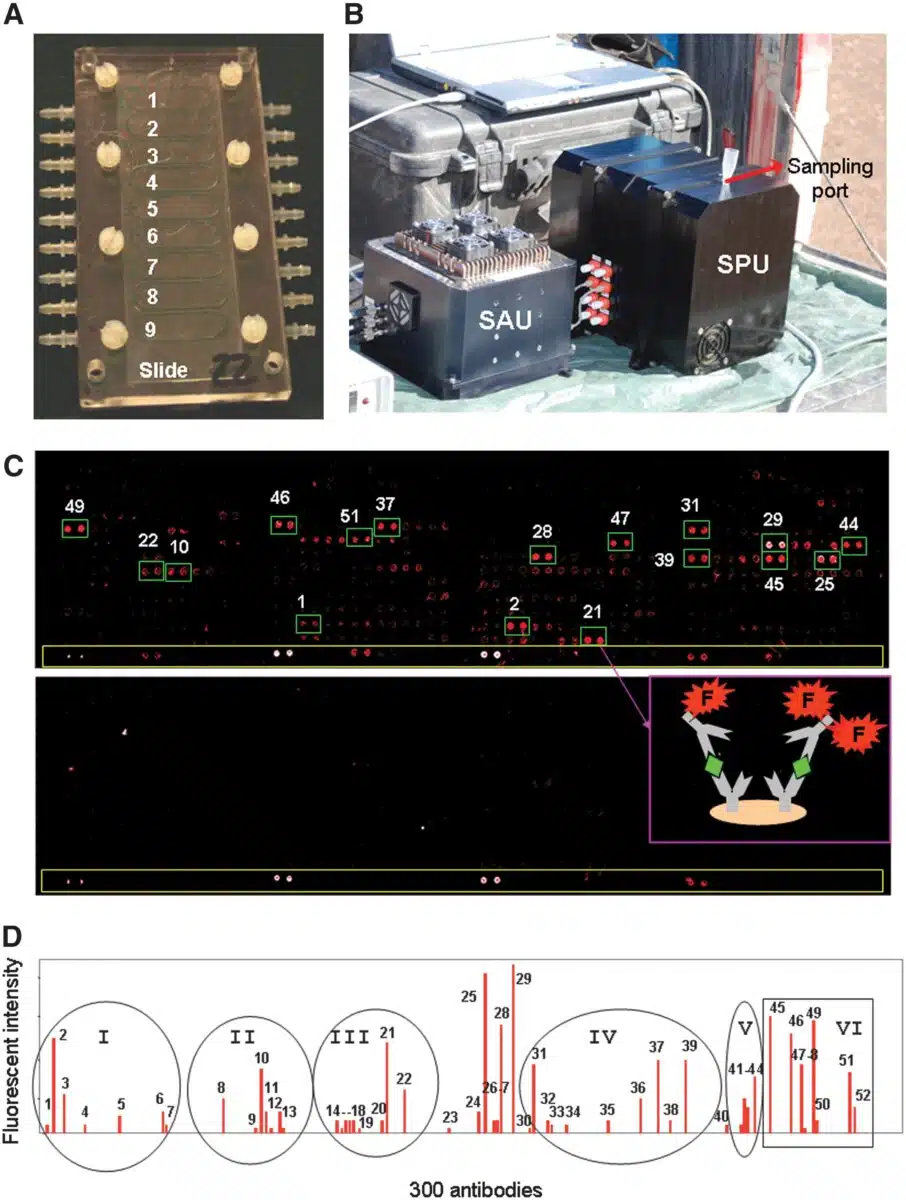
SOLID was tested in the Atacama as part of preparations for potential Mars missions. The device demonstrated its ability to detect biosignatures in deeply buried samples, supporting its use in future planetary exploration. As Parro explained:
“Our hypothesis is, microbes that have to deal with similar environmental problems [on Earth and on Mars] probably have to deal with similar molecular mechanisms, so they have to produce similar biological polymers or compounds.”
Mars Exploration May Go Underground
Conditions on Mars are even more extreme than those in the harshest desert, with low temperatures and intense ultraviolet radiation reaching the ground. As Victor Parro explained, the current scientific consensus is that finding life on the Martian surface is “very difficult, if not impossible.”
This has led researchers to focus on subsurface exploration. The Atacama microbes, which survive without sunlight by using chemical energy sources such as acetic acid and formic acid, show what life on Mars might look like.
First Appeared on
Source link






