


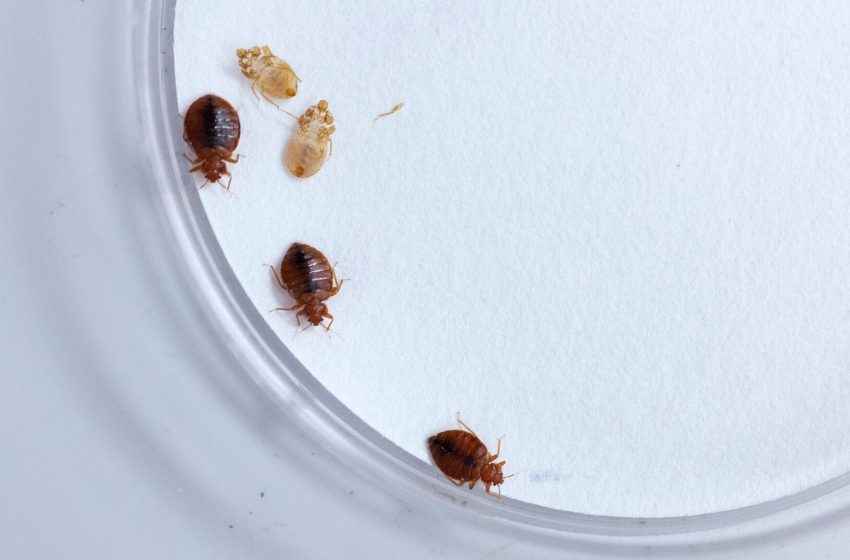
Scientists Have Discovered the Bed Bug’s Greatest Fear
Despite their tiny size, bed bugs are perhaps the scariest thing a person can realistically encounter in their home. But what do these blood-sucking fiends fear most? The answer, recent research shows, is apparently water.
Scientists at the University of California, Riverside, tracked how bed bugs behaved around water. The insects avoided wet surfaces as much as possible, though younger bugs were more nimble at doing so, they found. The team’s research not only sheds light on one of humanity’s most spine-chilling parasites but could also help improve pest control efforts.
“These findings demonstrate that the wet surface is intrinsically aversive to bed bugs, a factor that must be considered in the development and application of liquid-based control tactics to prevent bed bugs from evading freshly treated surfaces,” the study researchers wrote in their paper, published this past December in the Journal of Ethology.
A fortuitous discovery
As with many things in science, this discovery was made by complete accident.
Entomologist Dong-Hwan Choe was preparing to feed bed bugs raised in his lab when he noticed that a feeding machine had started leaking blood onto one of the colony vials where the bugs are kept. To his surprise, the bugs in the vial steered clear away from the wet blood.
“The leaked blood was slowly soaking the paper from the top of the vial. I thought the bed bugs would be happy to drink the blood from the paper,” Choe said in a statement from the university. “But what I saw was very different. They were actively avoiding the part of paper that became wet with blood. They wouldn’t even walk near the wet areas.”
Curious, Choe and his team soaked some paper with water, finding the exact same pattern. Then they carried out more extensive experiments, closely recording how bed bugs, young and old, male and female, moved in the presence of surfaces with or without water.
All in all, the researchers found, the bed bugs consistently spent much less time on wet surfaces as opposed to dry ones. Nearly 90% of the time, the bugs moved away from the wet surfaces before they even came close to touching the water. That said, juvenile bed bugs, or nymphs, were about 60% quicker than older bugs at turning away from water, suggesting they have an especially strong aversion to water.
Though this appears to be the first documented report of bed bugs fearing water, it makes intuitive sense, the researchers say. These insects are incredibly flat, and the strong adhesive force of water could threaten to block their spiracles on their belly, the external pores that allow them to breathe (their version of lungs). In other words, even a tiny bit of water might be enough to easily drown them.
What does this mean for bed bug control?
Bed bugs were nearly eradicated in the mid-20th century, but they’ve made a strong comeback in recent decades. While bed bug populations may have stabilized more recently, they remain a persistent indoor pest. So it’s obviously important to find the most effective way to eradicate these bugs for good from a home.
Other research has shown that bed bugs have evolved widespread resistance to the most commonly used insecticides, highlighting the need for more comprehensive pest management that doesn’t solely rely on chemicals. These findings further indicate that exterminators should be especially careful about how they use liquid-based methods of removal, the researchers say.
“If the insecticides don’t kill the bed bugs right away, then they will leave the treated areas and disperse elsewhere,” Choe said.
At the end of the day, it’s comforting to know that even our real-life nightmares have their own fears to be worried about.
First Appeared on
Source link






