


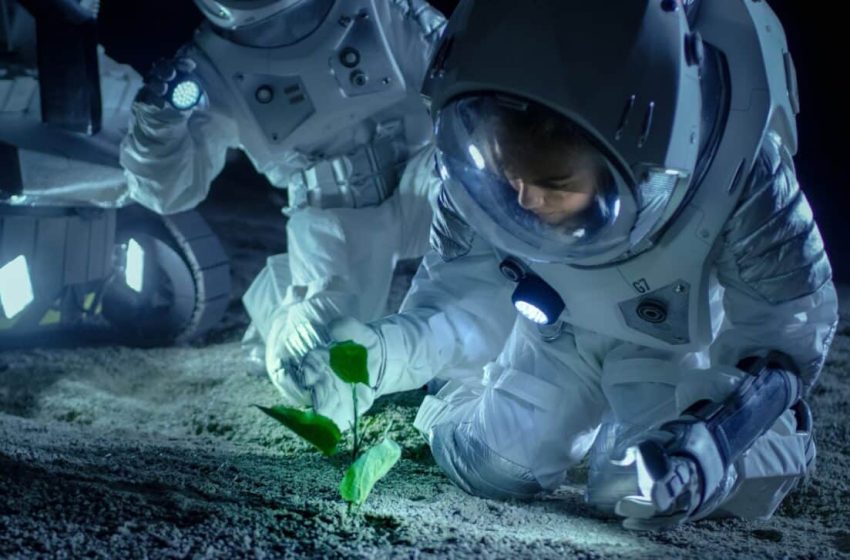
Scientists Have Just Successfully Grown Chickpeas in Lunar Soil for the First Time
Scientists have successfully grown chickpeas in soil that mimics the Moon’s surface. This exciting achievement, led by researchers at the University of Texas at Austin, could change the future of space travel by showing that astronauts might be able to grow their own food on the Moon during long missions.
As NASA prepares to send astronauts back to the Moon with its Artemis missions, one of the biggest challenges is how to feed them during extended stays. The new research shows that growing food on the Moon might actually be possible, with chickpeas becoming the first crop to thrive in a material designed to simulate lunar soil.
Growing in Simulated Moon Soil
Lunar regolith, the material covering the Moon’s surface, isn’t exactly plant-friendly. It’s made up of tiny particles that lack the organic matter and microorganisms plants need to grow on Earth. Not only that, but it also contains heavy metals that can be harmful to plants.
“The research is about understanding the viability of growing crops on the moon,” said Sara Santos, a postdoctoral fellow at the University of Texas Institute for Geophysics (UTIG), associated with the Jackson School of Geosciences. “How do we transform this regolith into soil? What kinds of natural mechanisms can cause this conversion?”
According to the study, published in the journal Scientific Reports, conducted by the University of Texas and Texas A&M University, simulating this environment on Earth was the first big challenge. To do so, the researchers used simulated moon dirt from Exolith Labs, which closely resembles the regolith brought back during the Apollo missions.
The next step was improving this moon dirt to make it more suitable for growing crops. The team added vermicompost, nutrient-rich material created by earthworms, to the mix. This helped give the chickpeas the nutrients they needed to grow, turning the sterile moon dirt into something much more plant-friendly.
Fungi Helped Chickpeas Survive Moon Soil
What really made this experiment stand out was the use of arbuscular mycorrhizal fungi. These fungi form a partnership with plant roots, helping them absorb nutrients and water, which is especially important in a harsh environment like simulated moon soil. The researchers coated the chickpea seeds with these fungi before planting them.
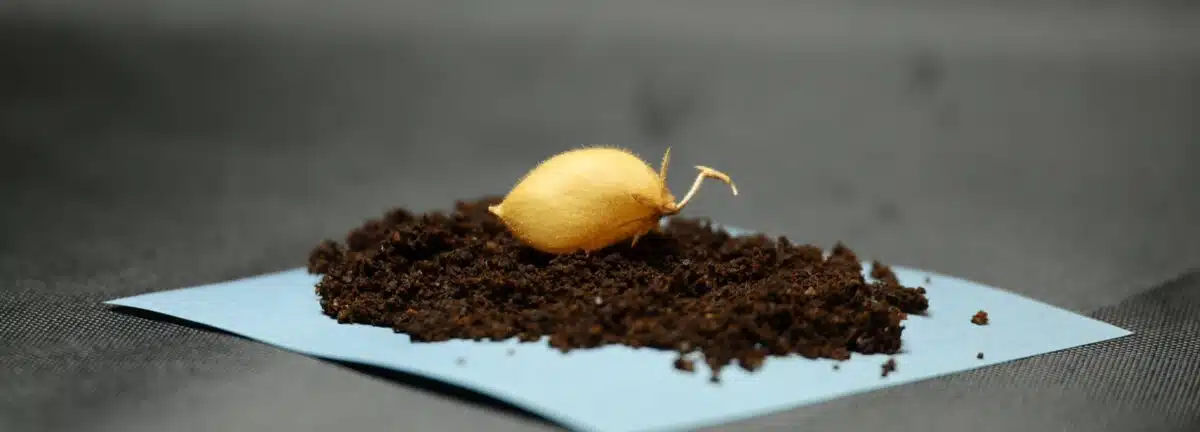
The results were promising. As stated in the latest research, chickpeas treated with the fungi survived much longer than those without it. The fungi also helped limit the uptake of harmful metals from the soil, which is a big deal when it comes to growing food on the Moon. Plus, the fungi stuck around in the simulated lunar soil, meaning they could potentially continue to support plant growth over time in future lunar farming systems.
Are Moon-Grown Chickpeas Safe to Eat?
While growing chickpeas on the Moon is an exciting step forward, there’s still a lot more to figure out. Scientists now face the task of determining if these chickpeas are safe to eat. They need to check if the plants absorbed any harmful metals from the soil and whether they’re nutritious enough for astronauts.
Jessica Atkin noted that, the first author of the study, the next phase of research will focus on analyzing the nutritional content of the crops. If everything checks out, this could pave the way for astronauts to grow their own food on the Moon.
“We want to understand their feasibility as a food source,” she said Jessica Atkin.“How healthy are they? Do they have the nutrients astronauts need? If they aren’t safe to eat, how many generations until they are?”
Right now, the scientists are taking a measured approach, advancing one step at a time. This study is just the starting point, with plenty of work ahead before crops grown in space can be a trusted food source for lunar explorers.
First Appeared on
Source link






