


Scientists Have Uncovered Embryos Older Than Most Dinosaur Fossils, Did They Give Birth to Live Young?
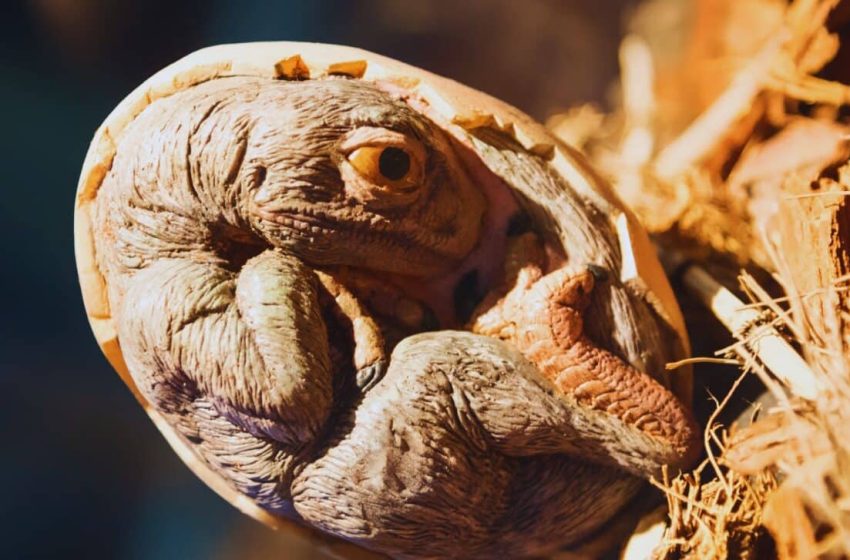
An international team of paleontologists has uncovered the oldest known fossil reptile embryos, dating back approximately 280 million years. This discovery, featuring well-preserved embryos of mesosaur, an ancient aquatic reptile, was made in both Brazil and Uruguay. The embryos suggest that mesosaurs may have been viviparous, giving birth to live young, potentially pushing back the origins of viviparity by 60 million years.
The study, published in Historical Biology, provides vital new insights into the evolution of early reptilian reproductive strategies. Until now, viviparity was believed to have evolved much later in reptiles.
Mesosaurs May Have Been Among the First Viviparous Reptiles
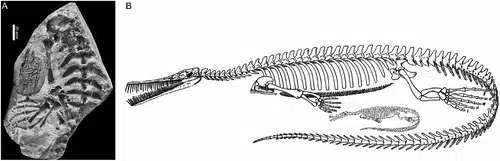
The discovery of mesosaur embryos suggests that mesosaurs, an ancient group of aquatic reptiles, were among the first to give birth to live young. According to the study, published in Historical Biology, one specimen found in Brazil clearly shows that the embryo was retained within the mother’s body for most of its development.
This find is significant, as it indicates that viviparity could have emerged in reptiles much earlier than previously thought. Prior to this discovery, the oldest evidence of viviparity in reptiles was thought to date from the Mesozoic Era.
“These embryos provide the earliest direct evidence of reproductive biology in Paleozoic amniotes,” the authors wrote.
The new fossils, however, push this timeline into the Early Permian period, roughly 280 million years ago. This suggests that mesosaurs may have been among the first reptiles to evolve the ability to retain and develop embryos internally.
Egg Fossils Show Reproductive Diversity
Alongside the embryos, the team discovered several adult mesosaurs and young specimens in Uruguay, all from the same time period as those found in Brazil. While many of these fossils provide further support for the viviparity theory, the picture is more complex. Some of the specimens from Uruguay are disarticulated and difficult to interpret, but many appear to be embryos in the uterus, reinforcing the hypothesis that mesosaurs were viviparous.
“The absence of a recognisable eggshell and the occurrence of a partially articulated, but well-preserved embryo within an adult individual suggest that mesosaurs were viviparous or that they laid eggs in advanced stages of development,” explained the researchers.
However, the discovery of a single mesosaur egg in Uruguay introduces a new layer of complexity to the findings. The egg, found at an advanced stage of development, suggests that mesosaurs may not have strictly given birth to live young. Instead, it hints at a potential mixed reproductive strategy, where some mesosaurs laid eggs that were close to hatching.
Early Reptiles: New Findings on Parental Care
As explained in the research, some of the larger fossils found in Uruguay may represent young mesosaurs, suggesting that these animals could have been cared for by one or both parents. While there is no direct evidence to confirm parental behavior, the close association between adults and young mesosaurs supports the possibility of early forms of parental care.
If mesosaurs did indeed care for their offspring, it would add another layer of complexity to their reproductive behavior, providing protection or nurturing to the young in their early stages. This would make mesosaurs some of the earliest reptiles known to exhibit parental care, a behavior that is rare in modern reptiles but more commonly seen in some species today.
First Appeared on
Source link






