


Scientists Just Found a Dinosaur So Unique It’s Forcing a Rethink of Titanosaur Evolution
Paleontologists have uncovered a previously unknown species of sauropod dinosaur in northern Patagonia. The newly named Yeneen houssayi lived around 83 million years ago, adding to the growing body of fossil evidence from the Upper Cretaceous period in Argentina’s Neuquén Basin.
The discovery, described as one of the most complete titanosaur skeletons found in the region, offers new insights into the diversity and evolution of long-necked herbivorous dinosaurs on the ancient continent of Gondwana. Scientists have already placed Yeneen houssayi within a newly defined lineage of non-lithostrotian saltasauroids, alongside other species like Overosaurus and Narambuenatitan.
Fossils of titanosaurs have long been found in Patagonia, a region known for its exceptional paleontological richness. The new species was discovered at the Cerro Overo-La Invernada site within the Bajo de la Carpa Formation, which has now yielded remains from at least three different titanosaur species. According to the study published in Historical Biology on January 12, 2026, the area’s fossil record makes it “exceptional” for understanding dinosaur evolution during the Santonian stage.
A Remarkably Preserved Skeleton
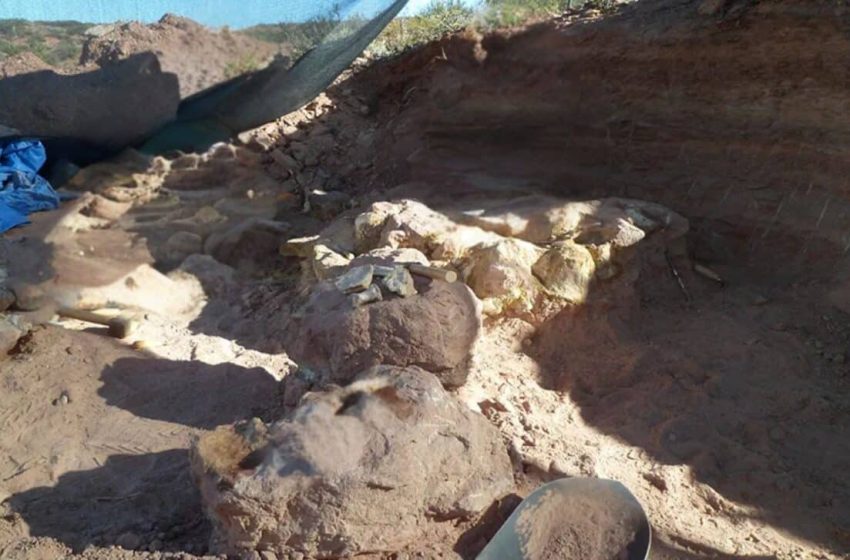
The fossil remains of Yeneen houssayi include six cervical vertebrae, a complete series of dorsal vertebrae with attached ribs, the sacrum with both ilia, and the first caudal vertebra. These elements were found in situ in the Cerro Overo-La Invernada locality, in Neuquén province.
According to paleontologist Leonardo Filippi, who led the research team from CONICET and the Museo Municipal Argentino Urquiza, the skeleton belonged to an individual measuring between 10 and 12 meters in length and weighing around 8 to 10 tons. He noted that the animal had “a small head relative to the rest of its body.”
Alongside the main specimen, researchers also identified the remains of at least two other individuals at the site: a juvenile, represented by a small hip bone, and another adult belonging to a different, still unnamed, species. This further underlines the high density and preservation quality of dinosaur fossils in this zone of Patagonia.
Evolutionary Relationships and Diversity
Detailed phylogenetic analysis indicates that Yeneen houssayi is closely related to Narambuenatitan and Overosaurus. These three species form a basal subgroup within a yet-unnamed clade of derived saltasauroids. As noted in the published paper, this group differs from lithostrotian titanosaurs in several skeletal features, particularly in the dorsal, sacral, and caudal vertebrae.
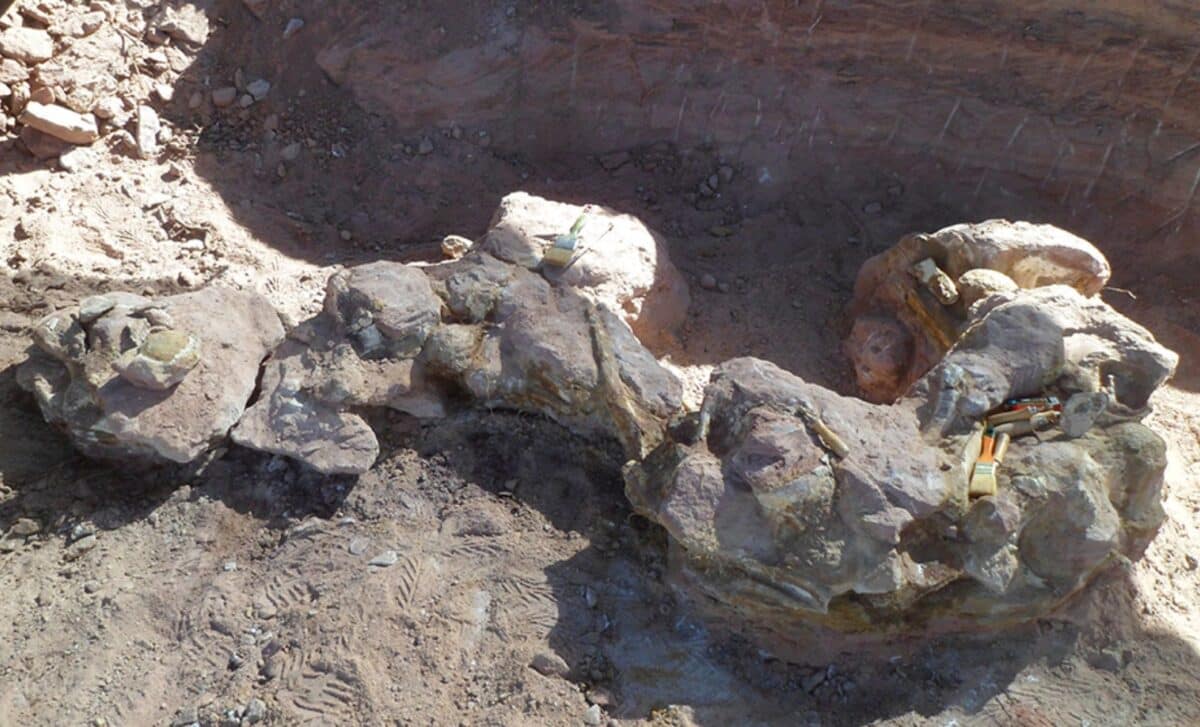
The region’s fossil record, especially from Cerro Overo-La Invernada, now holds more Santonian titanosaur species than any other area in the Neuquén Basin. According to the article in Historical Biology, this includes Overosaurus paradasorum, Inawentu oslatus, and now Yeneen houssayi, making it a key site for understanding species variation within Titanosauria.
The authors report that this fossil evidence reveals two coexisting lineages (Collossosauria and Saltasauroidea) during the same geologic period, indicating a complex ecosystem of herbivorous giants.
A Hotspot for Cretaceous Life
The paleontological significance of the Cerro Overo-La Invernada site goes beyond the discovery of Yeneen houssayi. According to the CONICET research announcement, the area has produced a rich ecosystem record, with additional fossils from abelisaurid theropods and other dinosaur species.
Fieldwork in the area began more than a decade ago, with the first remains recorded in 2003 and systematic excavations continuing since 2013. The recent findings are part of a broader effort to map the diversity and stratigraphic depth of dinosaur remains in northern Patagonia. Filippi remarked that the species were “discovered at different stratigraphic levels,” possibly pointing to a long-lasting presence of titanosaur species across several millennia.
The authors emphasize that this sector of Patagonia is only beginning to reveal its secrets. “There is no doubt that it was highly conducive to life,” Filippi observed, referring to the biodiversity unearthed at the site. With Yeneen houssayi now officially named and catalogued, the Cerro Overo-La Invernada site strengthens its status as one of the richest Cretaceous fossil repositories in South America.
First Appeared on
Source link






