


Scientists Just Found Alzheimer’s Hidden ‘Death Switch’ — And They May Have Found a Way to Turn It Off
Note: I am a science writer, not a medical professional. This article is intended for informational purposes only and does not constitute medical advice. Always consult a qualified healthcare provider regarding any health concerns.
Imagine the person you love the most struggling to remember your name or complete the most basic tasks to take care of themselves. For many of the 55 million people worldwide living with dementia, and for the families standing beside them, those are things they might face on a daily basis.
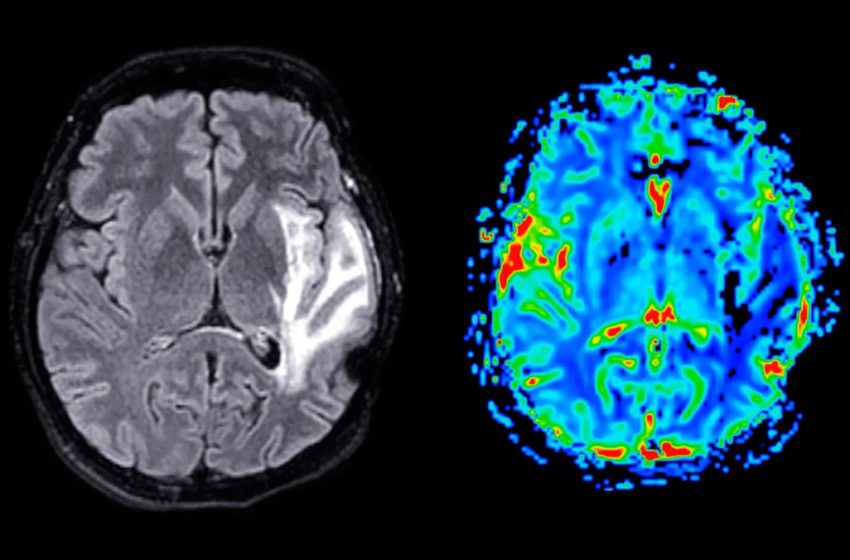
For decades, scientists have known what Alzheimer’s disease looks like. According to the National Institute on Aging, scientists find sticky amyloid plaques, tangled tau proteins, and atrophy (shrinking in the brain) in patients with Alzheimer’s disease,
The deeper question has always been harder to answer. What actually flips the switch that starts killing neurons? This month, researchers at Heidelberg University in Germany believe they may have found it.
The ‘Death Switch’ Scientists Just Discovered Inside Your Brain
According to researchers at Heidelberg University, scientists have uncovered a hidden “death switch” in the brain that may be driving Alzheimer’s disease, and they even found a way to turn it off in mice. The culprit is a toxic pairing of two proteins that, when combined, triggers the destruction of brain cells and fuels memory loss.
The two proteins at the center of this discovery are called the NMDA receptor and the TRPM4 ion channel. Under normal, healthy conditions, the NMDA receptor is actually one of the brain’s most important tools. It helps neurons communicate with each other and plays a critical role in learning and memory. However, when NMDA receptors interact with TRPM4 channels outside of their usual locations, they form a harmful connection that changes how the receptors behave and leads to damage inside the cell. The researchers themselves describe this harmful combination as a “death complex.” When it forms, it starts a chain of events that leads to the death of nerve cells, ultimately contributing to the cognitive decline that defines Alzheimer’s disease.
Think of it like two perfectly reasonable colleagues who, when placed in the wrong room together, become destructive. They are fine on their own. However, when they are placed together in the wrong place, the results are catastrophic.
The NMDAR/TRPM4 death complex is responsible for toxic signaling of glutamate, which has been implicated in Alzheimer’s disease development. A study published in Molecular Psychiatry found a significant increase in this complex’s formation in the brains of Alzheimer’s mice. The sicker the brain, the higher the levels appeared. That correlation alone is a significant finding.
The Experimental Compound That Broke the Complex Apart
Identifying the problem is one thing, but finding a way to stop it is the goal. This is where the research surprised scientists.
Using a novel pharmaceutical compound called FP802, a so-called “TwinF Interface Inhibitor”, the international research team demonstrated that the NMDAR/TRPM4 complex plays a key role in the progression of cognitive decline. They succeeded in breaking the deadly protein-protein complex apart using this neuroprotective molecule in an experiment.
The results in treated mice were striking across multiple measures. FP802 treatment prevented cognitive decline assessed through a series of memory tasks, preserved the structural complexity of dendrites, prevented synapse loss, reduced amyloid plaque formation, and protected against damage to mitochondria.
That last point deserves special attention. The treatment didn’t just slow memory loss. It also reduced the amyloid plaques that have long been viewed as the defining hallmark of Alzheimer’s. This suggests the death complex and amyloid buildup may be feeding off each other in a vicious cycle, and that breaking one could disrupt the other.
What makes this approach especially notable is how it differs from every major Alzheimer’s drug currently on the market or in development. As the Heidelberg University’s press release explains, Professor Bading’s approach blocks a downstream cellular mechanism, the NMDAR/TRPM4 complex, which causes nerve cell death and promotes the formation of amyloid deposits, rather than targeting amyloid removal.
Most current treatments try to clean up the mess. This one is different because it tries to stop the mess from happening in the first place.
This Isn’t the Only Alzheimer’s Breakthrough Happening Right Now
As remarkable as the Heidelberg discovery is, it is part of a broader wave of Alzheimer’s research momentum that has accelerated dramatically in early 2026. There are reasons to be cautiously hopeful about these developments.
At Stanford’s Wu Tsai Neurosciences Institute, researchers recently found that amyloid beta and inflammation may act through the same molecular pathway. They both converge on a specific receptor that signals neurons to eliminate their own synapses, the contact points that allow brain cells to communicate. In other words, Alzheimer’s may be hijacking the brain’s own pruning system and weaponizing it against itself.
Meanwhile, at the University of New Mexico, a separate team discovered that when a protein called OTULIN was disabled, tau protein completely vanished from neurons and brain cells remained healthy. Scientists now believe OTULIN may act as a master switch for inflammation and age-related brain decline.
And at Sweden’s Karolinska Institutet, scientists identified two brain receptors, SST1 and SST4, that help regulate the breakdown of amyloid beta, raising the possibility of future medications taken as a pill rather than an infusion. They would also likely be cheaper.
Here’s What This Research Cannot Tell Us Yet And Why That Matters
Although this is all good news, there is an important caveat that the researchers themselves are quick to explain. Each incredible discovery has so far been demonstrated in mice, not humans.
Prof. Bading himself cautions that the road ahead is long. As Heidelberg University notes, comprehensive pharmacological development, toxicological experiments, and clinical studies are all still needed before any human application would be possible. Efforts are already underway in collaboration with FundaMental Pharma to refine FP802 for potential therapeutic use, and that is a wise next step.
Alzheimer’s disease research seems to be drastically changing. The focus is no longer predominantly only on amyloid plaques. The emergence of multiple new mechanisms, all discovered within months of each other, indicate that effective changes are emerging from multiple directions at once, giving scientists and patients more targets to pursue than ever before.
What This Means If Alzheimer’s Has Touched Your Life
According to the Alzheimer’s Association, more than 7 million Americans are currently living with Alzheimer’s disease, and by 2050 that number is projected to rise to nearly 13 million, with care costs expected to reach nearly $1 trillion. If you or someone you love is at risk or dealing with the disease, this research is sure to feel personal.
Right now, there is no cure for Alzheimer’s disease. What the research emerging this spring suggests is that scientists are, for the first time in a long time, attacking the disease from multiple new angles at once. They’re addressing the mechanisms that trigger cell death before the damage becomes irreversible.
A Summary of What the Research Shows
Finally, here’s what we know for sure. Scientists at Heidelberg University have identified a “death complex” formed by two brain proteins that appears to be a major driver of neuron death in Alzheimer’s disease. A compound called FP802 successfully broke apart this complex in mice. It slowed disease progression, preserved memory, protected brain cells, and reduced amyloid buildup. The research was published in Molecular Psychiatry and is now advancing toward pharmaceutical development in partnership with FundaMental Pharma.
This article is for informational purposes only and should not be taken as medical advice.
For more on health, wellness, the arts, and travel, follow my page.
First Appeared on
Source link






