


Scientists Just Revealed a Never-Before-Seen Feature Inside Archaeopteryx’s Skull
In 2022, a mysterious Archaeopteryx fossil was uncovered at the Field Museum in Chicago, revealing an incredible feature that had never been seen before in the fossil record. The discovery, which took over a year to prepare, has provided scientists with new insight into the evolution of one of the first flying bird-like dinosaurs. By using advanced techniques, including ultraviolet light, paleontologists were able to uncover something unexpected inside the skull of the Archaeopteryx. This find has shaken up our understanding of early avian anatomy and feeding habits.
Unveiling a Hidden Feature in the Archaeopteryx Skull
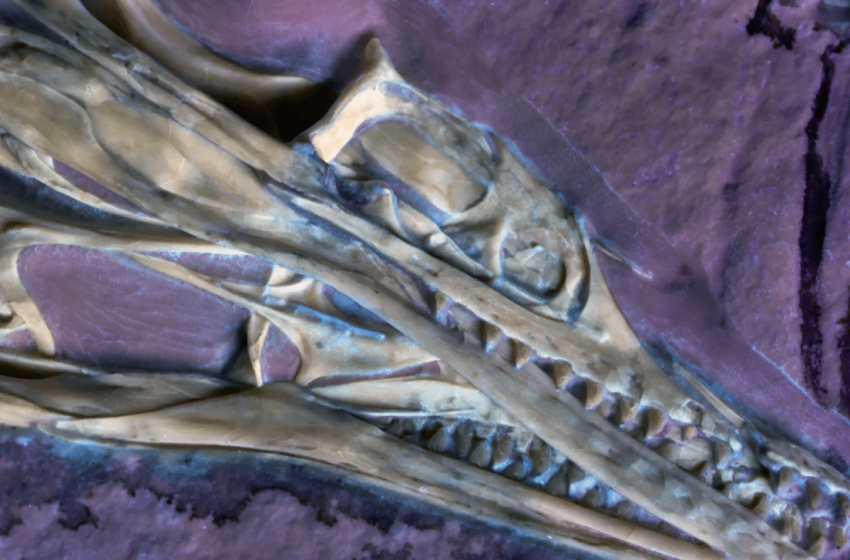
The Archaeopteryx fossil in question was encased in limestone when it arrived at the Field Museum in Chicago. A meticulous process of fossil preparation, led by Akiko Shinya and her team, began in 2022. Over a year of delicate work, the team carefully removed the surrounding rock layer, eager to identify key features of the ancient creature. At times, the team used ultraviolet light to highlight soft tissues, like feathers and skin, making the bones and structures of the fossil glow. This technique proved vital in revealing key details without damaging the fossil.
During one of these UV light stages, something unexpected appeared inside the skull of the Archaeopteryx.
“I remember them calling me over and saying, ‘Jingmai, we found something strange, come look at it,” said lead author Jingmai O’Connor, associate curator of fossil reptiles at the Field Museum. “They showed me these tiny, glowing dots, and I had no idea what we were looking at.”
The dots turned out to be something incredibly important, oral papillae.
The Mysterious Oral Papillae of Archaeopteryx
Oral papillae, found in modern birds, are fleshy cones that line the roof of the mouth. These structures help guide food to the back of the throat, preventing it from accidentally entering the windpipe. While not true teeth, oral papillae serve a crucial role in digestion, ensuring food moves efficiently through the digestive system.
“Imagine if the flesh on the roof of your mouth just had rows and rows of tiny, fleshy cones – that’s what birds have, and they’re called oral papillae,” explained O’Connor.
This discovery is significant for several reasons. It marks the oldest known oral papillae in the fossil record, pushing back the existence of this feature far earlier than previously believed. The presence of oral papillae in Archaeopteryx suggests that even these early bird-like dinosaurs had a highly specialized digestive system, one that was evolving to support the high-energy demands of flight.
The Evolution of Feeding Systems in Early Birds
The discovery of oral papillae in Archaeopteryx is not just a fascinating anatomical find; it also provides critical insight into how these early creatures adapted to the demands of flight. As birds evolved from dinosaurs, their bodies needed to undergo a variety of changes to support powered flight, a highly energy-intensive activity. One of the key changes is the efficiency of their digestive systems.
“These discoveries show this really clear shift in how dinosaurs were feeding when they started flying and had to meet the enormous energetic demands of flight,” O’Connor explained.
Birds, today, have one of the most efficient digestive systems in the animal kingdom. Their digestive processes have been finely tuned to maximize energy extraction from food, essential for sustaining flight. The presence of oral papillae in Archaeopteryx suggests that even early avians were already on the path to this remarkable digestive efficiency.
“Birds have a super-efficient digestive system – everything is modified to maximize the efficiency of eating and the calories that they can extract from food. And the digestive system starts with the mouth,” O’Connor continued.
The Importance of Fossil Preparation and UV Technology
The discovery of these tiny, glowing oral papillae wouldn’t have been possible without the advanced techniques used by the Field Museum’s team. Paleontologists have long used UV light to enhance fossil preparation, especially when soft tissues like skin, feathers, or muscle impressions are involved. In this case, UV light illuminated features that otherwise would have remained hidden, including the oral papillae. This technique has revolutionized how scientists approach fossil excavation and preparation, allowing for the discovery of even the smallest and most intricate details.
“The team used UV light during intermittent stages of fossil prep to make sure that they weren’t destroying any soft tissues,” says O’Connor. “Plus, some of these soft tissues and bone fragments are really tiny—they’re very, very easy to miss unless you’re actively looking for them.”
The careful work done by the Field Museum team is a testament to how science continues to push the boundaries of what we can discover about our prehistoric past. Their dedication to understanding the Archaeopteryx fossil has provided invaluable insight into the evolutionary path of birds, helping to bridge the gap between ancient dinosaurs and modern birds.
First Appeared on
Source link






