


Scientists Say One of the Oldest Archaeological Sites in the Americas May Not Be as Old as We Thought
New research suggests that Monte Verde in Chile may not be as old as once believed. The site, long dated to 14,500 years ago, is now placed between 4,200 and 8,200 years ago. That shift changes how researchers look at the first human movements into the Americas.
Monte Verde has been a key reference point for decades. Its original dating placed it before the Clovis culture in North America, usually dated to between 13,000 and 13,500 years ago. This led many to think that humans reached South America earlier than expected.
Because of that, the site often came up in debates about migration routes. It was used to support the idea that people may have traveled along the Pacific coast, instead of only moving through the Beringia land bridge.
A Site Once Seen As Very Early
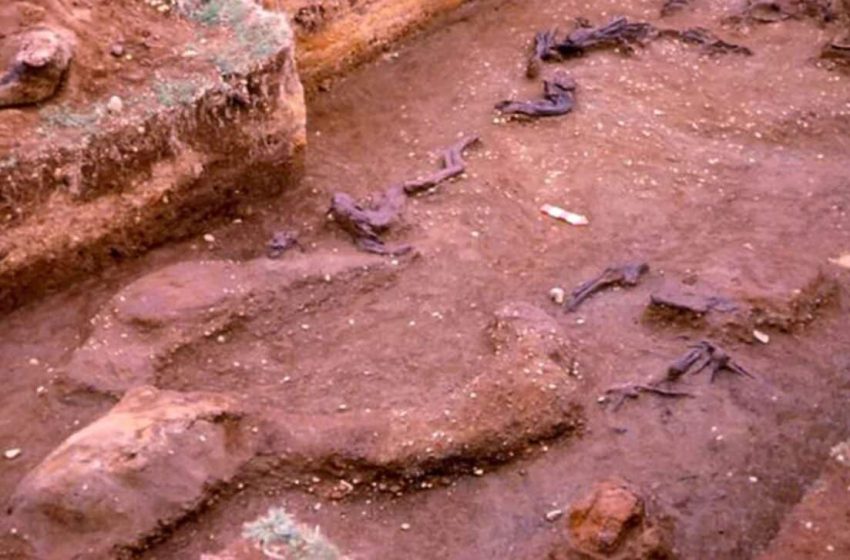
Excavations carried out between 1977 and 1985 uncovered a wide range of materials at Monte Verde. Researchers found stone tools, wooden remains, ropes, and seaweed, all preserved in wet, peat-rich ground.
These remains were dated to about 14,500 years ago. According to research confirmed in 1997, this made the site older than known Clovis sites and even older than some locations in eastern Beringia. That interpretation became widely accepted and was often used in studies about early human settlement in the Americas.
A recent study led by Todd Surovell from the University of Wyoming revisits those conclusions. As explained by a research published in Science, the evidence does not support such an early date.
Instead, the team places the site between 4,200 and 8,200 years old. The researchers stated that:
“[Our] results fail to support the [previous] hypothesis that the lower portion of [Monte Verde II] date to the Late Pleistocene,” he added that: “Instead, evidence from multiple sections show that the uppermost terrace at Monte Verde accumulated during the Late Pleistocene and Early Holocene.”
While the Pleistocene was marked by colder, glacial conditions, the Holocene began around 11,700 years ago with a warmer and more stable climate, placing the site in a very different time frame than originally proposed.
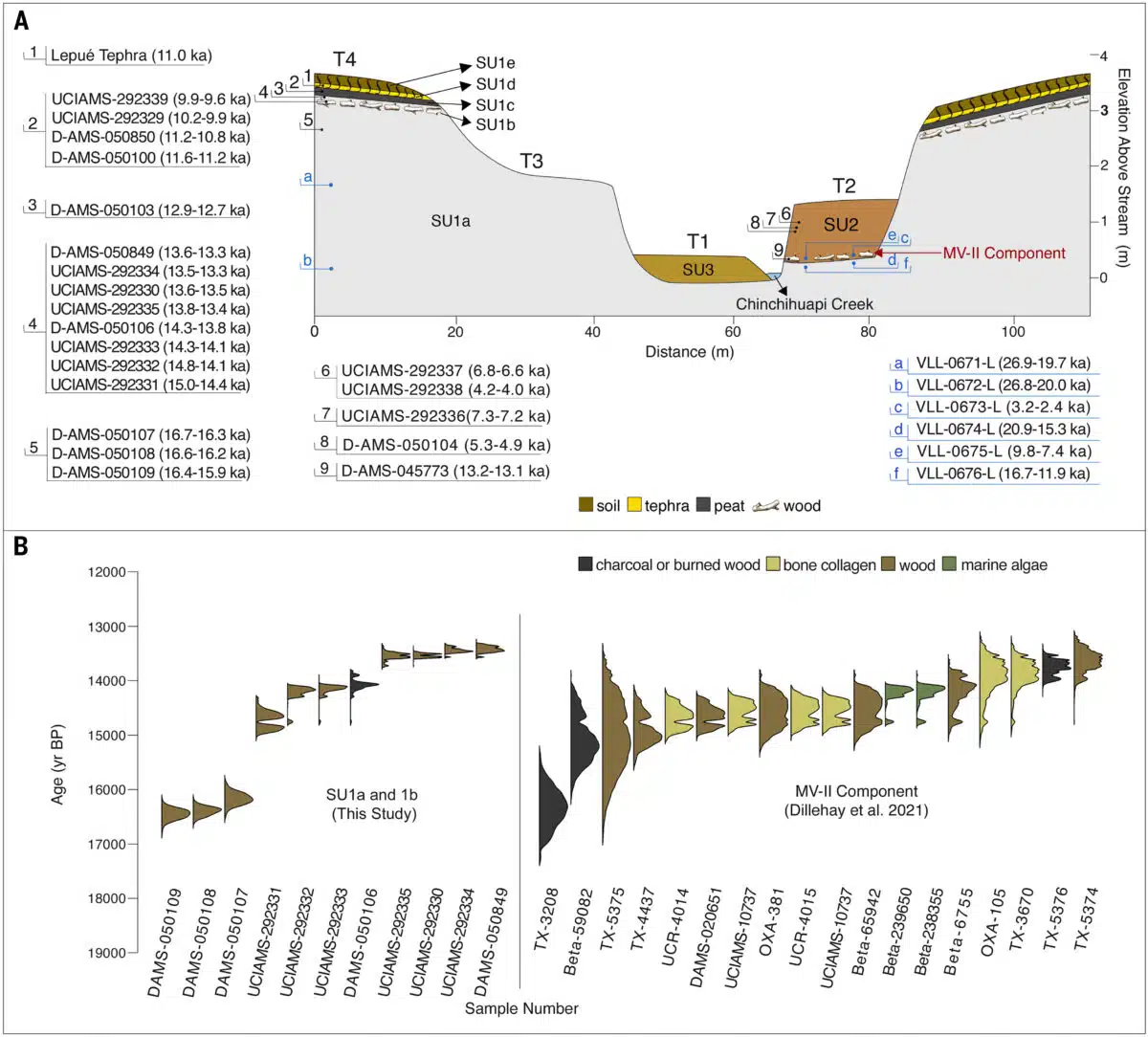
One important detail is the geological layer beneath the site. Monte Verde II sits above the Lepué Tephra, a volcanic deposit dated to around 11,000 years ago, which does not match the earlier timeline. The study also noted that earlier work did not fully take into account erosion and the way sediment layers can shift over time.
When Older Material Ends Up In Younger Layers
Organic remains played a big role in the original dating. The study reported that Pleistocene wood and plant material found near the site were taken as signs of very early human activity.
The new analysis suggests a different explanation. Geological changes during the Early Holocene likely exposed older material, which was later moved and buried again in younger sediments.
This mixing made the site look older than it really is. When the sediments themselves are dated, they point instead to a Middle Holocene age.
Surovell explains that Monte Verde should not be used as a fixed reference point for migration models.
“As demonstrated here, the age of the [Monte Verde II] component should not be used as a constraint or check on colonization models derived from other sources, including the genetics of modern or ancient populations,” he stated. “Our findings also underscore the critical need for independent study and verification of early sites.”
The new dating does not rule out earlier human presence in the Americas, but it does remove one of the strongest examples that had been used to support that idea.
First Appeared on
Source link






