


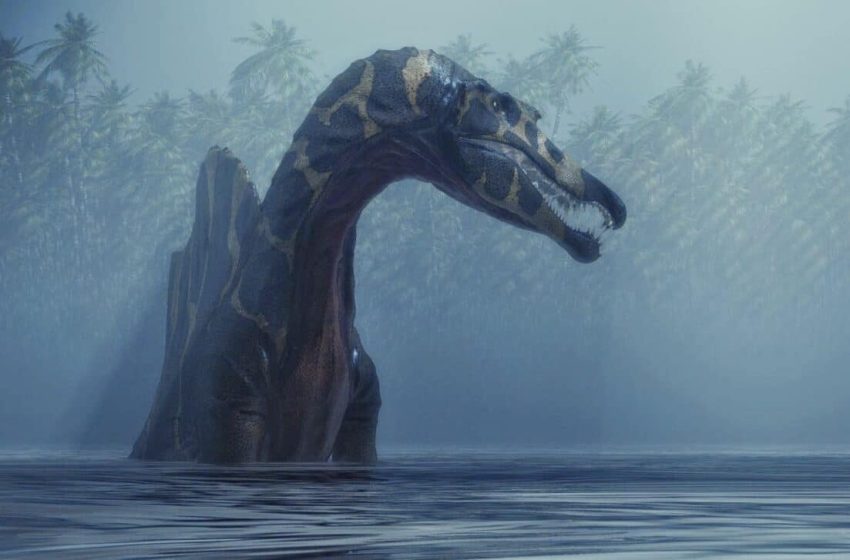
Scientists Unearth a Massive 40-Foot ‘Hell Heron’ Dinosaur That Hunted in Sahara Shallows Far from the Sea
The animal stood in water, its snout submerged just below the surface, waiting. When a large fish swam close, jaws lined with interlocking conical teeth snapped shut, trapping prey that had no serrated edges to slice through. This is how researchers now describe the hunting strategy of a newly identified dinosaur species recovered from the Sahara Desert in Niger.
The fossils belong to Spinosaurus mirabilis, a meat-eating dinosaur that lived about 95 million years ago and measured roughly 40 feet long. Its most visible feature was a 20-inch scimitar-shaped bony crest atop its skull, an apparatus too delicate for combat but well suited for display.
The discovery, reported in the journal Science, marks only the second known species within the Spinosaurus genus and adds physical evidence to a decade-long debate over whether these animals swam in open ocean or stalked prey from shallow waters.
The location of the find may be as significant as the bones themselves. The Jenguebi site in Niger sits 300 to 600 miles from the nearest ocean shoreline that existed during the Cretaceous Period. That distance complicates the hypothesis that Spinosaurus species were fully aquatic marine predators.
A Crest Built for Love, Not War
The new species shares the general body plan of Spinosaurus aegyptiacus, the first known species described in 1915 from Egyptian fossils. Both have elongated crocodile-like snouts, conical teeth without serrations, and nostrils set back on the snout. But S. mirabilis shows distinct features including a more elongated snout, teeth spaced farther apart, and longer hind limbs.
Daniel Vidal, a paleontologist at the University of Chicago and Universidad Nacional de Educación a Distancia in Spain and a co-author of the study, described the dental arrangement. “Their large conical teeth without serrations that interdigitate form a ‘fish trap’ that is very good at piercing and trapping slippery fish in the jaws, preventing them from sliding,” Vidal said.
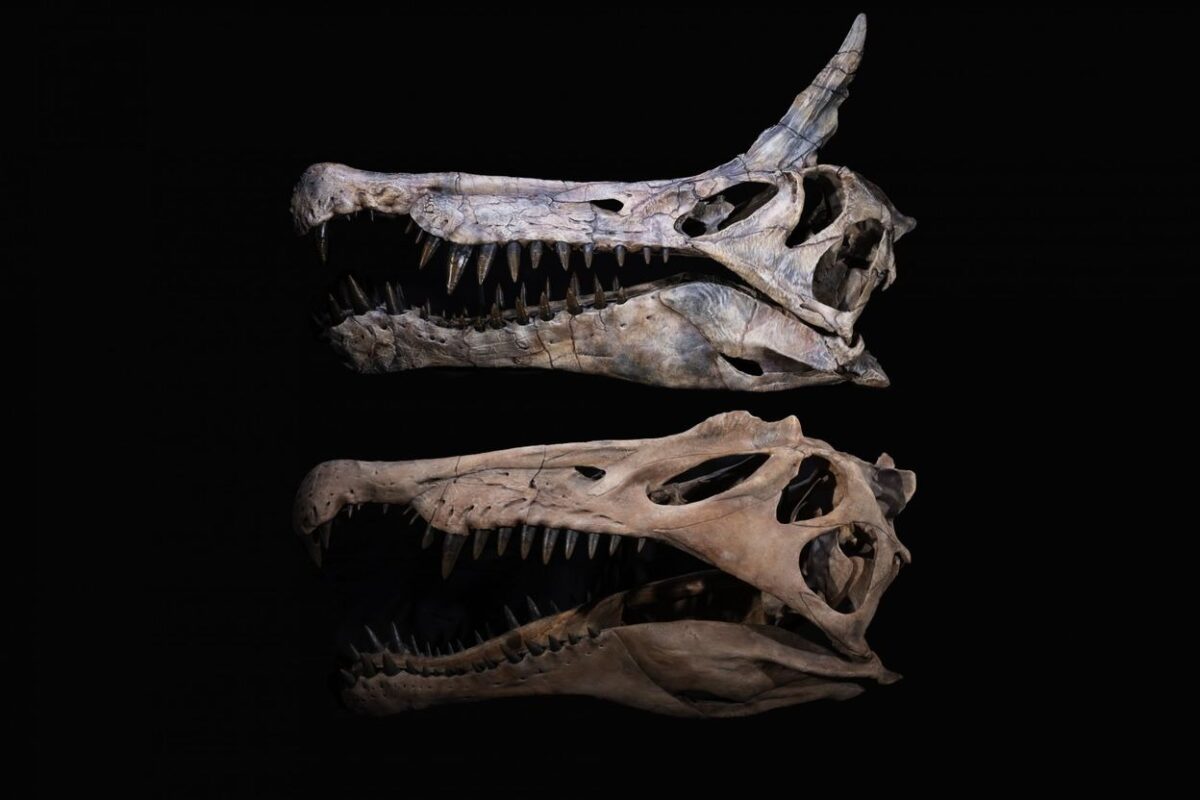
“Spinosaurus mirabilis has some of the most extreme piscivorous adaptations of any dinosaur, so we know it was better at preying upon fish than it would have been at preying upon other dinosaurs,” Vidal added.
The crest, made of solid bone without the air sacs present in some other dinosaur crests, likely served social functions rather than combat. Lead author Paul Sereno, a paleontologist at the University of Chicago, addressed its purpose in comments to Reuters. “It’s about love and life attracting a mate, defending your hot feeding shallows,” Sereno said. “What else could be more important?”
The 600-Mile Problem for the Aquatic Dinosaur Theory
S. aegyptiacus fossils have come primarily from sites in Egypt and Morocco that bordered the Tethys Sea, the prehistoric body of water that preceded the modern Mediterranean. That coastal distribution, combined with skeletal traits including dense bones and a paddle-like tail, led some researchers to propose that Spinosaurus was fully aquatic spending its life swimming and diving in marine environments. The Natural History Museum in London notes that understanding of Spinosaurus has shifted in recent years as new evidence emerged.
The S. mirabilis fossils were found roughly 300-600 miles from the nearest ocean shoreline. Sereno called the discovery “the coup de grâce for the aquatic hypothesis” in comments to Reuters.
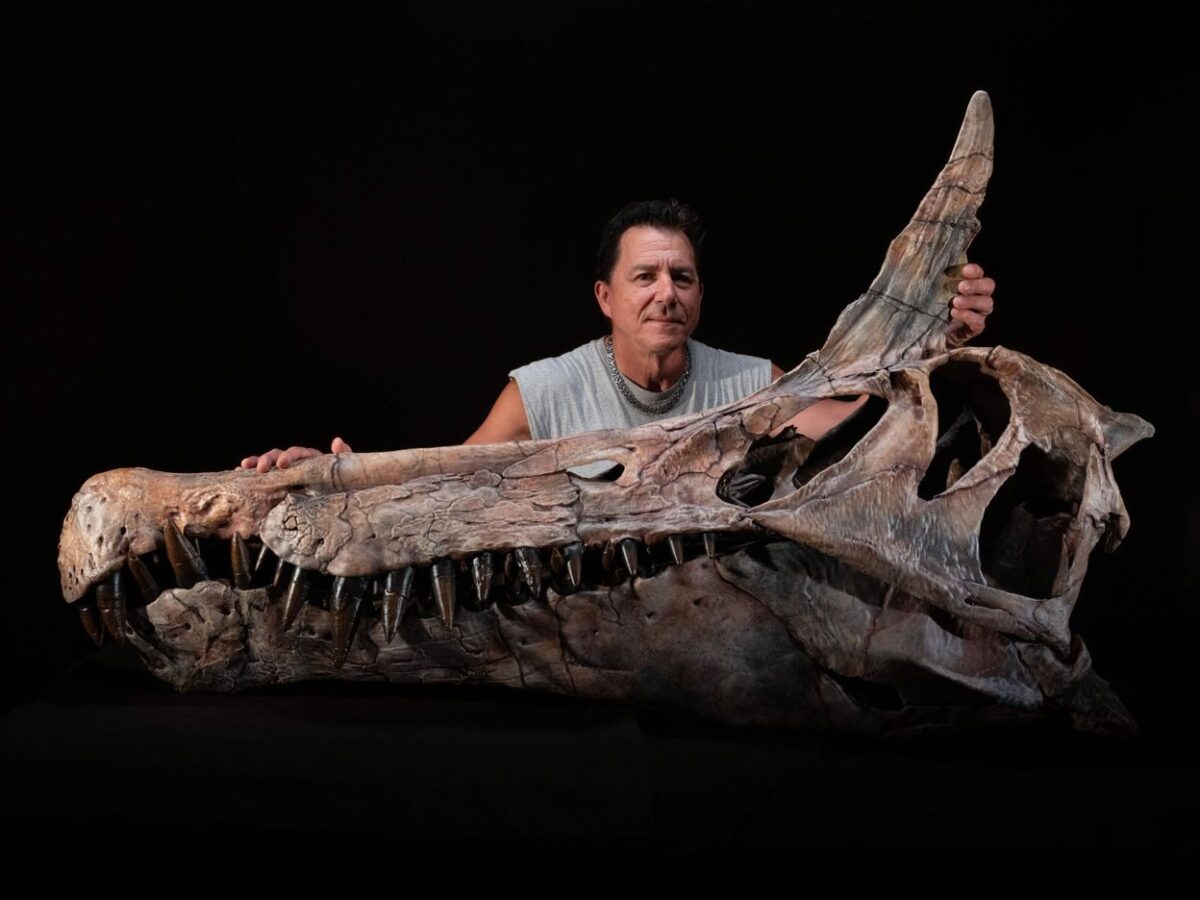
The research team describes S. mirabilis as a shallow-water wader that hunted in rivers and forested inland environments. Sereno offered a visual comparison in a statement published by Smithsonian Magazine. “I envision this dinosaur as a kind of ‘hell heron,’” Sereno said.
Matt Lamanna, a paleontologist at the Carnegie Museum of Natural History who was not involved with the research, suggested to National Geographic that the animals may have used multiple strategies. “What if it’s doing both?” Lamanna said. “What if it’s wading sometimes? What if it’s getting into the water and swimming around some? The common denominator is ambush, whether that was from shore or from the water.”
Three Days Stuck in the Sand to Find a New Species
The fossils were recovered from sandstone outcrops at Jenguebi, a remote Sahara locality surrounded by sand dunes. A French geologist had reported finding a single fossilized tooth at the site in the 1950s. During a 2019 expedition, the team unearthed a mysterious crest bone that suggested a new species. When they returned in 2022, they found additional crests, teeth and jaw bones confirming the identification.
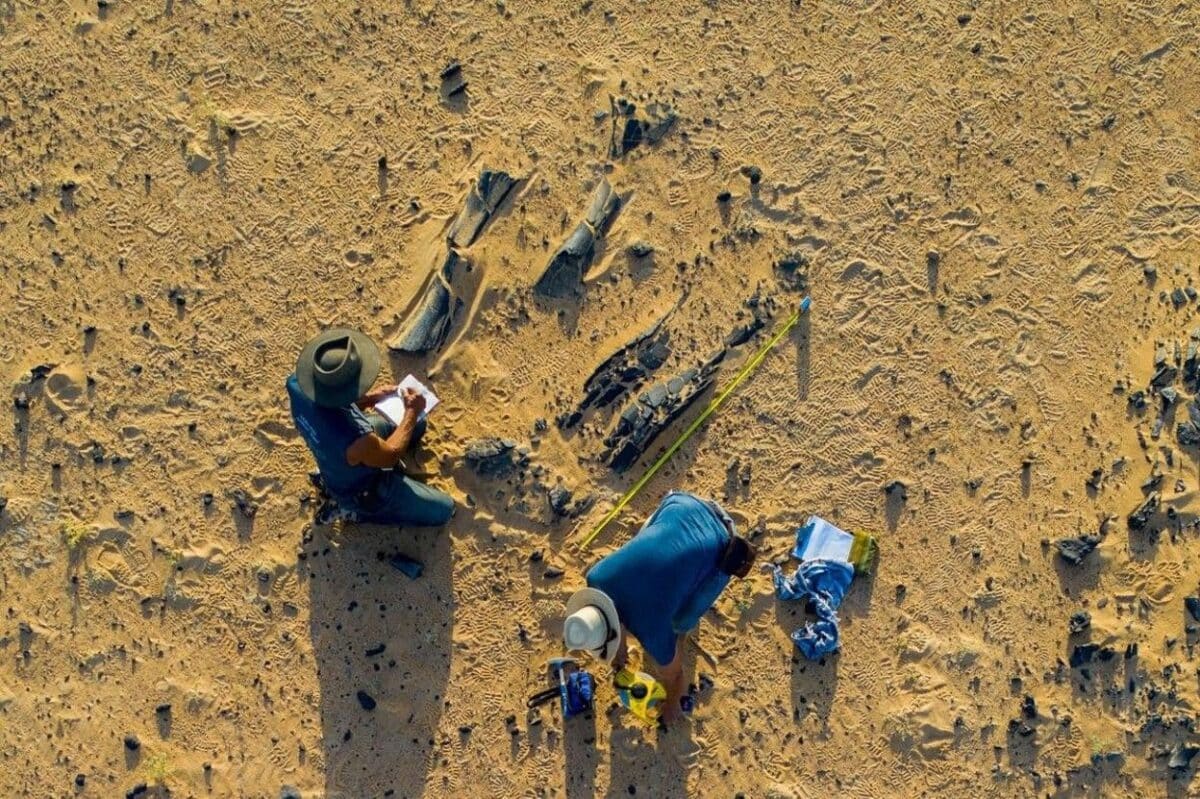
For the 2022 expedition, researchers set out from the city of Agadez in a convoy and drove off-road through desert terrain for almost three days, frequently getting stuck in the sand. They recovered parts of three S. mirabilis skulls along with other bones.
According to the dinosaur directory maintained by the Natural History Museum, scientists have long debated whether Spinosaurus swam extensively or mostly lived on the shoreline. For most of the last century, researchers reconstructed it as a land-based animal with long hind legs similar to Tyrannosaurus. More recent evidence indicates shorter legs and a wide paddle-like tail.
First Appeared on
Source link






