


Scientists Unearthed a 500,000-Year-Old Tool in England, and Cracked a Decades-Old Mystery
A prehistoric tool uncovered decades ago in southern England has now been firmly identified as a deliberately crafted elephant bone hammer, reshaping views of early human ingenuity in Europe. The finding, recently detailed in a study published in Science Advances, shows that human ancestors living around 500,000 years ago were capable of complex planning, material selection, and repeated tool use long before the emergence of Homo sapiens.
A Forgotten Fossil Reexamined With Modern Science
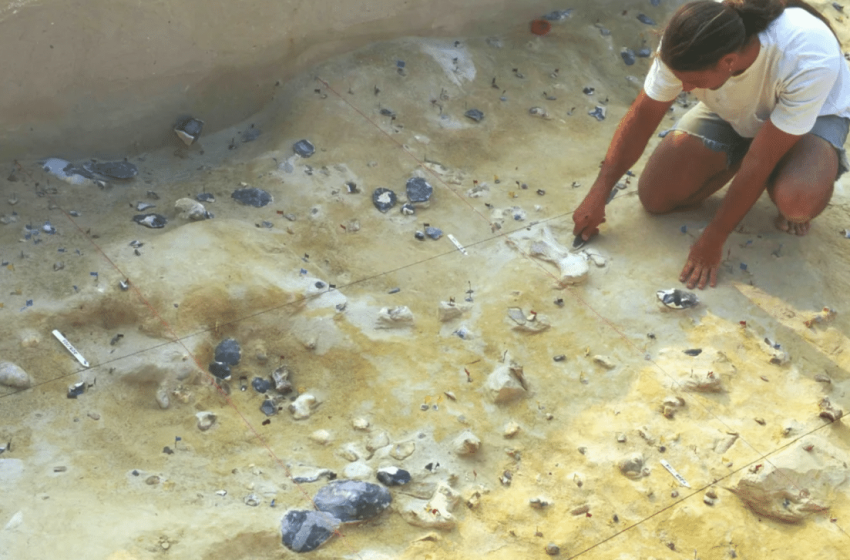
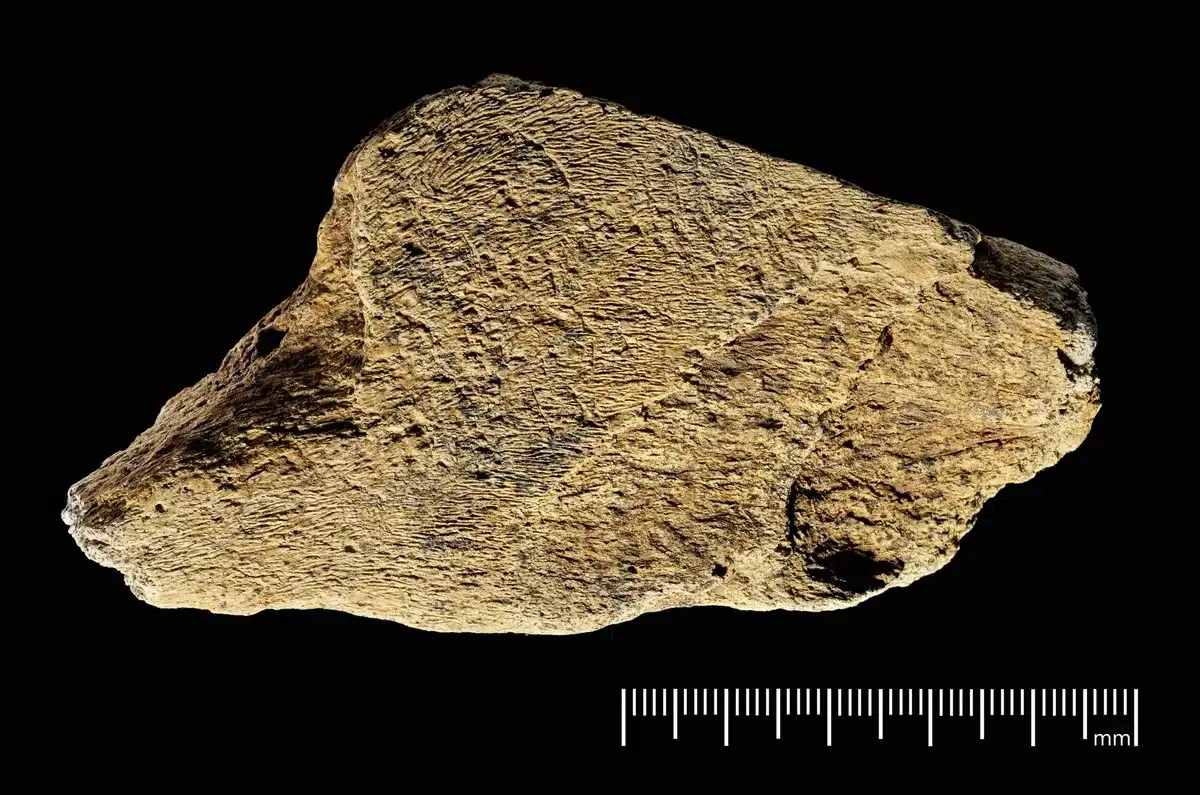
The artefact was originally excavated in the 1990s at the Boxgrove archaeological site near Chichester, in West Sussex, a location already known for its rich record of early human activity. At the time, the bone fragment was catalogued but not fully understood. Only with the application of modern analytical techniques did its true function come into focus. Researchers used 3D surface scanning and electron microscopy to examine wear patterns that were invisible to the naked eye, revealing impact marks and embedded fragments of flint.
These traces show repeated, intentional use rather than accidental damage. The object’s flat surface and dense structure made it suitable for striking stone, confirming it functioned as a soft hammer used in stone tool production. As the research team explains in Science Advances, this reassessment highlights how earlier discoveries can take on new meaning when revisited with updated methods and fresh questions about early human behavior.
Elephant Bone As A Strategic Choice Of Material
The hammer was shaped from thick, dense bone belonging to an elephant or mammoth, animals that roamed parts of Europe during the Middle Pleistocene. Even then, such animals were relatively uncommon in southern Britain, making their remains a rare resource. Choosing elephant bone was not incidental; its mechanical properties made it tougher and more resilient than most other animal bones, while still softer than stone.
“This remarkable discovery showcases the ingenuity and resourcefulness of our ancient ancestors. They possessed, not only a deep knowledge of the local materials around them, but also a sophisticated understanding of how to craft highly refined stone tools. Elephant bone would have been a rare but highly useful resource, and it’s likely this was a tool of considerable value,” said lead author Simon Parfitt.
The careful selection and shaping of this material indicate long-term planning. Early humans not only recognized the utility of elephant bone but also curated it, transporting and reusing it multiple times. Such behavior suggests foresight and an appreciation of durability that goes beyond opportunistic toolmaking.
What The Tool Reveals About Early Human Minds
The hammer measures roughly 11 centimeters long and shows extensive wear, pointing to repeated use over an extended period. Microscopic flint residues embedded in its surface confirm it was employed to shape and sharpen stone tools through knapping, a precise process requiring controlled force. Bone hammers allow finer adjustments than stone, reducing the risk of breaking delicate tool edges.
“Our ancient ancestors were sophisticated in their use of tools. Collecting and shaping an elephant bone fragment and then using it on multiple occasions to shape and sharpen stone tools shows an advanced level of complex thinking and abstract thought. They were resourceful gatherers of available materials, and savvy about how best to use them,” added co-author Silvia Bello.
The study suggests the tool was likely made by Homo heidelbergensis or an early Neanderthal population. Its age places it around 200,000 years before the appearance of modern humans, reinforcing the idea that advanced cognition evolved gradually across multiple human species rather than appearing suddenly.
Rewriting The Timeline Of European Tool Innovation
Bone tools made from elephants have been found elsewhere in Europe, though most date to less than 450,000 years ago and are concentrated in warmer southern regions. The Boxgrove hammer is currently the oldest known elephant bone tool in Europe, pushing back the timeline for such technological experimentation in northern environments.
When compared with much older examples from Olduvai Gorge in Tanzania, which date back 1.5 million years, the English find shows that early humans repeatedly reinvented and adapted similar solutions in different ecological contexts. The Boxgrove site, already famous for its hand axes and butchered animal remains, now provides even stronger evidence that early Europeans were skilled, adaptable, and capable of complex technological traditions.
First Appeared on
Source link






