


Scientists Unveil a Material So Powerful It Eliminates Superbugs on Command
Scientists in Switzerland have developed ultra-thin, graphene-based coatings capable of neutralizing dangerous hospital pathogens using nothing more than infrared light. In early testing, the material eliminated nearly all traces of one drug-resistant bacterial strain and over 90 percent of another. The research could mark a turning point in the global fight against antibiotic resistance.
The threat posed by drug-resistant microbes is no longer a distant warning, it is an unfolding crisis. Conventional antibiotics are losing ground against a growing number of pathogens, and existing antimicrobial coatings used on medical equipment carry their own problems, from allergic reactions to limited effectiveness against viruses. Researchers at Empa, the Swiss materials science institute within the ETH Domain, believe nanomaterials offer a way out.
At the heart of the effort is the Nanomaterials in Health Lab in St. Gallen, led by Peter Wick, who has spent more than two decades studying how specialized materials interact with the human body. His team is not simply iterating on existing solutions, they are building an entirely new class of antimicrobial technology, one that can be switched on and off with light.
A New Generation of Coatings Built From Graphene
The inspiration for the lab’s lead material came from a research partner at Palacký University Olomouc in the Czech Republic, whose team had been working with graphene, a carbon allotrope consisting of a single atomic layer. According to project lead Giacomo Reina, a chemist who joined Wick’s lab in 2023, the medical potential was immediately apparent.
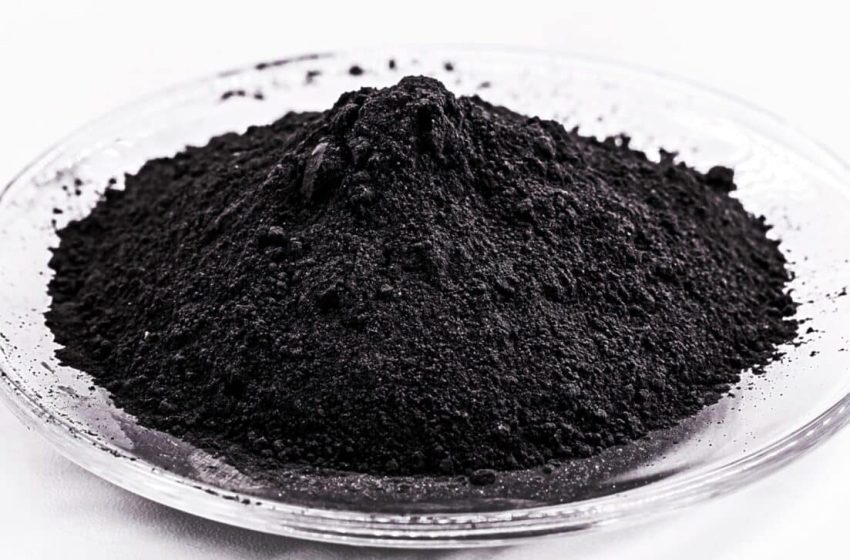
The resulting material combines graphene oxide with polyvinyl alcohol, a plastic commonly found in the food industry. The coating is so thin it is invisible to the naked eye, meaning it can be applied to medical equipment without altering its appearance. Reina has since synthesized four distinct formulations, each designed to sharpen specific properties. As he notes, these are believed to be the first antimicrobial coatings based on graphene acid.
The requirements the team set for themselves were demanding. According to Reina, the nanomaterials must be not only antimicrobial, but also tissue-compatible, environmentally friendly, and chemically stable, a combination that existing metal-based coatings using silver, copper, or titanium dioxide have so far failed to fully deliver.
How Light Turns a Coating Into a Germ-Killer
The mechanism behind the material’s antimicrobial action is a precise chain reaction. When exposed to near-infrared light, the same type used in hospital pain therapy, the coating heats to around 44 degrees Celsius. According to the research team, this warmth alone weakens microbes, but the more significant effect is chemical: light triggers a reaction between the nanomaterial and ambient oxygen, generating highly reactive molecules known as oxygen radicals that attack and damage bacterial surfaces.
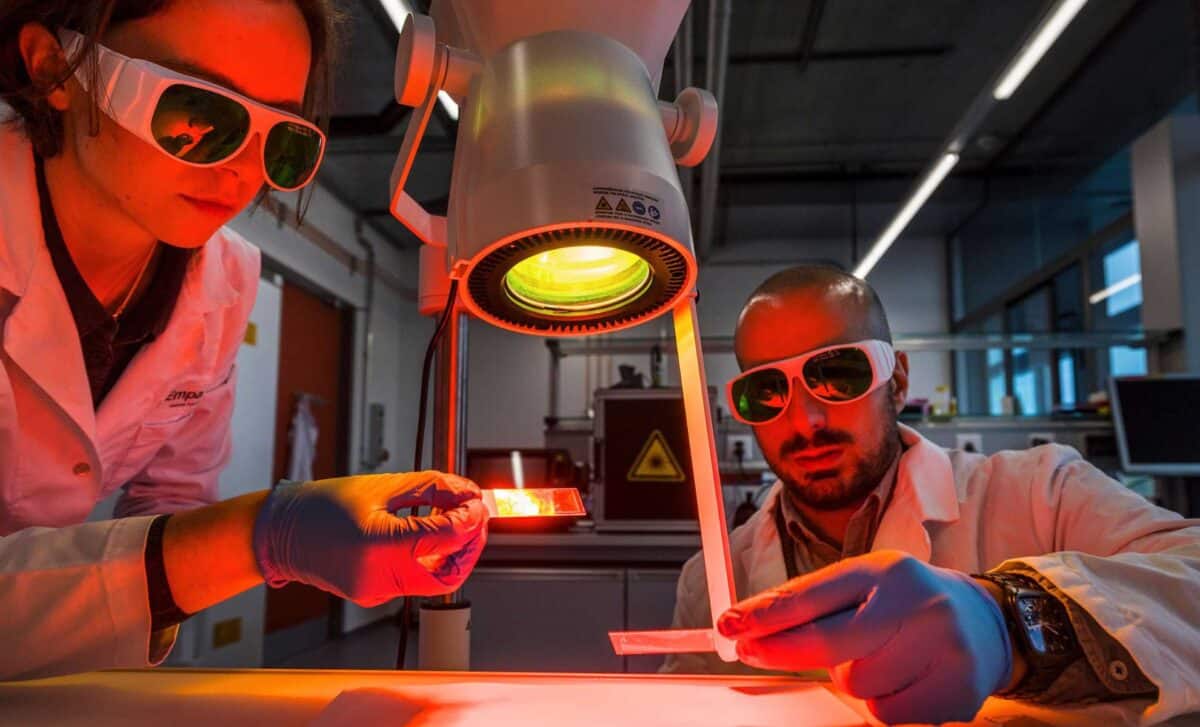
Crucially, infrared light can penetrate body tissue by up to two centimeters, making it possible to activate an implant coating from outside the body. The antimicrobial effect is also tunable. As Reina explains, the response can be switched on and off, or adjusted in intensity, simply by controlling the amount of light energy applied. Swapping infrared lamps for lasers enables even more surgical precision.
Wick described the process with evident enthusiasm, calling it a case of using physical energy to initiate a chemical reaction with real biological consequences. Testing in the Biointerfaces Lab confirmed the approach works: the first of the four materials eliminated close to 100 percent of one bacterial strain and around 91 percent of a second, results that, according to the team, outperform silver-based coatings currently in clinical use.
Dental Implants as the First Real-World Test
With proof of concept established, the team is now targeting a specific and pressing medical problem: infections caused by dental implants, which can in serious cases spread to the jawbone or throughout the body. Doctoral student Paula Bürgisser, who began her dissertation in summer 2025, is leading this line of inquiry under the joint supervision of Wick and Professor Roland Jung of the University of Zurich’s Center for Dental Medicine.
The concept is straightforward. According to the team, the portion of a dental implant in contact with the gum tissue would be pre-coated with the nanomaterial. Once the implant is placed, light is applied to clear surface microbes. The treatment can then be repeated at routine check-ups or whenever an infection arises. Testing to date shows the material retains its antimicrobial properties through repeated reactivation without degradation.
The path to clinical use, however, remains long. The team aims to engage a private sector partner within three to four years to begin clinical trials, but Wick cautions that widespread patient access could still be a decade or more away. Looking further ahead, the lab has its sights on broader applications, from nanomaterial-based sensors to cancer therapies, driven by the conviction that, as Wick puts it, basic research continues to open new doors.
First Appeared on
Source link






