


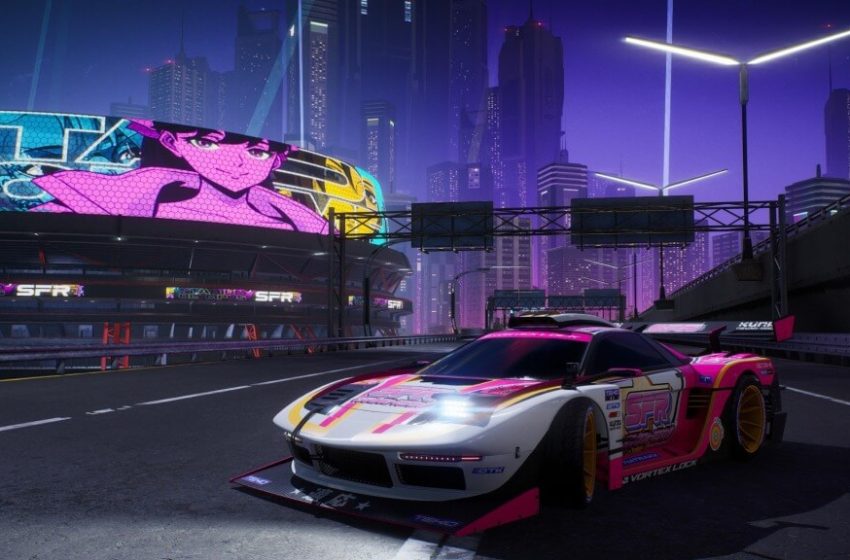
Screamer is less than the sum of its auto parts
The humble arcade racing game has been somewhat neglected lately, where lately means “for the last decade and a half.” What used to be one of the foremost genres in gaming has fallen out of fashion in favor of its bigger simcade brothers as the expectation for scale and content in game releases grew to unreasonable sizes. Forza Horizon, the biggest racing game in the world, offers all the accessibility of a classic arcade racer while also providing a massive roster of real cars with realistic passing handling, a full open world, road races, off-road races, drift events, single player, multiplayer, and leaderboards. Name it, and Forza Horizon has got it—everything except coherent game design and a sense of genuine progression.
An entire genre being subsumed into one megagame and a few The Crew-sized also-rans has led to a lot of lamentation from arcade racer fans who long for a revival of the genre. And truth be told, the past few years have had enough great games to render this narrative wilfully full of holes. The glorious return of Tokyo Xtreme Racer, the impossible skill ceiling of the Redout games, the no-nonsense family fun of not one but two Hot Wheels Racers: The genre has undeniably been on a slow, steady upswing during the 2020s. It is into this context that Screamer emerges as not just another racing game, but a potential genre saviour.
Screamer is a revival of a game from 1995 that was the first original racing game by Milestone, a veteran racing game studio with countless series to its name, including those two shockingly impressive Hot Wheels games. Although it looks back to Milestone’s earliest history, the new Screamer is a departure from their usual licensed fare, and with its striking cel-shaded style, an overt mechanical influence from lesser known genre classics like Inertial Drift and Blur, and a fully featured single player campaign with no open world or meaningless filler, it’s initial reveal felt like a statement of intent: Finally, racing fans, this is what you’ve been asking for over the last 15 years.
And now it’s out. And all of that is true. But also true, and tragically: It’s one of the most disappointing games of the year.
Screamer is the most heartbreaking kind of bad game, one where competence shines through in every piece of its construction. This is very obviously the work of an incredibly talented team. The cars feel (mostly) good to drive on the track, it runs flawlessly on my computer without a single crash, and the music effortlessly switches between driving metal riffs and spacey breakbeats, keeping an incredible sense of atmosphere at all times. But all these elements get placed together in the final design to create a whole that is staggeringly less than the sum of its parts. There are so many mechanics and systems in Screamer that it’s hard to find the game underneath all the cruft.
To give a basic rundown, here are the core mechanics. You accelerate and break with the triggers and steer with the left stick. Your right stick controls your drift angle. Left bumper controls up-shifts, which—along with consistent high speed driving—builds your Sync Meter. Holding the left bumper when you have enough Sync Meter spends it for a boost; how much boost you get depends on the timing of how you hold the left bumper. Expending Sync Meter builds your Entropy Meter. Holding the right bumper activates a shorter, violent boost that turns your car into a hurtbox which can takedown opponents and send them further back in the pack, and potentially earn points towards a total victory without needing to place first. Finally, as a defensive measure, you can tap the right bumper to spend Sync Meter on a shield instead of a boost. And of course every character has their own signature ability that defines their playstyle.
To be clear: the problem is not that Screamer is mechanically complicated. The problem is that it is mechanically incoherent, with all these systems fighting against each other rather than building to a satisfying whole. The moment-to-moment decision making of the racing is overwhelmingly taken up by questions not of positioning and handling, but meter management. Hitting a corner just right matters far less than making sure you spend your boosts at the correct time, not least because boosts don’t just increase your speed but greatly reduce the punishment for off-track driving and barrier collisions. The game steals Inertial Drift’s absolutely masterful twin stick control model but inherits none of that game’s breadth of handling and expression; every car drives basically the same, and their primary differentiators aren’t in core handling elements like acceleration, breaking, or turning speed, but in special abilities and the way they build and stock meter.

First Appeared on
Source link






