


Shifting Gulf Stream may signal an ocean current collapse is next
For years, scientists have worried that the Atlantic Ocean’s circulation system, which plays a key role in regulating temperatures in the Northern Hemisphere, is slowing down.
A new modeling study adds an unsettling detail: if the Atlantic Meridional Overturning Circulation (AMOC) weakens, the Gulf Stream’s path should gradually creep northward along the U.S. East Coast.
Satellite observations suggest that’s already happening. The same model shows that a sudden, sharp jump in the Gulf Stream’s route could be an early alarm bell for a much bigger breakdown.
The research was led by René van Westen and Henk Dijkstra at Utrecht University in the Netherlands.
The team focused on connecting something hard to measure directly (the strength of AMOC) to something we can track more easily (where the Gulf Stream runs).
The big engine in the Atlantic
The AMOC is essentially a giant conveyor belt. Warm, salty water moves north at the surface from the tropics toward Europe.
As the water reaches higher latitudes, it cools, becomes denser, and sinks. That deep, colder water then flows back south along the ocean floor.
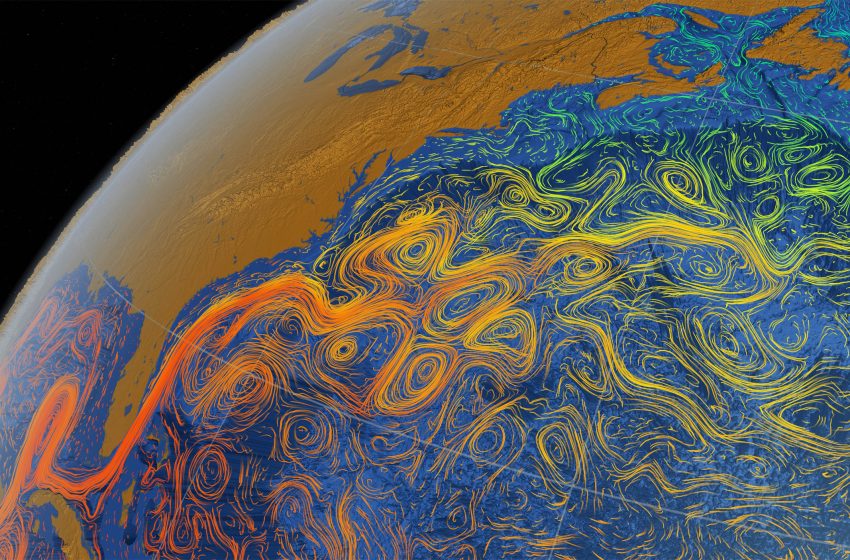
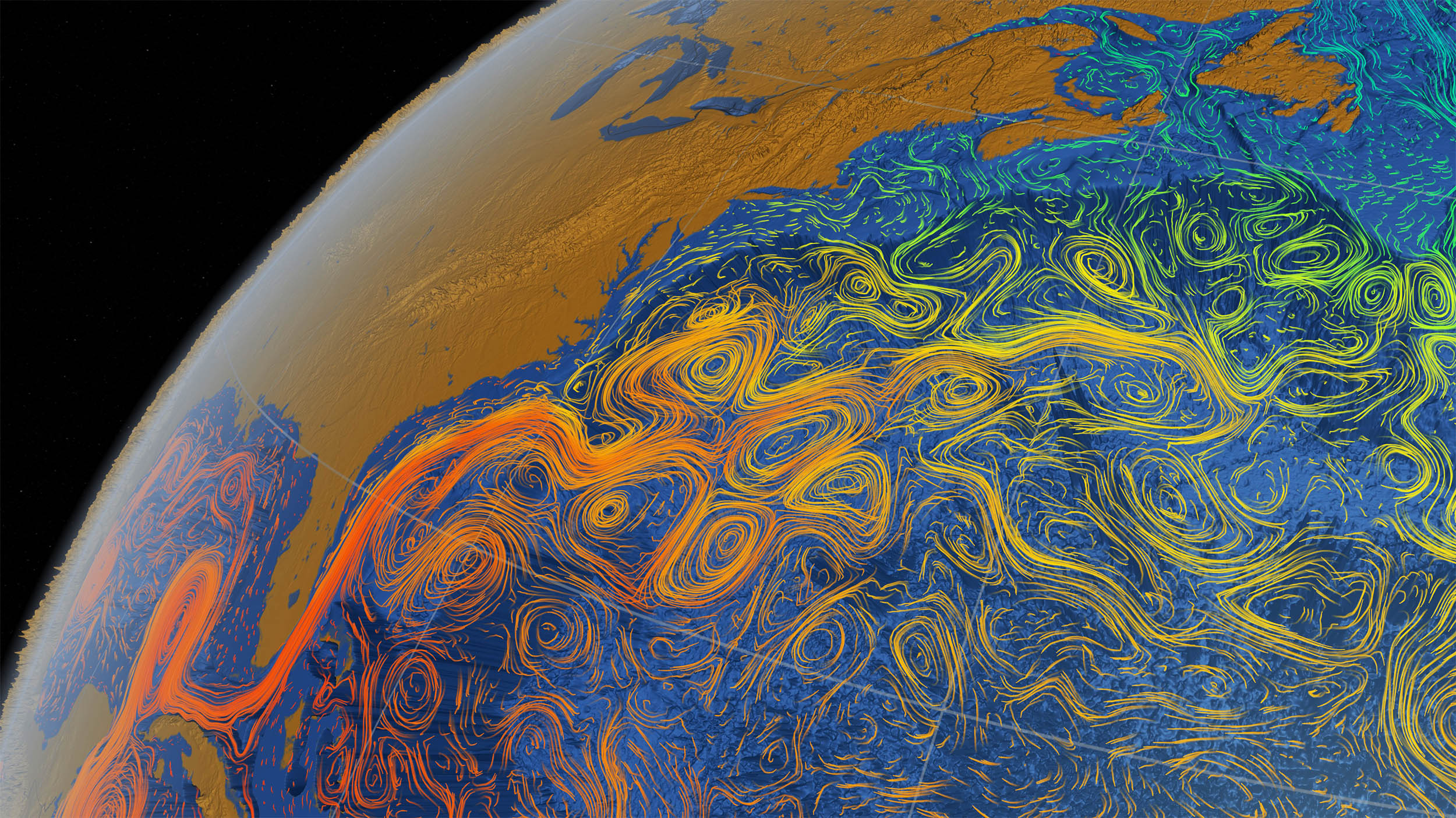
The Gulf Stream is one part of that system – the fast surface current that runs from the Gulf of Mexico up the East Coast and then swings east into the Atlantic around North Carolina.
The concern is that AMOC is vulnerable to freshening in the North Atlantic. As Greenland’s ice melts and dumps more freshwater into the ocean, it can dilute the salty water that normally sinks.
Less sinking means less overturning, which can weaken the whole circulation.
Searching for evidence
A frustrating piece of this story is that direct measurements of AMOC are relatively recent.
The flow has only been continuously monitored by moored instruments since 2004, which is not long enough to confidently separate a true long-term decline from natural ups and downs.
Some reconstructions, based on historic sea-surface temperatures, suggest AMOC may have weakened by around 15% since 1950 – but these reconstructions aren’t the same as direct measurement.
The Utrecht team went looking for a different kind of evidence: if AMOC weakens, does it leave a fingerprint somewhere else in the system?
Monitoring the Gulf Stream’s path
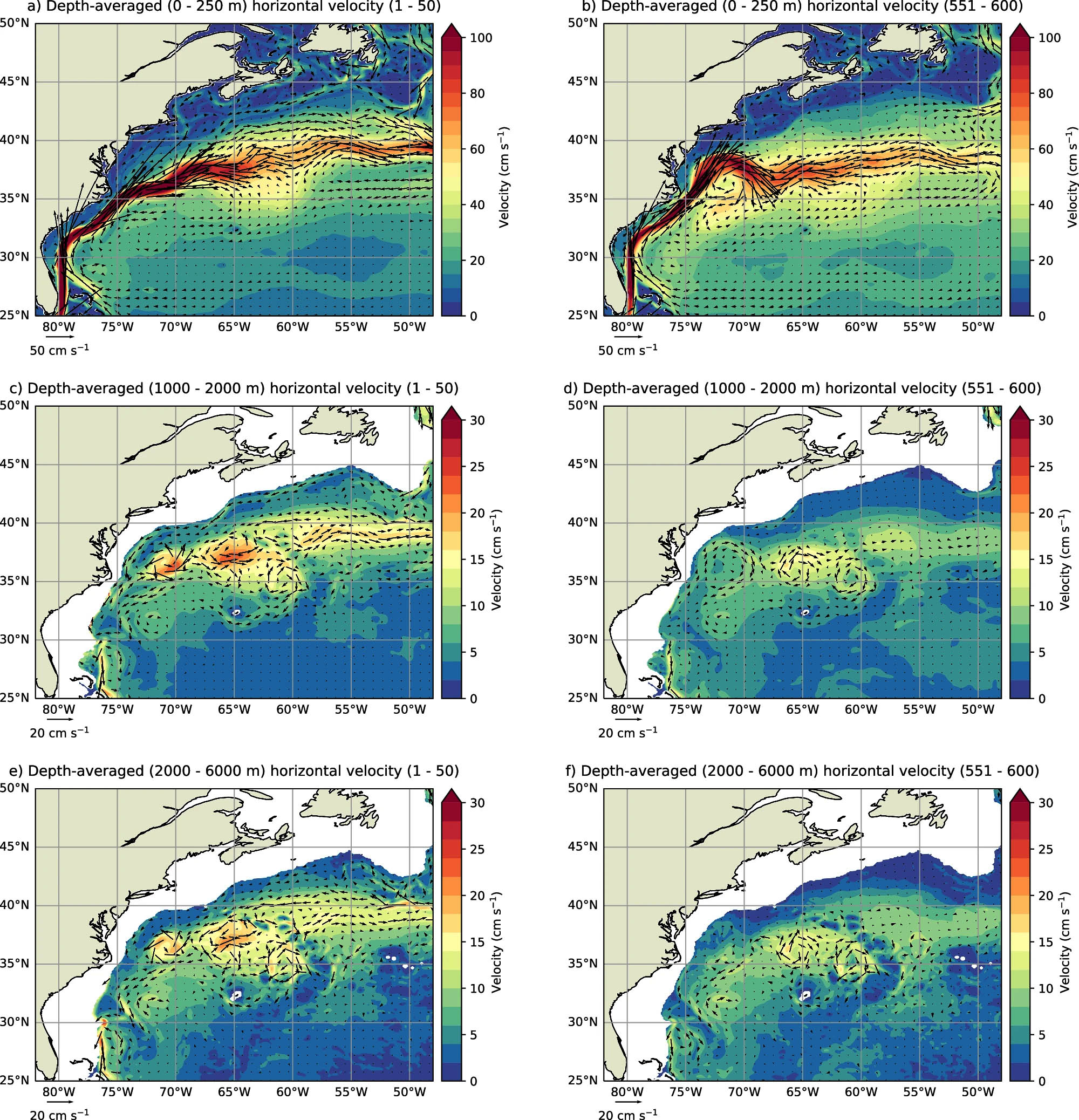
In their simulations, the researchers found that a weakening AMOC should tug the Gulf Stream northward – meaning it would reach the U.S. coastline farther north before veering into the open Atlantic.
Professor van Westen said this is appealing because the Gulf Stream’s path is something we can actually monitor with satellites, making it a practical “proxy” for changes in the deeper circulation.
According to the study, the satellite signal is already there. The Gulf Stream appears to have shifted north by roughly 50 kilometers over the past 30 years.
Because the shift matches what the physics-based model predicts during AMOC weakening, it strengthens the case that the broader system is already slowing, the researchers noted.
Cause of the Gulf Stream shift
The model points to a specific mechanism: the Deep Western Boundary Current. This is a cold, salty flow that runs southward along the seafloor off North America as part of AMOC.
Under normal conditions, this deep current flows beneath the Gulf Stream and exerts a kind of “southward tug” on it.
But as the AMOC weakens, that deep boundary current weakens too. With less pull holding it down, the Gulf Stream’s curve gradually shifts north.
One technical improvement matters here. The team used a much higher-resolution ocean model than is typical, representing the world in 10-kilometer pixels rather than 100-kilometer pixels.
That finer grid allows the simulation to better capture the Gulf Stream’s structure, including the “bulge” where it carries huge masses of water.
An abrupt jump, then a collapse
The most dramatic result comes far into the simulation. After centuries of gradual change, the Gulf Stream suddenly jumps more than 200 kilometers north in just two years. Then, about 25 years later, the AMOC collapses in the model.
To be clear, the study is not claiming the real AMOC will collapse in 400 years. This is an idealized scenario meant to explore how the system behaves and what warning signs might show up.
But the implication is still unsettling: a rapid, unusual shift in the Gulf Stream’s position could be a precursor to a tipping point collapse, offering one of the clearest early warning indicators scientists have identified so far.
Van Westen said the key point is that the warning signal is straightforward to monitor: you can track the Gulf Stream’s path from space, and if it suddenly lurches north, that could be a serious red flag.
Potential impacts of an AMOC collapse
Earlier research suggests an AMOC collapse could sharply cool parts of Europe, even in a warming world.
Some models indicate that extreme winter cold could occur, with cities like London occasionally approaching −20°C.
That doesn’t mean Europe would permanently turn into the Arctic overnight. But it does mean the climate could become much harsher and more volatile – with major knock-on effects for agriculture, infrastructure, and energy demand.
The study also makes an uncomfortable point. If a sudden Gulf Stream jump really is a late stage warning, it might be too late at that point to stop the collapse – but it could still be enough time to prepare.
That could mean better home insulation, hardening infrastructure, and rethinking where certain crops can reliably grow.
Watching the Gulf Stream closely
This research doesn’t prove a collapse is imminent, and it doesn’t give a clean countdown clock. What it does offer is a clearer connection between deep-ocean weakening and a surface feature we can monitor continuously.
If the Gulf Stream’s slow northward drift continues, it adds weight to the argument that the AMOC is weakening.
And if the Gulf Stream were ever to jump north abruptly, the study suggests that might be the closest thing we have to a flashing warning light for a major Atlantic circulation shift – one with serious consequences for Europe and beyond.
The research is published in the journal Nature Communications Earth & Environment.
—–
Like what you read? Subscribe to our newsletter for engaging articles, exclusive content, and the latest updates.
Check us out on EarthSnap, a free app brought to you by Eric Ralls and Earth.com.
—–
First Appeared on
Source link






