


Simple Blood Test Can Predict Dementia 25 Years in Advance, Study Suggests
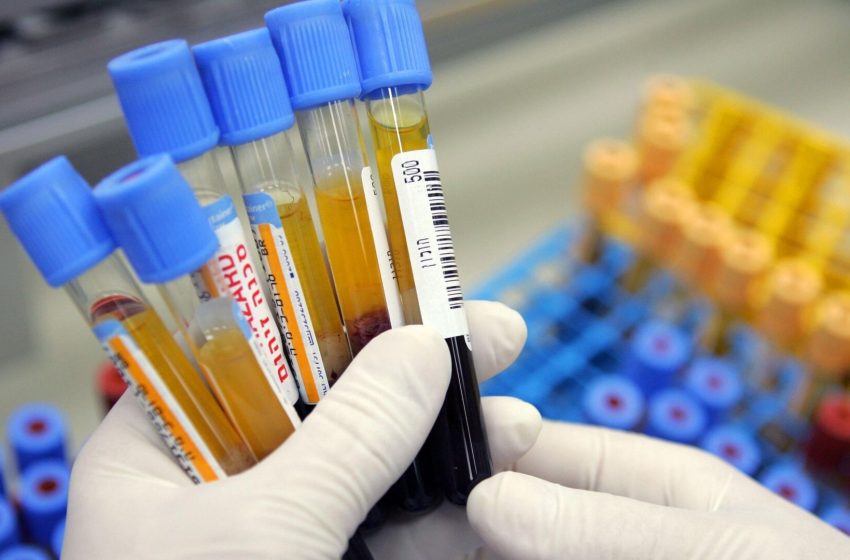
Your blood might someday reveal much about the distant future of your brain health. A study out today indicates that doctors could use a biomarker in blood to predict Alzheimer’s disease in women decades before their actual diagnosis.
Researchers at the University of California, San Diego, studied blood plasma levels of a protein known as phosphorylated tau 217 (p-tau217) in a large sample of older women. Women with the highest amounts of p-tau217 had a significantly greater risk of later developing dementia, the researchers found. What’s more, this increased risk could be spotted in women up to 25 years before they showed any visible symptoms.
“These findings underscore the value of plasma p-tau217 as an easily measured biomarker for dementia prediction,” lead author Aladdin Shadyab, an associate professor of public health and medicine at UC San Diego, told Gizmodo.
The most promising biomarker
Alzheimer’s is the most common form of dementia. There are two proteins closely tied to the development of Alzheimer’s: tau and amyloid beta. In people with Alzheimer’s, abnormal versions of these proteins steadily build up in the brain, though it usually takes years before this accumulation becomes noticeable. Scientists have found that certain forms of these proteins can spill over from the brain into our blood in detectable amounts. One particular kind of abnormal tau, ptau217, seems to track especially well to the progression of Alzheimer’s.
“Among all the blood-based biomarkers of Alzheimer’s disease, plasma p-tau217 has shown the most promise in detecting Alzheimer’s in the brain. It has been highly correlated with changes in the brain that indicate Alzheimer’s disease,” said Shadyab.
To test out the predictive utility of p-tau217, Shadyab and his team studied baseline blood samples taken from over 2,500 volunteers in the Women’s Health Initiative Memory Study. This was a long-running project that followed the long-term health of women between the ages of 65 and 79 starting in the late 1990s for up to 25 years.
Some of the women were eventually diagnosed with dementia or mild cognitive decline, the latter often a precursor to dementia. And women who showed the highest levels of p-tau217 in their plasma at the start of the study were substantially more likely to develop either condition, the researchers found. The correlation between higher p-tau217 and dementia wasn’t the same for every demographic group, though.
“We found that the risk of cognitive impairment associated with elevated levels of p-tau217 were stronger in women who were older than 70 years, carried genetic risk for Alzheimer’s, or were on estrogen plus progestin hormone therapy,” Shadyab said. The team’s findings were published Tuesday in JAMA Network Open.
Predicting Alzheimer’s
There are currently two FDA-cleared blood tests for diagnosing or ruling out Alzheimer’s, and likely more on the way soon. Many of these tests use p-tau217 as a biomarker, but it’s still too early to widely use p-tau217 in the doctor’s office as a foolproof means of diagnosing Alzheimer’s, particularly in people who aren’t sick yet.
“Additional studies are needed to determine the predictive ability of plasma p-tau217 in people who do not yet have symptoms for dementia,” Shadyab said. “Since our study focused only on women, additional studies are needed to confirm our findings in men.”
That said, researchers are already looking to use these blood tests to identify the highest-risk people in trials testing out new preventative treatments for Alzheimer’s. Other recent research has suggested that we can one day rely on p-tau217 and other biomarkers to not only predict whether someone will develop Alzheimer’s but also exactly when they’ll begin to show symptoms.
Scientists are still struggling to find medicines and interventions that can significantly slow the otherwise fatal progression of Alzheimer’s and other forms of dementia, but it’s advances like these that will give them a better fighting chance.
First Appeared on
Source link






