


Startup Plans to Mine $20 Million-Per-Kilo Moon Fuel That Could Revolutionize Energy Forever
A new venture is preparing to test the limits of lunar exploration with an ambitious plan to mine the Moon for helium-3, a rare isotope with enormous energy potential. The company, Interlune, is spearheading this initiative, aiming for a launch in 2027. Its mission, named Prospect Moon, will test technologies to extract this valuable material directly from the lunar surface. Their vision: make lunar helium-3 economically viable and technically feasible.
Why Helium-3 Could Reshape Lunar Economics
The Moon’s surface, constantly bombarded by solar wind, holds trace amounts of helium-3 (He-3)—a non-radioactive isotope with long-touted potential as a fuel for future nuclear fusion. Advocates of lunar mining believe that unlocking this material could revolutionize energy on Earth, providing a cleaner and virtually limitless power source. The challenge lies not just in reaching the Moon, but in efficiently isolating He-3 from lunar regolith, the dusty surface layer covering the Moon.
This is where Interlune steps in. Founded in 2024 by aerospace veterans including Rob Meyerson and Gary Lai, the Seattle-based startup has already attracted attention—and funding—for its innovative approach. Their project, Prospect Moon, is designed as a robotic prospector. It will land on the nearside lunar maria, known for their ilmenite-rich soils, and test specialized equipment that can scoop, process, and analyze regolith to isolate helium-3.
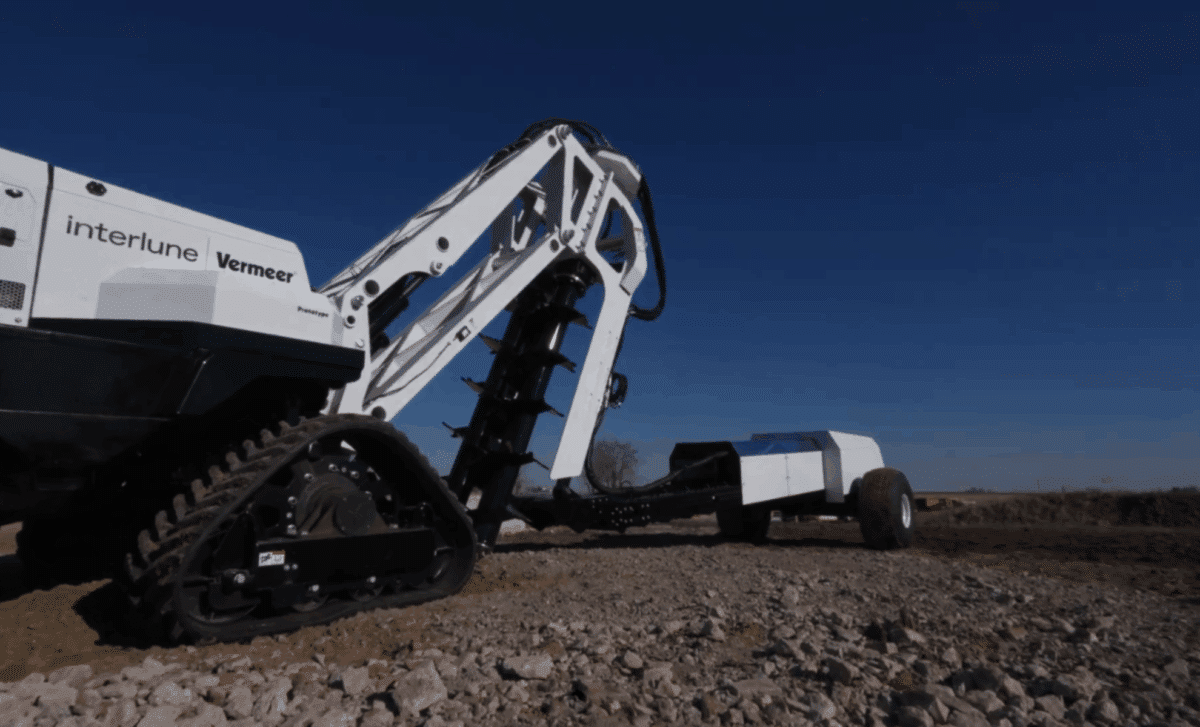
“The high-rate excavation needed to harvest helium-3 from the Moon in large quantities has never been attempted before, let alone with high efficiency,” said Gary Lai, Interlune’s co-founder and CTO.
It’s a bold statement that reflects the scale of what’s being attempted. As the company points out, He-3 is worth an estimated $20 million per kilogram, making it one of the most expensive substances on Earth. Yet its extraction has never been practically demonstrated.
A Robotic Prospector With A High-Stakes Mission
The mission concept draws heavily on previous lunar data, especially from the Clementine mission in the 1990s, which mapped concentrations of titanium dioxide—a proxy for ilmenite, the mineral where helium-3 is most likely to be found. According to Interlune, older, fine-grained ilmenite retains more He-3, and processing smaller grains requires less energy—two key factors in the company’s engineering roadmap.
Prospect Moon will carry four key instruments: a regolith sampling system, a helium-3 processing module, a mass spectrometer, and a multispectral camera. These systems are designed to function autonomously, gathering and analyzing samples without human oversight. If successful, this would mark a significant advance in in-situ resource utilization (ISRU), an emerging field critical to long-term lunar operations.
“When you’re operating equipment on the Moon, reliability and performance standards are at a new level,” said Rob Meyerson, Interlune’s CEO.
This reliability will be tested on a surface with no atmosphere, high radiation exposure, and extreme temperature swings. The mission’s goals aren’t limited to proving feasibility; it also aims to gather open-source scientific data.
“We’ve been very pleased with the results of the test program to date and look forward to the next phase of development,” Lai added, pointing to a trajectory that could reshape the economics of the Moon.
Lunar Mining In The Era Of Commercial Spaceflight
The timing of Prospect Moon is no coincidence. The broader ecosystem of commercial lunar landers—such as those developed under NASA’s CLPS (Commercial Lunar Payload Services) program—is gradually maturing. Interlune intends to piggyback on these advancements, using off-the-shelf lander designs to minimize cost and development time.
Yet the challenges remain formidable. Despite growing private investment in lunar missions, successful soft landings are still rare. Interlune has raised $18 million in seed funding, secured a grant from the U.S. Department of Energy to boost He-3 research, and completed early-stage testing of its regolith-processing systems. But the final test will come on the Moon itself.
The project’s success could open the door for a new generation of lunar economy players—companies focused on resource extraction, off-Earth infrastructure, and even power beaming back to Earth. If helium-3 proves viable as a fuel, the Moon may no longer be just a destination for astronauts but a source of one of the most precious resources known.
The Next Phase Begins
Set for a tentative 2027 launch, Prospect Moon could redefine what’s possible in private space exploration. Unlike purely scientific missions, Interlune’s project is geared toward commercial viability. If they can demonstrate efficient He-3 collection and deliver usable data, the implications extend far beyond their own roadmap.
As space exploration transitions from government-led projects to commercially driven ventures, the Moon may become a proving ground not just for technologies, but for entire industries. Whether Prospect Moon becomes a historic breakthrough or a cautionary tale will depend on how it handles the harsh truths of operating in deep space—and how much helium-3 it can truly extract.
First Appeared on
Source link






