


Stash or splash? NASA asked for ISS deorbit alternatives • The Register
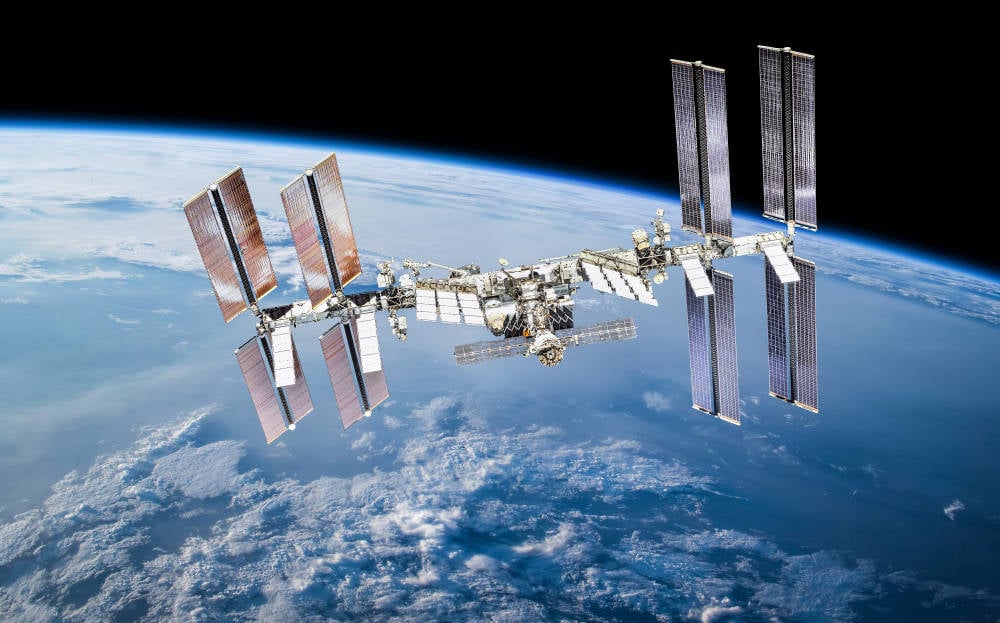
US lawmakers have asked NASA to look into storing the International Space Station (ISS) in a higher orbit at the end of its operational life, instead of sending the structure hurtling into the ocean when the time comes.
The question came up during the markup of the NASA Reauthorization Act and raises an intriguing possibility. Could the multi-billion-dollar complex be sent to a higher orbit where future generations might find a use for it, rather than destroyed?
To be clear, the amendment offered by Reps. Whitesides (D-CA) and Begich (R-AK) and passed by voice vote was not about changing the plan to end ISS operations in 2030, but instead asked whether the ISS could be stored in a higher, stable orbit once it reached the end of its useful life.
Whitesides explained that the amendment required NASA to conduct an analysis of the costs and risks of storing the ISS in orbit. It did not mandate relocation, nor did it authorize funding or the execution of any such plan.

It is, however, worth pondering as the ISS nears the end of its life. In 2024, SpaceX was awarded the contract to build a vehicle to de-orbit the ISS. The vehicle is expected to be ready by 2029, ahead of a planned push to send the ISS into the Earth’s atmosphere.
But the alternative is intriguing. It is technically possible to boost the orbit, though it would require building a vehicle to do so. The bigger question is whether doing so is worth the risks involved.
Whitesides acknowledged some of those risks in the amendment. The ISS is aging and could shed components in the future, posing a potential debris risk. There is also the possibility of a future uncontrolled re-entry.
NASA has already performed an evaluation and concluded that the chance of something hitting the ISS would increase as the orbit was raised, from an estimated 51 years between impacts at its current altitude to less than four years at 497 miles. Complete fragmentation could be catastrophic.
It is, however, an interesting thought experiment.
Another markup, introduced and later withdrawn, came from Rep. Don Beyer (D-VA) regarding the controversial requirement to relocate a space vehicle to Houston. NASA is widely expected to move Space Shuttle Discovery from its current resting place at the Smithsonian Museum to a facility in Texas, although it’s not confirmed this yet.
Beyer’s markup would have required NASA to inform Congress of the cost “and potential for physical harm” to the space vehicle before kicking off the process.
The markup was withdrawn on the understanding that discussions would be had on the relocation “without damaging the vehicle, preserving the integrity of our assets for generations to come.” ®
First Appeared on
Source link






