


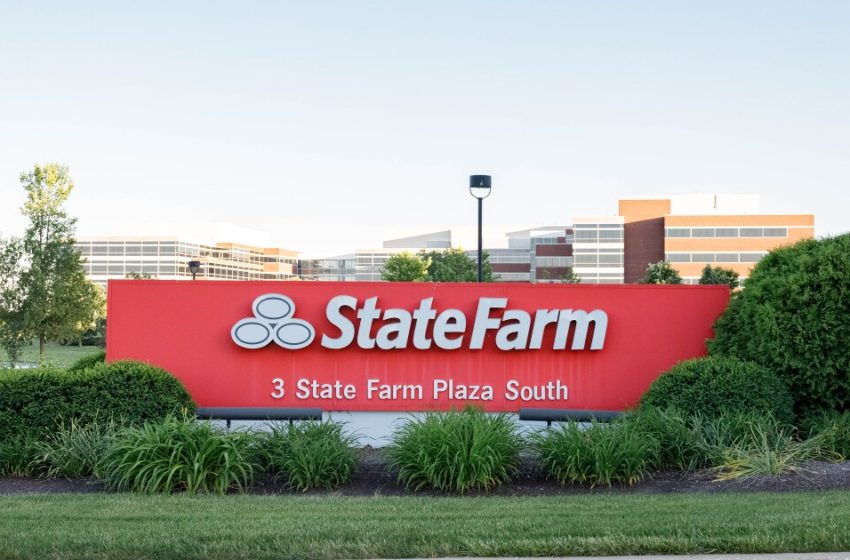
State Farm to close Corporate HQ and Illinois Operations Center and consolidate Bloomington employees at Corporate South
With too much unused office space in Bloomington, State Farm said Thursday that it plans to consolidate its local workforce into the Corporate South complex and close its Corporate Headquarters and Illinois Operations Center by the end of 2027.
It’s a major shift for Bloomington-Normal’s largest employer, with around 13,000 local workers, and one that could significantly impact local government taxing bodies and the commercial real estate market. In its statement Thursday, State Farm did not disclose plans for what to do with those two properties once they’ve moved employees out.
“While we don’t know yet what will happen to the Illinois Operations Center or Corporate Headquarters, we will eventually pass back savings to our customers by reducing costs associated with unoccupied space,” State Farm CEO Jon Farney said. “We simply have too much office space in Bloomington – about double what we need.”
Added State Farm spokesperson Gina Morss-Fischer: “We’ll keep everybody updated on those plans as they develop. And we hope these spaces continue to support the Bloomington-Normal community in new ways moving forward.”
Corporate South is located on Bloomington’s southeast side, just a few blocks away from the Corporate Headquarters building that stands as a landmark on Veterans Parkway adjacent to the OSF HealthCare campus.
Corporate South is the newest of the three facilities, which was built in the 1990s and finished in 2001. It will be renovated as part of the consolidation, and preparation work and upgrades are already underway, the company said.
“We value the flexibility and energy of working together, and Corporate South can accommodate all of our approximately 13,000 local employees in that space. So that when we are together, we can all be in one place together. That just makes sense, to all be under one roof, versus having three underutilized facilities,” Morss-Fischer added.
After years of growing its footprint in Bloomington, State Farm has now moved again to shrink its square footage. The company announced plans in 2018 to move employees out of its Downtown Bloomington building, which was bought by a developer.
State Farm is “proud that we can all come together at Corporate South,” she said.
“Our commitment here in Illinois is pretty clear,” she said. “It’s home.”
In addition to being highly visible landmarks, the two State Farm properties that will be shuttered also generate a lot of property tax revenue for local governments. State Farm’s annual tax bill is about $3.2 million for Corporate Headquarters, and another $979,116 for the two main parcels for the Illinois Operations Center, according to county property records. District 87 would get the bulk of that money — about $2.5 million, records show.
WGLT has reached to District 87 and Unit 5 for comment about potential impacts if the properties are sold or see their assessed values drop after the move.
More in-person work?
Meanwhile, State Farm’s announcement on Thursday also signaled a shift to more in-person work.
“While State Farm does not expect a full-time return to the office for hybrid employees, they will be together more in the future. In Bloomington, Corporate South will accommodate all hybrid employees. Each business area determines work schedules for its employees,” the company said.
About 60% of State Farm’s employees are working hybrid – some at home, some in the office – and many of those people will now spend increased time in the office, said Morss-Fischer.
That return could have positive economic benefits for the community, said Meghan O’Neal-Rogozinski, an owner at the Bloomington-based commercial real estate firm AXIS 360.
“Overall, this is a good opportunity for the community, because this might [better] position other real estate,” she said. “Getting bodies back into Corporate South will help that end of Veterans [Parkway] and retailers and businesses in that area, and it allows for potentially other users to come into the market, depending on what State Farm is going to do.”
Added Laura Pritts, another owner at AXIS 360: “Anytime you get people out of their homes and back into the office, it generates activity in the wider market. They’ll stop for lunch, stop at the store, and do things they might not have done if they were working from home. I think that’s a good thing for the market as a whole.”
More in-office work could have other side effects, they acknowledged, including a potential increased demand for child care in a community with not enough options.
State Farm’s shift to more in-person work mirrors a trend that O’Neal-Rogozinski and Pritts say is playing out nationally. Real estate is cyclical, O’Neal-Rogozinski said, and demand for office space locally has increased in the past year or two after COVID-era declines.
“I tend to be an optimist,” O’Neal-Rogozinski said. “I hope that the community doesn’t necessarily take this as a negative. State Farm is a good community member. They are a sustainable business. I don’t want the community to go down a negative rabbit hole.”
First Appeared on
Source link






