


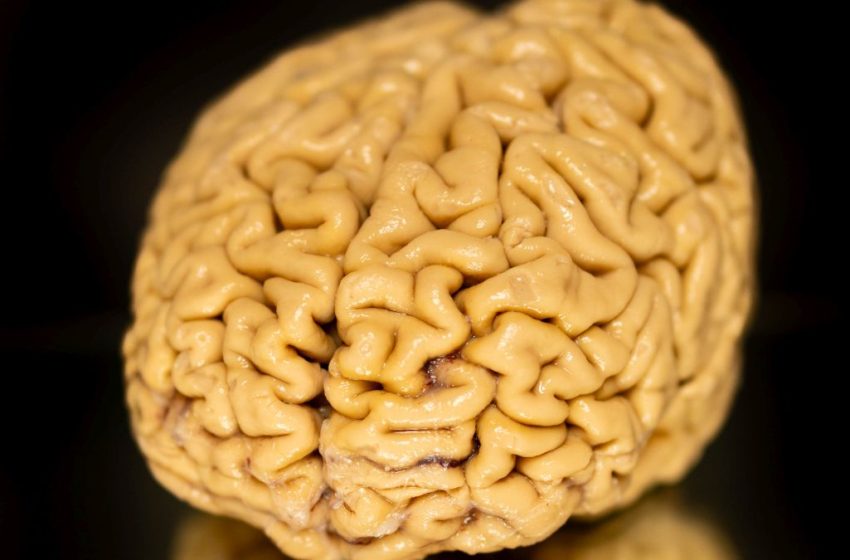
Superagers’ ‘Secret Ingredient’ May Be The Growth of New Brain Cells : ScienceAlert
Not only do our brains appear to generate new neurons into adulthood, but those of superagers contain far more brain cells in development than those of healthy peers, new research has found.
According to a study of 38 adult human brains donated to science, superagers – people who retain exceptional memory as they age – have roughly twice as many immature neurons as their peers who age more typically.
Moreover, people with Alzheimer’s disease show a marked reduction in neurogenesis compared to a normal baseline.
“This is a big step forward in understanding how the human brain processes cognition, forms memories, and ages,” says neuroscientist Orly Lazarov of the University of Illinois Chicago.
“Determining why some brains age more healthily than others can help researchers make therapeutics for healthy aging, cognitive resilience, and the prevention of Alzheimer’s disease and related dementia.”
There has been an ongoing debate about whether adult humans continue to generate new neurons in the hippocampus – the memory center of the brain. Scientists used to assume that the brain you were born with was the brain you were stuck with for life.
Then, in 1998, a landmark paper challenged that assumption, reporting evidence that adults may still produce new neurons. Subsequent papers supported this finding, but then in 2018, another bold claim appeared: Neurogenesis, according to neuroscientist Shawn Sorrells and his colleagues, crawls to a halt during adolescence. The topic has been a hot one since.
However, other recent studies have shown that neurogenesis – or a lack thereof – may play a role in Alzheimer’s disease.
Led by researchers at the University of Illinois Chicago, the team set out to examine a variety of postmortem hippocampal tissue samples to see if they could identify markers of neurogenesis – and if different groups had any notable differences.
The brain samples were donated from five groups: eight healthy young adults, aged between 20 and 40; eight healthy agers, aged between 60 and 93; six superagers, aged between 86 and 100; six individuals with preclinical Alzheimer’s pathology, aged between 80 and 94; and 10 individuals with an Alzheimer’s diagnosis, aged between 70 and 93.
The young healthy adult brain tissue was first analyzed to establish the neurogenesis pathways in the adult brain. Then, they analyzed 355,997 individual cell nuclei isolated from the hippocampus, searching for three different stages of cell development: Stem cells, which can develop into neurons; neuroblasts, which are stem cells in the process of that development; and immature neurons, on the verge of functionality.
The results were striking.

“Superagers had twice the neurogenesis of the other healthy older adults,” Lazarov says. “Something in their brains enables them to maintain a superior memory. I believe hippocampal neurogenesis is the secret ingredient, and the data support that.”
That’s an interesting result on its own, but the data from the individuals with preclinical Alzheimer’s pathology and Alzheimer’s diagnoses is where the real meat of the study sits.
In the preclinical group, subtle molecular changes hinted that the system supporting new neuron growth was beginning to falter. In the Alzheimer’s group, a clear drop in immature neurons was evident.
 frameborder=”0″ allow=”accelerometer; autoplay; clipboard-write; encrypted-media; gyroscope; picture-in-picture; web-share” referrerpolicy=”strict-origin-when-cross-origin” allowfullscreen>
A genetic analysis of the nuclei also showed that superager neural cells have increased gene activity linked to stronger synaptic connections, greater plasticity, and brain-derived neurotrophic factor, a critical protein for neural survival, growth, and maintenance. Taken together, these three things can be interpreted as resilience.
“We’ve always said that superagers show that the aging brain can be biologically active, adaptable, flexible, but we didn’t know why,” says neuropsychiatrist Tamar Gefen of Northwestern University in the US.
“This is biological proof that their brains are more plastic, and a real discovery that shows that neurogenesis of young neurons in the hippocampus may be a contributing factor.”
Related: Scientists Have Discovered a Protein That Reverses Brain Aging in The Lab
Further research, the team says, could help identify therapeutic ways of boosting neurogenesis and resilience, as well as potential environmental and lifestyle factors that may affect the brain’s aging.
“What’s exciting for the public is that this study shows the aging brain is not fixed or doomed to decline,” says cell biologist Ahmed Disouky of the University of Illinois Chicago, the first author of the study.
“Understanding how some people naturally maintain neurogenesis opens the door to strategies that could help more adults preserve memory and cognitive health as they age.”
The research has been published in Nature.
First Appeared on
Source link






