


Tesla Update 2026.2 — The Undocumented Changes
By Not a Tesla App Staff
Like with all Tesla updates, many minor features often go unlisted. If you’re like us, you enjoy knowing all the small changes in a release.
Below are all the smaller changes included in Tesla update 2026.2 that didn’t make it into the official release notes.
Autopilot Name Changes
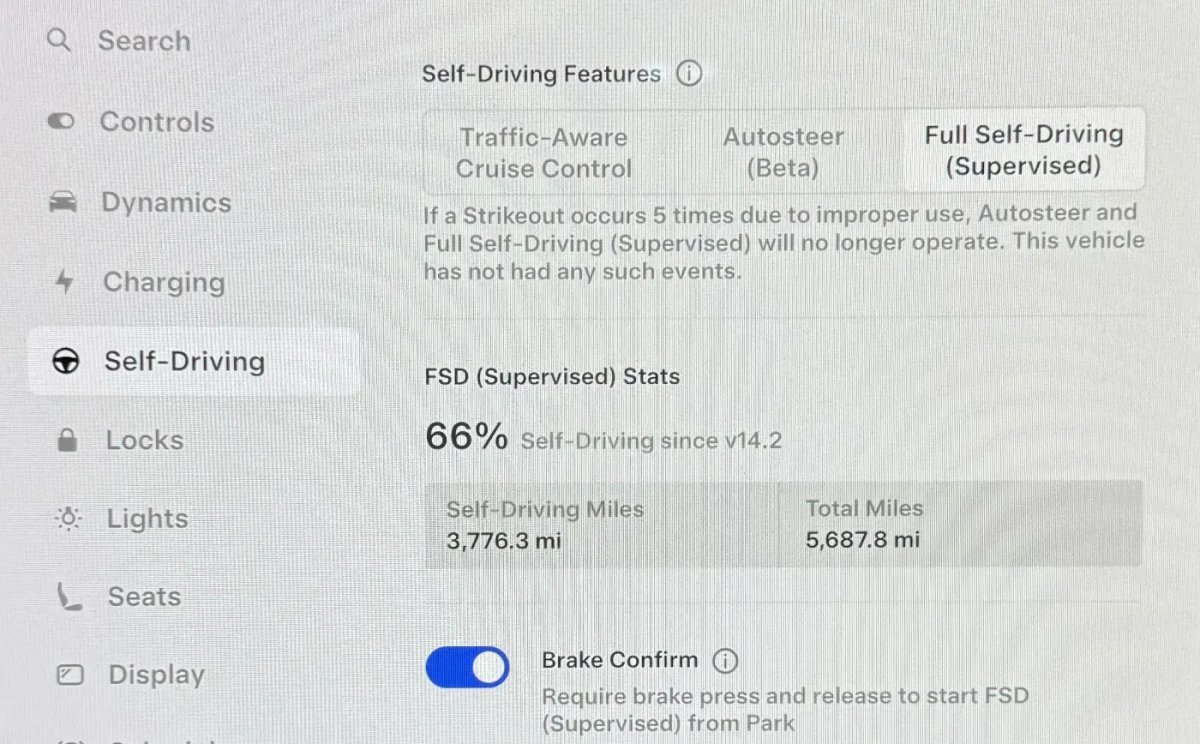
To go along with some of the naming changes, Tesla is replacing the term Autopilot with Self-Driving in most areas.
– Under Controls, the Autopilot tab has been renamed Self-Driving.
– Under the Autopilot menu, “Autopilot Features” has been renamed “Self-Driving Features.” This lets the user select between TACC, Autosteer, or Full Self-Driving.
Maps Version
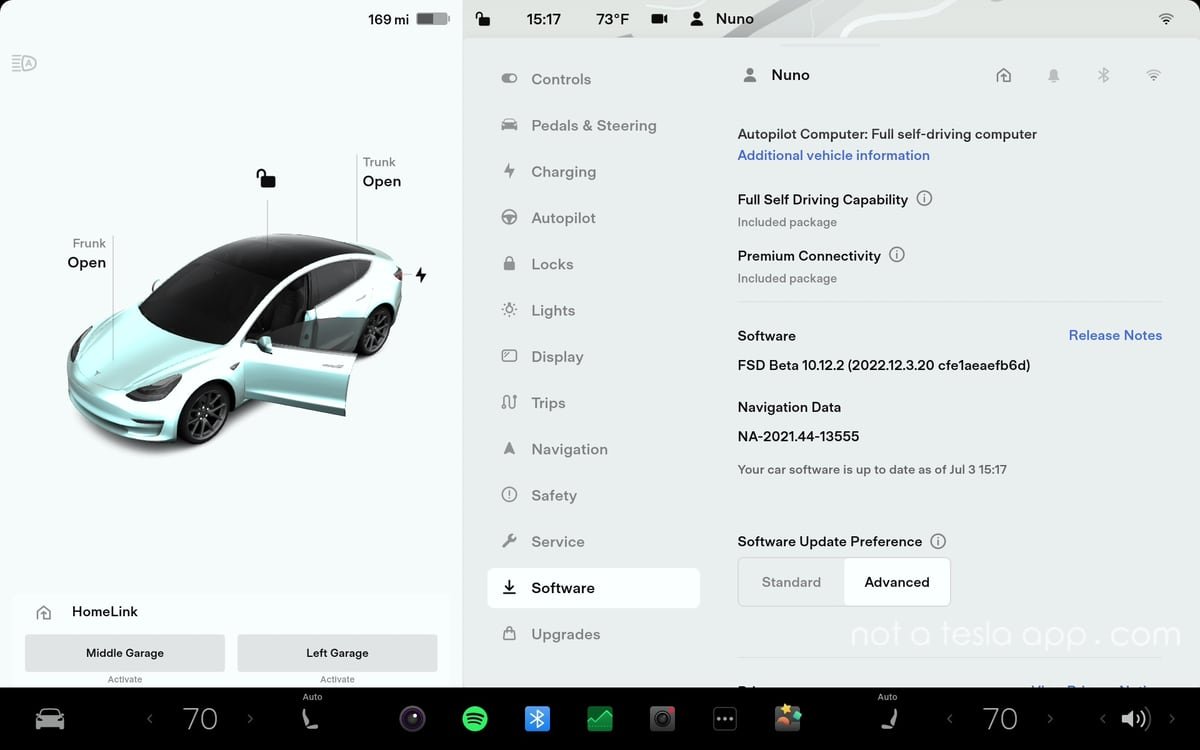
Tesla has changed the way the map version appears in the Software menu. Instead of listing the full map version, which includes the region, version, and build, Tesla will now include only the region and version, such as NA-2025.44.
Supercharger Site Maps Expanded
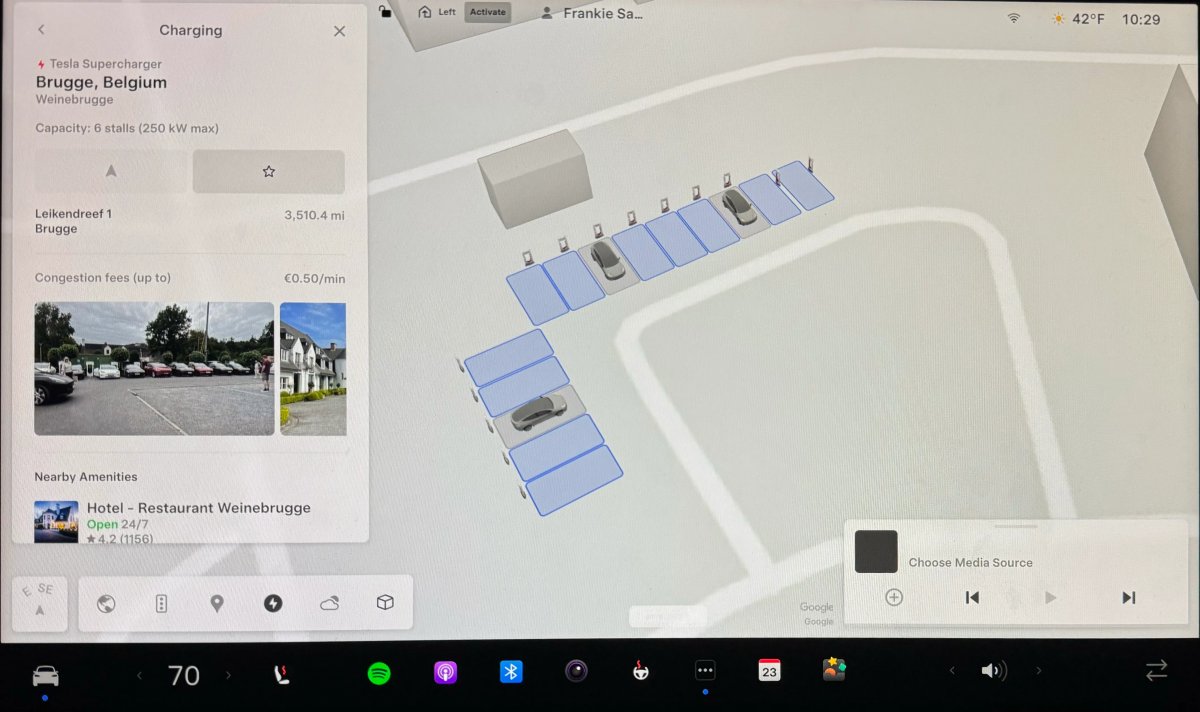
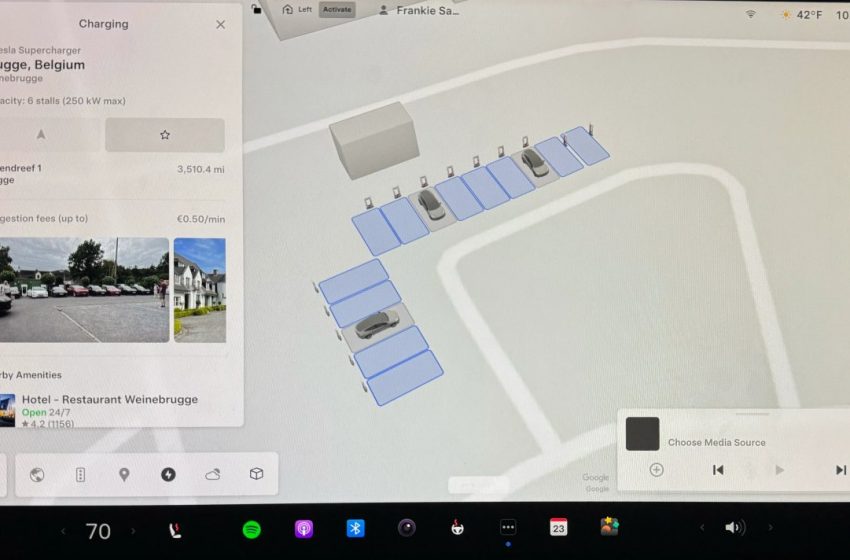
Tesla added 3D Supercharger Site maps in the 2025 Holiday Update. While the holiday update included 18 Supercharger sites in the United States, Tesla is now expanding this to Europe. We found at least two new Supercharger site maps in Belgium, located in Brugge and Heusden-Zolder.
These 3D representations of a Supercharger site include an accurate layout of the site, which is then coupled with live data.
The layout shows where each spot is, the location of the charger relative to the parking spot, handicap- and trailer-friendly stalls, and more.
The live data is even more interesting. Not only does it show which spots are occupied, but it also shows which Tesla model is charging at each location. It’ll identify and display a 3D model of the vehicle, and for non-Tesla EVs, it’ll display a generic vehicle model.
While these 3D models are limited to vehicles with AMD Ryzen infotainment units, anyone can view them by searching for the location in maps.
Service Mode Improvements
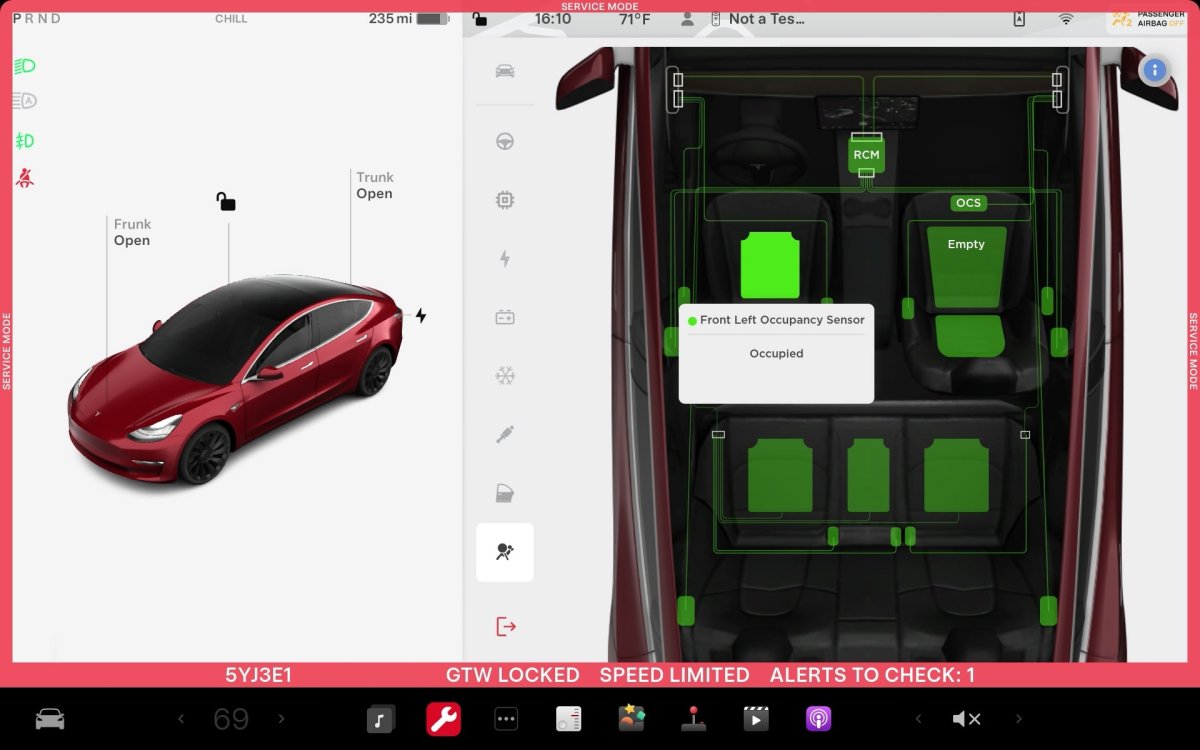
ECU Update Status Panel Updates – Non-CAN ECUs Added
The ECU Update Status panel now includes non-Controller Area Network (CAN) Electronic Control Units (ECUs), such as the Autopilot processors and Telematics Control Unit (TCU).
Models: Model S (2021+), Model 3, Model X (2021+), Model Y, Cybertruck
Next Update
Tesla has now started to roll out its next version, update 2026.8. While the big feature is the addition of Comfort Braking, it applies only to the new Model Y due to its unique braking system setup.
Installed on 15.5% of fleet
Last updated: Mar 16, 3:55 pm UTC
However, we already have a couple of undocumented features that have been included in the new update.
By Karan Singh
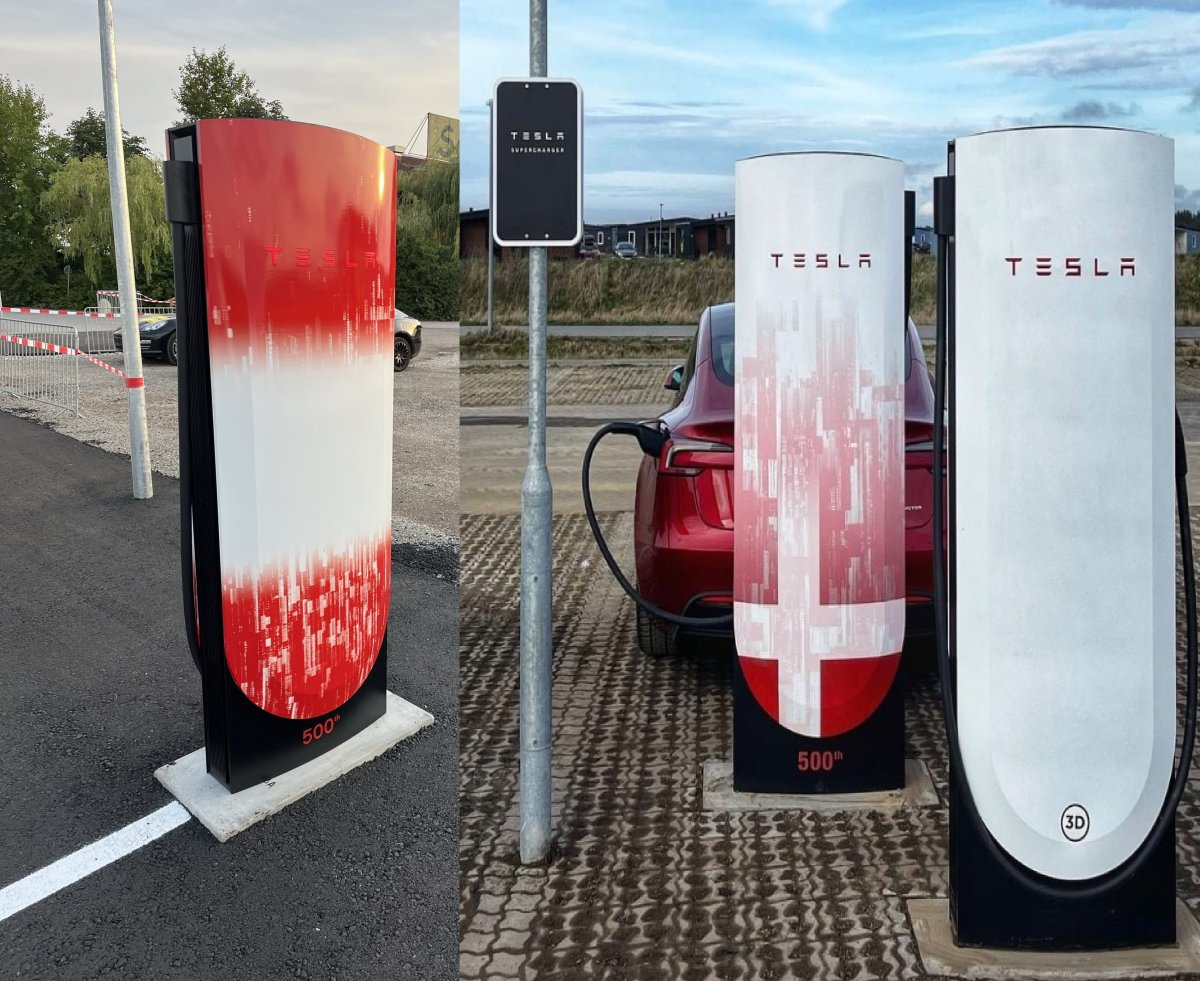
Tesla has been installing unique Superchargers when reaching certain milestones, and it has done so in various places around the world. Let’s take a look at these unique Superchargers and the milestones they commemorate.
Unit 10,000 – Shanghai
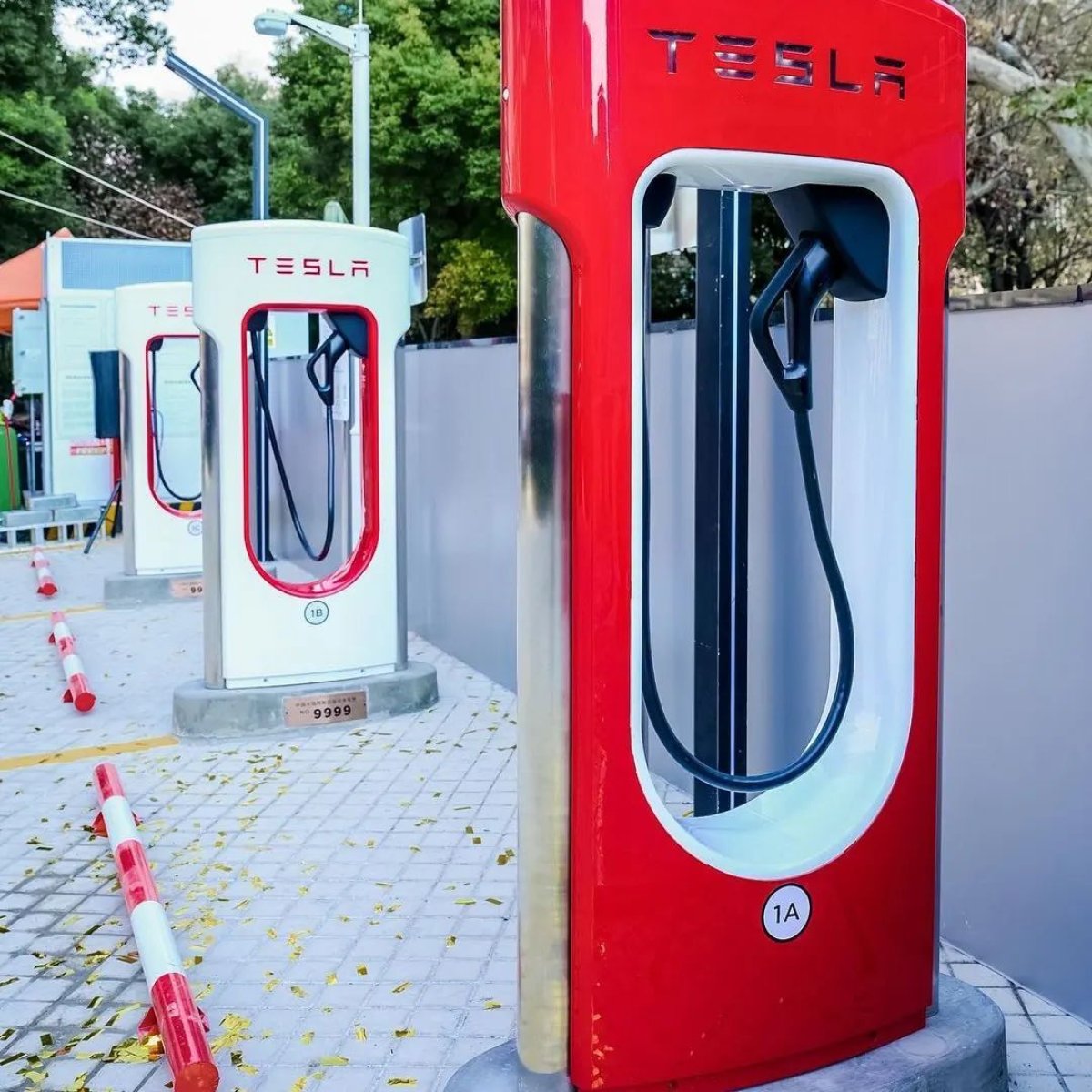
One of the first milestone Supercharger was installed in China – at the foot of the iconic Oriental Pearl TV Tower in Shanghai. This unit marked the 10,000th installation of a Supercharger – and it’s in iconic Tesla red. While not as fancy as the next one on our list, this one still stands out.
And the best part of this Supercharger site is that the neighboring chargers are also marked – so the units around it are units 9,998, 9,999, until reaching the iconic 10,000th Supercharger.
Unit 50,000 – Ultra Red in California
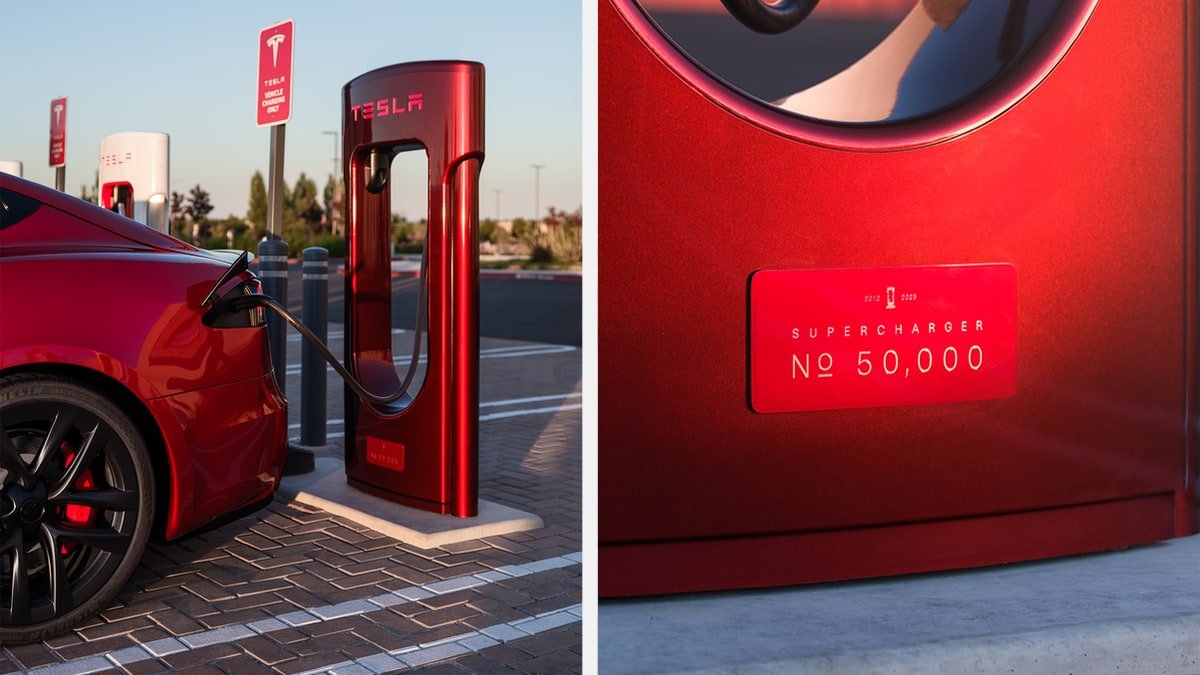
The first special Supercharger that Tesla installed was in 2023, when they installed an Ultra Red Supercharger. This one marks the 50,000th Supercharger installation globally, and it’s a beautiful shade of Ultra Red. Tesla installed this unit at Living Spaces, located at 1851 Freedom Way, Roseville, California.
In just 11 years, starting with the original 12 Superchargers in 2012, Tesla built over 50,000 fast DC chargers. Today it has over 75,000 Superchargers around the world as it continues to expand.
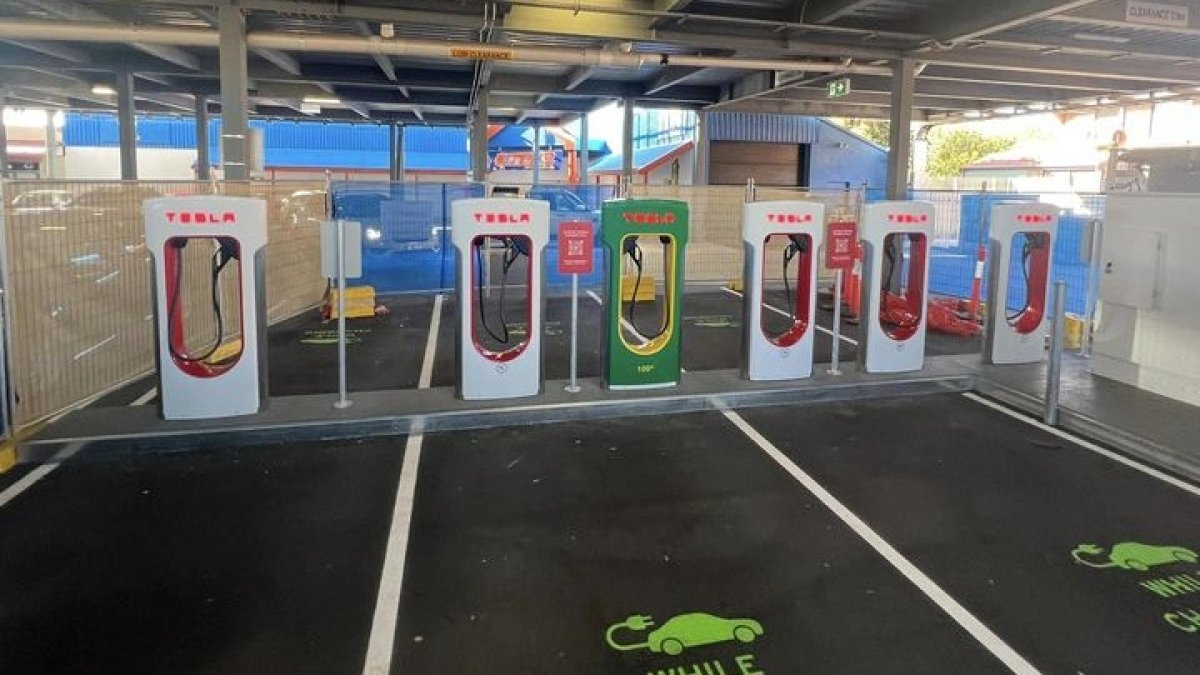
Australia 100th
Say g’day to our 100th Supercharger site in Australia!
📍Glenelg, South Australia pic.twitter.com/bBY8lcz34k
— Tesla Australia & New Zealand (@TeslaAUNZ) September 19, 2024
Tesla Australia and New Zealand celebrated the 100th Supercharger site install with a post on X. This unique yellow and green unit visited the beach for a photo shoot and then went on to get installed at a site in Glenelg, South Australia. It’s themed in Australian colors and definitely has an eye-catching and unique look, especially in comparison to the plain white and red of a regular Supercharger.
Hong Kong 400th
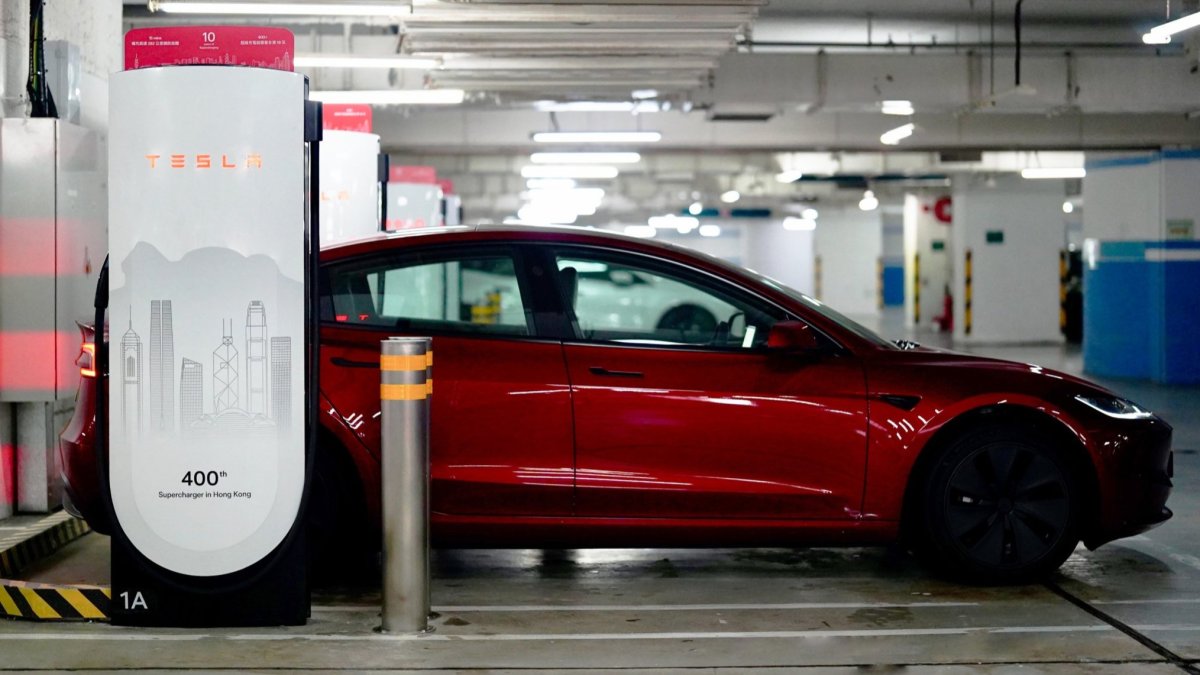
Hong Kong got its 400th Supercharger unit activated in August of 2024, and it’s decorated with a special wrap. This unit, in particular, is marked as #400 in Hong Kong and features an image of the Hong Kong skyline. On top of that, the unit was installed on the 10-year anniversary of the first Supercharger in Hong Kong (August 2014), so it’s an extra-special one.
500th Flag Design
Supercharger unit 500 in Austria, Denmark, and Japan also got some special treatment. The Austrian unit is draped with the Austrian flag, while the Danish unit is draped with the Danish flag. The neat part about these two, in particular, is their unique pixelated design. We’d say these are among the more distinctive Supercharger designs out there.
This could be the design that Tesla plans to celebrate the 500th unit installed in each country — a wrapped flag with a pixelated design. Sadly, it seems like the US and Canada won’t be receiving these, as they’re well past the 500 mark.
1,000th in South Korea
Number 1000 for South Korea is installed in Incheon-Yeonsu, and it’s marked with traditional Korean patterns. Like other milestone units, this Supercharger is raised on a small pedestal with a plaque celebrating the occasion.

1st in South America
Chile’s first Supercharger is also the first Supercharger in South America. Tesla launched their Supercharger network in South America in late 2024. At the same time as the opening of the first Supercharger, Tesla was introduced to Chile, with two stores opening in Santiago.
This one is another beautiful digital flag design on a V4 Supercharger.

Unit 60,000 – Japan
Interestingly, unit 60,000 is also next to number 600 in Japan. Unit 60,000 is in a lovely gray, while unit 600 for Japan has some spectacularly designed Origami cranes on it.

United Kingdom
Tesla installed this beautiful charger in the United Kingdom to celebrate its 2,000th Supercharger stall.
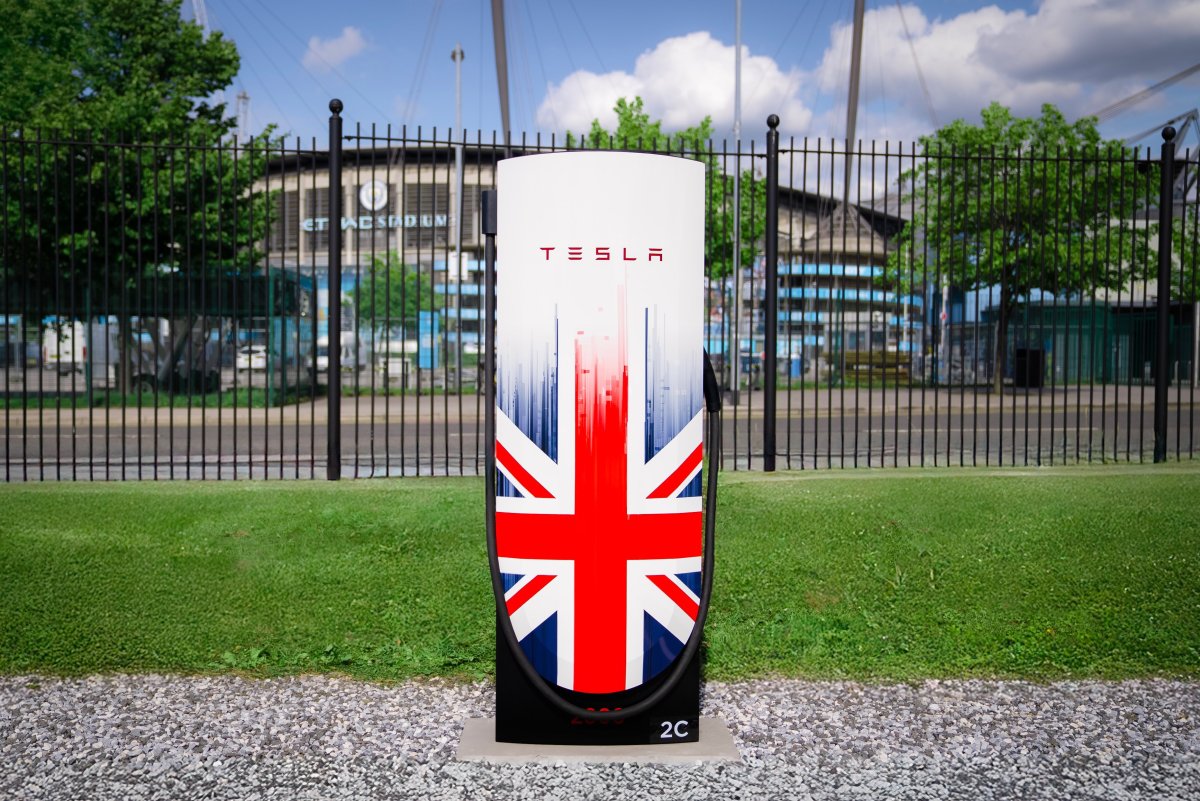
Tesla has continued these unique designs around the world. It makes it a special occasion when a customer encounters one of these unique Superchargers for the first time.
Taiwan
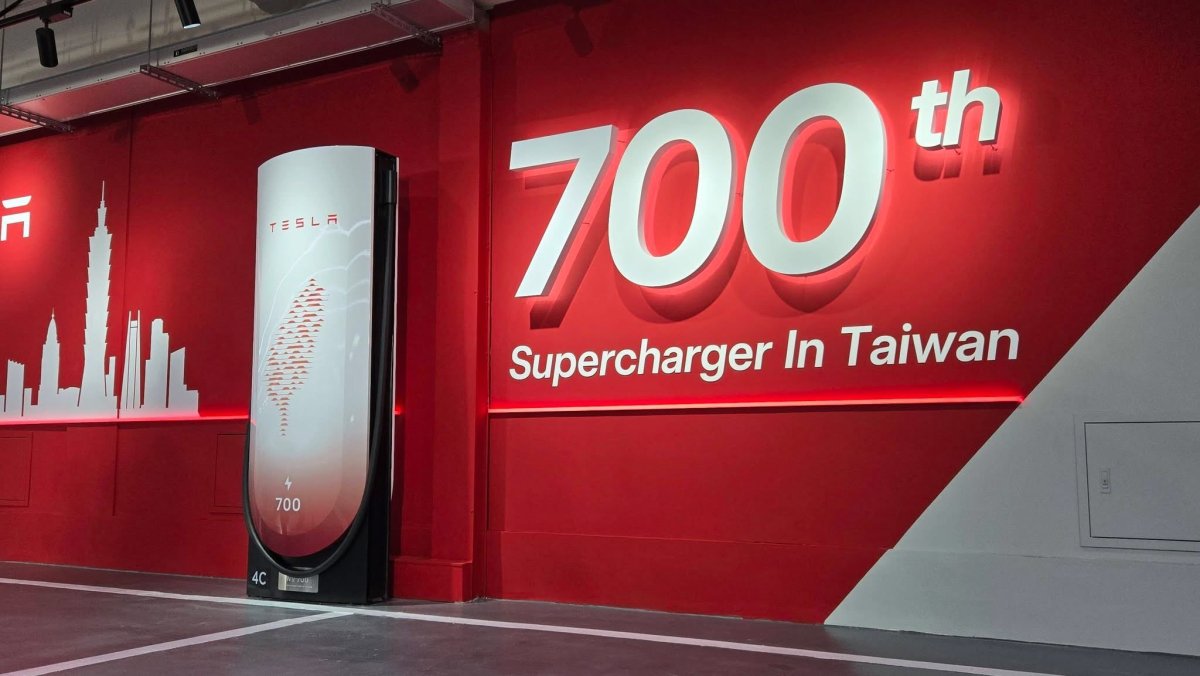
This Supercharger site commemorates Tesla’s achievement not only on the Supercharger itself, which celebrates the 700th unit in Taiwan, but also for the entire site, which is painted Tesla red and features 700 in large, lit-up numbers.
Saudi Arabia
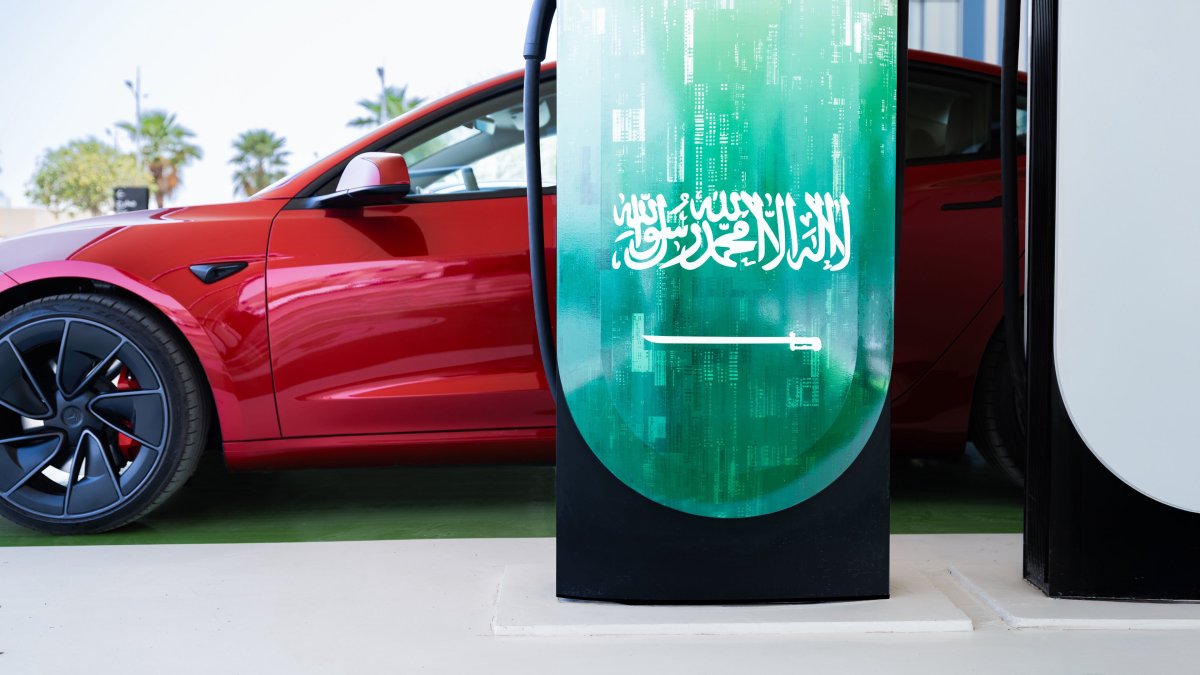
This unique charger celebrates the first Supercharger installed in Saudi Arabia. One of the most unique aspects of these Superchargers is seeing them in unique colors when we’re so often used to seeing the white/red Tesla chargers.
All of these Tesla Supercharger designs are great and bring a sense of national pride to something as simple as charging your vehicle. They not only celebrate Tesla’s milestone but also honor the country where they’re installed.
Maybe we’ll eventually get some special designs for our Wall Connectors, too?
By Karan Singh
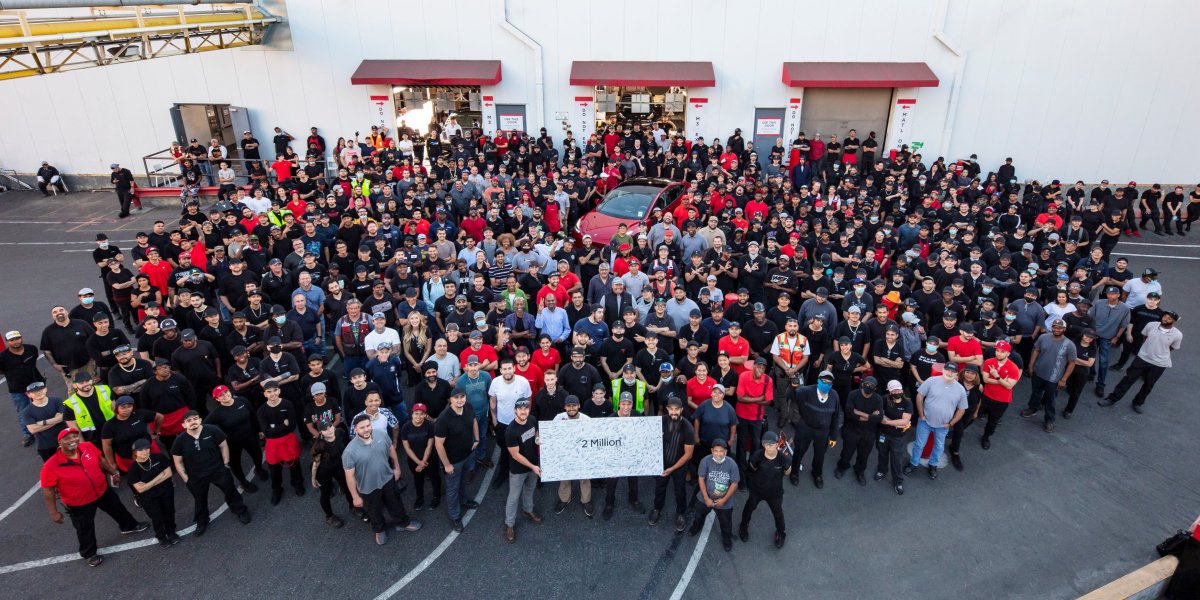
For the better part of a decade, Tesla didn’t just have customers – it had evangelists. People spoke out about the company, defended its values, and advocated for it in a form that was completely unique for an automaker, much less any major company.
Tesla built its empire on the backs of early adopters who were willing to overlook panel gaps, software bugs, and bare-bones service centers because they believed in the mission. They were part of a club.
But as we move deeper into 2026, that relationship has fundamentally changed. As Tesla shifts its focus from satisfying its dedicated base to capturing the mass market and maximizing quarterly margins, its executives are developing a habit of chasing short-term profits at the direct expense of long-term brand loyalty.
The Illusion of Loyalty
Nothing illustrates this shift quite like Tesla’s recent treatment of its veteran owners. Just recently, Tesla quietly slashed its existing owner loyalty discount in half, dropping it from $1,000 to just $500, while simultaneously removing its premium Model S and Model X from the referral program entirely.
But the true slap in the face to early adopters has been the ongoing Full Self-Driving (FSD) transfer saga. For years, owners begged Tesla to tie their $8,000 to $15,000 software purchases to their accounts rather than the physical cars. Tesla has, from time to time, as a demand lever, allowed customers to transfer FSD.
Each and every time, Elon Musk has said, “This is the last time.” Tesla has repeatedly dangled, yanked away, and resurrected the transfer offer exclusively to juice end-of-quarter delivery numbers. It turns the company’s most dedicated software beta testers into pawns to hit financial targets.
Now, it appears that this time is truly the last, and rather than being generous in their interpretation, Tesla flipped the tables on customers. In January, they adjusted the terms of their offer to state that orders placed by March 31st were eligible for FSD transfer. Then, in late February, they switched it around – only orders delivered by then were eligible, leaving customers hanging – especially those who purchased the new AWD Dual Motor Cybertruck.
Pricing Whiplash
This transaction mindset has heavily bled into how Tesla prices its vehicles, particularly the Cybertruck. The launch of the long-awaited pickup was supposed to be a triumph for the reservation holders who gave Tesla free interest loans for half a decade.
Instead, early reservation holders were met with the massive markup of the mandatory Foundation Series. Many, including myself, still went ahead with the purchase of the Foundation Series, because we fell in love with the Cybertruck and the future of Tesla.
Let me flat out say it here: I love the Cybertruck, and the Foundation Series was the best vehicle purchase I have ever made.
On launch, the Cybertruck didn’t have FSD, Summon, Autopilot, or a myriad of other autonomy features. When it finally got FSD, it was a lacking experience, and it is still missing Summon today. With the official cancellation of Autopilot, Tesla is now not even including basic lane keeping in any part of its lineup – a feature now found standard on a base-level Honda Civic or Toyota Corolla.
Recently, Tesla finally introduced the new AWD Dual Motor Cybertruck, offering a “Standard” experience, and moving the existing trim to a new “Premium” branding. This new cut-down trim was a massive step up from the failed and cancelled launch of the Cybertruck Long Range last year. Most importantly, it was affordable at $59,990, and allowed many old reservation holders to finally convert their original orders or follow up and get the vehicle of their dreams.
But hours after its launch, Elon Musk posted on X and said the pricing would only last for 10 days. There was no indication on whether that meant the end of this new trim, or whether the price would go up or down, or by how much. Finally, 10 days later, Tesla hiked the price by $10,000 to $69,990, making it unaffordable once again.
FSD Transfer Issues
Many of Tesla’s loyal owners who owned FSD saw this new Cybertruck – and saw the deal it represented. It was finally a chance for them to get a new, modern vehicle – and transfer FSD to boot. With the change of terms and the fact that Tesla won’t even begin AWD Dual Motor deliveries for months past the new deadline, all these owners are left high and dry.
They can either find an inventory vehicle to transfer to if they want to upgrade now before the transfer period ends, or they will be forced to subscribe to FSD once they finally receive their new vehicle.
Stagnation at the Top
While Tesla squeezes its existing lineup for margins, its actual automotive innovation has begun to stall. Tesla is actively winding down the flagship Model S and Model X to make room for its robotics and autonomous goals, and hasn’t released any major updates to its flagship vehicles for years, barring last year’s minor refresh.
Many buyers expected the refresh to include significant new features such as steer-by-wire, 800V architecture, V2L support, and other features found in the Cybertruck.
With the death of the S and X, Tesla’s lineup is looking increasingly utilitarian at a time when the competition is fiercely innovating. While legacy automakers and new startups like Lucid and Porsche are rolling out 800-volt architectures, massive range milestones, and true luxury interiors, Tesla has largely rested on its laurels.
Just this week, BYD introduced a new consumer vehicle battery that charges at a 1MW peak, while holding at high C rates – putting even the 500kW peak that the Cybertruck achieves for a few seconds to shame.
Aside from the welcome but incremental changes with the Juniper and Highland refreshes of the Model Y and Model 3, the core vehicle hardware feels stagnant. Tesla is no longer the undisputed king of range or charging speed, yet they seem disinterested in fighting to win those crowns back.
Abandoning the Track
While legacy automakers are out setting Nürburgring lap times and fighting for motorsport dominance, Tesla seems to have completely lost its appetite for performance supremacy. It has been years since Tesla made any meaningful effort to conquer Pikes Peak, and the mythical, track-destroying Model S Plaid+ was unceremoniously killed off before it ever saw an assembly line. Today, there appears to be absolutely zero corporate ambition to develop dedicated race vehicles or push the absolute physical limits of EV track performance.
This newfound apathy isn’t just limited to the asphalt; it extends to the dirt, too. When the Cybertruck launched, its dedicated Off-Road Mode felt like the opening salvo for a rugged, overlanding ecosystem. Instead, it was a once-and-done inclusion. Tesla never went back to meaningfully iterate on its off-road software capabilities, nor have they released a substantial lineup of first-party accessories to support the rugged lifestyle they aggressively marketed.
Look no further than the infamous Cybertruck roof lightbar: years after launch, it is still not available to purchase in the official Tesla Shop, and it remains glaringly absent from the vehicles of early customers who paid a massive premium expecting the hardware.
Service Center Reality
All of this culminates in the grim reality of the modern Tesla service experience. As the company has broadened its reach to sell millions of Model 3s and Model Ys, the service infrastructure has failed to keep pace with the culture it initially built.
What used to be a highly communicative, premium service experience has been reduced to an automated, app-only queue. Reports of weeks-long wait times, unavailable parts, and a stark lack of human communication have become the norm rather than the exception. Tesla is scaling its sales like a legacy automaker, but treating its service centers like tech support for a smartphone.
The Cost of the Mass Market
It is completely understandable that Tesla needs to evolve. You cannot become the most valuable automaker on Earth by solely catering to a niche group of early-adopting tech enthusiasts.
However, brand loyalty is a finite resource. By continuously weaponizing FSD transfers, treating vehicle pricing like a day-trading exercise, letting its premium features stagnate, and allowing service to degrade, Tesla is eroding the very foundation of evangelists who built the company.
They may be successfully squeezing out short-term profits today, but they are mortgaging the fierce customer loyalty they will desperately need tomorrow.
We’re still loyal fans, but we’d like to see Tesla take a moment and reflect back on just how they got here today – and maybe throw a bone to long-term supporters once in a while.
First Appeared on
Source link






