


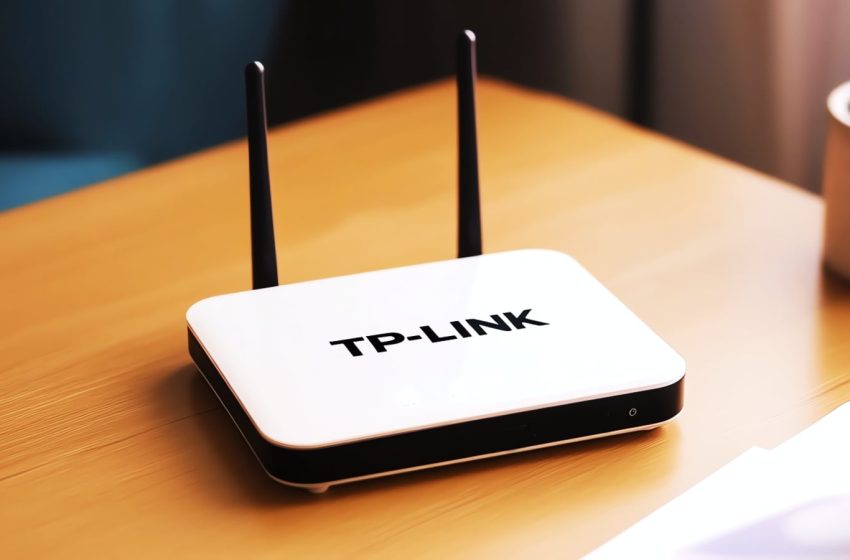
Texas sues TP-Link over Chinese hacking risks, user deception
Texas sued networking giant TP-Link Systems, accusing the company of deceptively marketing its routers as secure while allowing Chinese state-backed hackers to exploit firmware vulnerabilities and access users’ devices.
The lawsuit follows an investigation launched in October and claims that TP-Link misled buyers by labeling its products “Made in Vietnam” while sourcing nearly all components from China. According to Texas Attorney General Paxton, this is important because Chinese law can compel companies with Chinese supply-chain ties to cooperate with government intelligence requests and hand over user data.
“This week, my office is launching a coordinated series of actions against CCP-aligned companies to send a clear message that in the Lone Star State we will always put Texas and America First,” said Paxton. “TP Link will face the full force of the law for putting Americans’ security at risk. Let this serve as a clear warning to any Chinese entity seeking to compromise our nation’s security.”

The suit points to a history of security failures, including firmware vulnerabilities exploited by Chinese hacking groups and the company’s routers being used in a large-scale credential-theft botnet later linked to password-spray attacks.
As Microsoft reported in October 2024, this botnet (tracked as Quad7, CovertNetwork-1658, or xlogin) was built from hacked home and small-business routers (primarily TP-Link devices) and operated by Chinese threat actors.
“Despite its claims of privacy and security, TP Link’s products have been used by People’s Republic of China’s (“PRC”) state-sponsored hacking entities to launch multiple cyber-attack operations against the United States,” Paxton added.
“With nearly all of its products’ parts imported from China, TP Link’s deliberate deception towards Texans regarding the nationality, privacy, and security capabilities of its networking devices is not just illegal—it is also a national security threat that enables the secret surveillance and exploitation of Texas consumers.”
Paxton now seeks civil monetary penalties and injunctions that would require TP-Link to disclose the Chinese origins of its devices and stop collecting consumer data without informed consent.
Federal agencies have previously flagged actively exploited flaws in TP-Link hardware, and CISA currently lists half a dozen TP-Link security flaws in its catalog of vulnerabilities known to be exploited in attacks.
In December 2024, the U.S. government was also reportedly considering banning TP-Link routers, with the U.S. Departments of Justice, Commerce, and Defense investigating the issue, and at least one Commerce Department office having subpoenaed the company.
More recently, in December 2025, the Texas Attorney General sued five major television manufacturers (i.e., Sony, Samsung, LG, and China-based companies Hisense and TCL Technology Group Corporation), accusing them of secretly and illegally collecting their users’ data using Automated Content Recognition (ACR) technology.
A TP-Link spokesperson told BleepingComputer today that Texas Attorney General Paxton’s allegations are “without merit and will be proven false,” that neither the Chinese government nor the Chinese Communist Party (CCP) exercises control over the company, its products, or user data, and added that all U.S. user data is stored on Amazon Web Services servers.
“TP-Link Systems Inc. is an independent American company. Neither the Chinese government nor the CCP exercises any form of ownership or control over TP-Link, its products, or its user data. TP-Link’s founder and CEO, Jeffrey Chao, resides in Irvine, CA, and is not and never has been a member of the CCP,” the spokesperson said.
“To ensure the highest level of security, our core operations and infrastructure are located entirely within the United States, and all U.S. users’ networking data is stored securely on Amazon Web Services servers. We will continue to vigorously defend our reputation as a trusted provider of secure connectivity for American families.”
Update February 19, 11:19 EST: Added TP-Link statement.

Modern IT infrastructure moves faster than manual workflows can handle.
In this new Tines guide, learn how your team can reduce hidden manual delays, improve reliability through automated response, and build and scale intelligent workflows on top of tools you already use.
First Appeared on
Source link






