


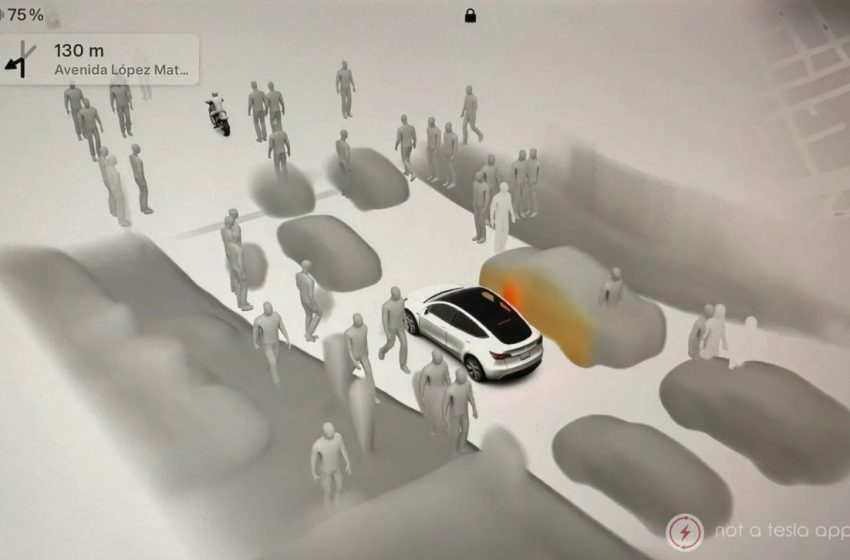
The Best Features Tesla Has Added Over the Years With Software Updates
By Not a Tesla App Staff
For decades, the idea of a car getting better after it left the dealership was unheard of. You bought a vehicle, and that was it — short of a physical recall or a DIY modification, your car would never gain a new feature. Tesla completely flipped that script with its software-first approach. By treating the vehicle’s infotainment system like a smartphone, the company has rolled out massive, game-changing features for free over the years.
As we look back at the history of these updates, the community is currently waiting for what could be the ultimate “final boss” of Tesla software: Unsupervised Full Self-Driving. While we aren’t quite at a global rollout yet, we have already seen a glimpse of this future. Recently, Tesla launched completely unmanned Robotaxi rides in Austin, where vehicles have begun picking up passengers without a driver or even a safety monitor inside. It is a historic milestone that highlights just how far the software has come.
But before we reach that fully autonomous future, let’s count down the most impressive features Tesla has gifted owners over the years.
Full Self-Driving (Supervised)
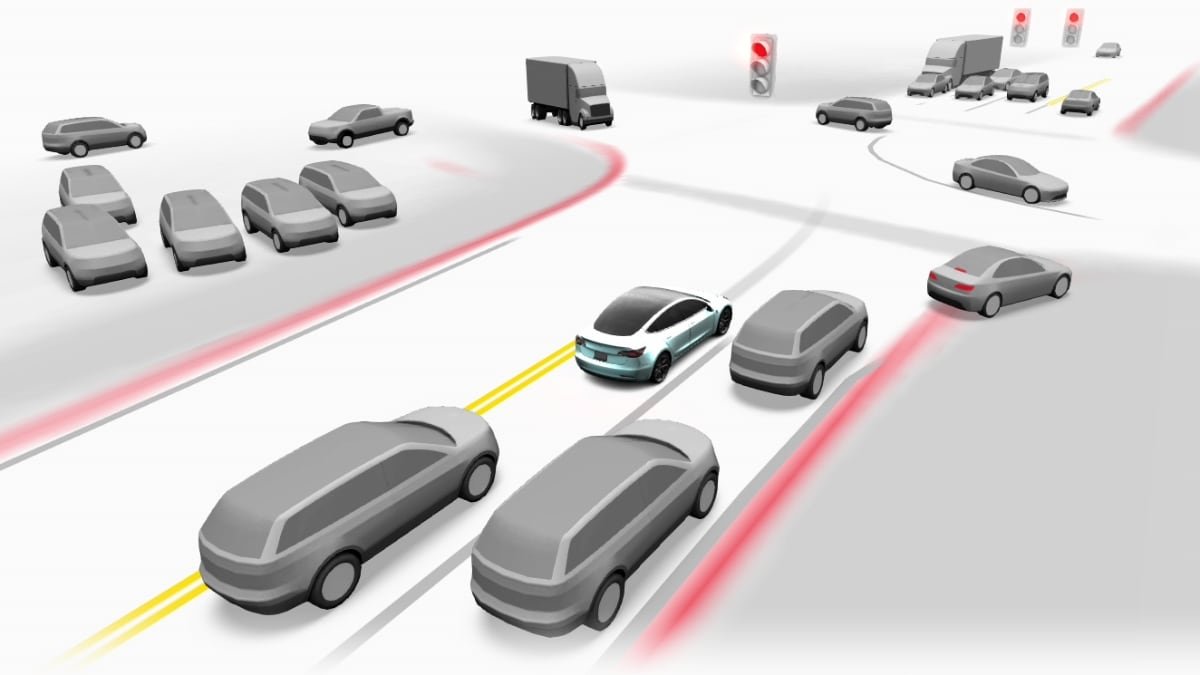
The crown jewel of Tesla’s software has always been its driver-assistance suite. While Full Self-Driving (Supervised) is now a household name, it was built layer by layer through years of data collection. For those lucky enough to get into the beta early on, you really understand how far the software has come. The vehicle can now navigate city streets, handle traffic, wait for pedestrians, and automatically park itself at the destination.
Navigate on Autopilot
One of the first major leaps toward FSD was Navigate on Autopilot, which allowed the car to guide itself from an on-ramp to an off-ramp. This includes automatic lane changes and handling highway interchanges. It changed long-distance road trips from a chore into a more relaxed experience.
In a push to increase FSD adoption and away from the more primitive Autopilot, Tesla recently discontinued the latter, removing it from all new vehicles and leaving them with just Traffic Aware Cruise Control (TACC) instead.
AutoPark
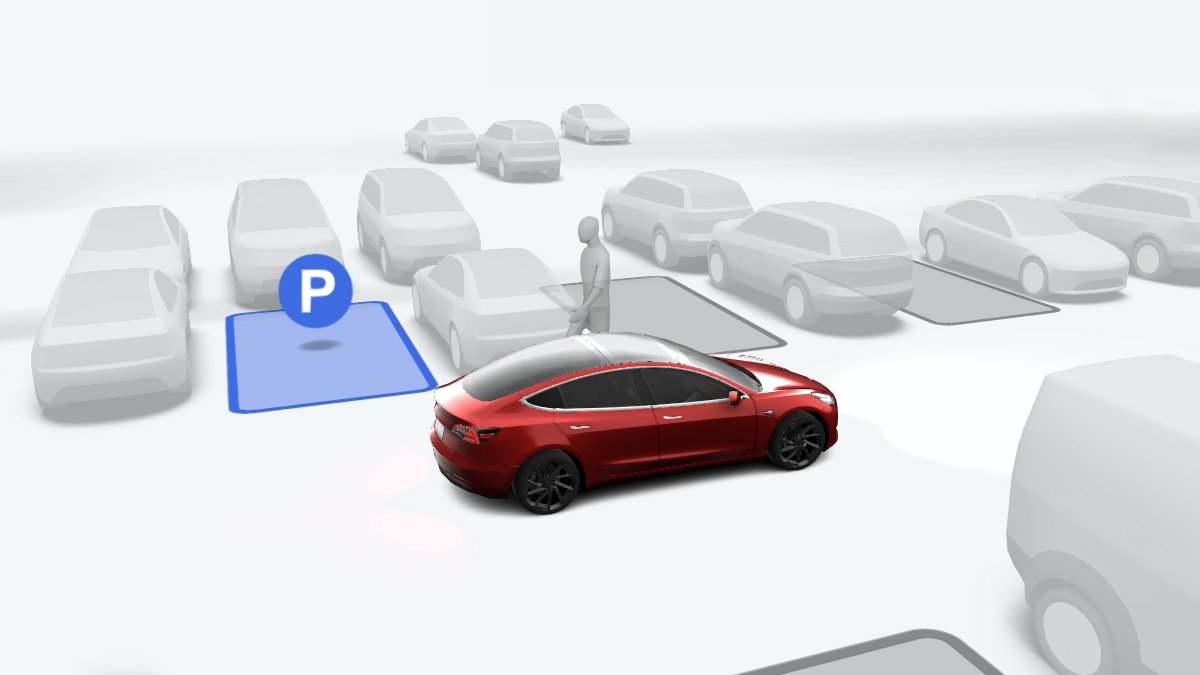
Tesla released AutoPark through a software update in 2019, but more recently, it has completely revamped it to be faster and more accurate. If you have FSD, your vehicle will even seek out a parking spot and park itself for you.
Boombox / Custom Lock Sounds
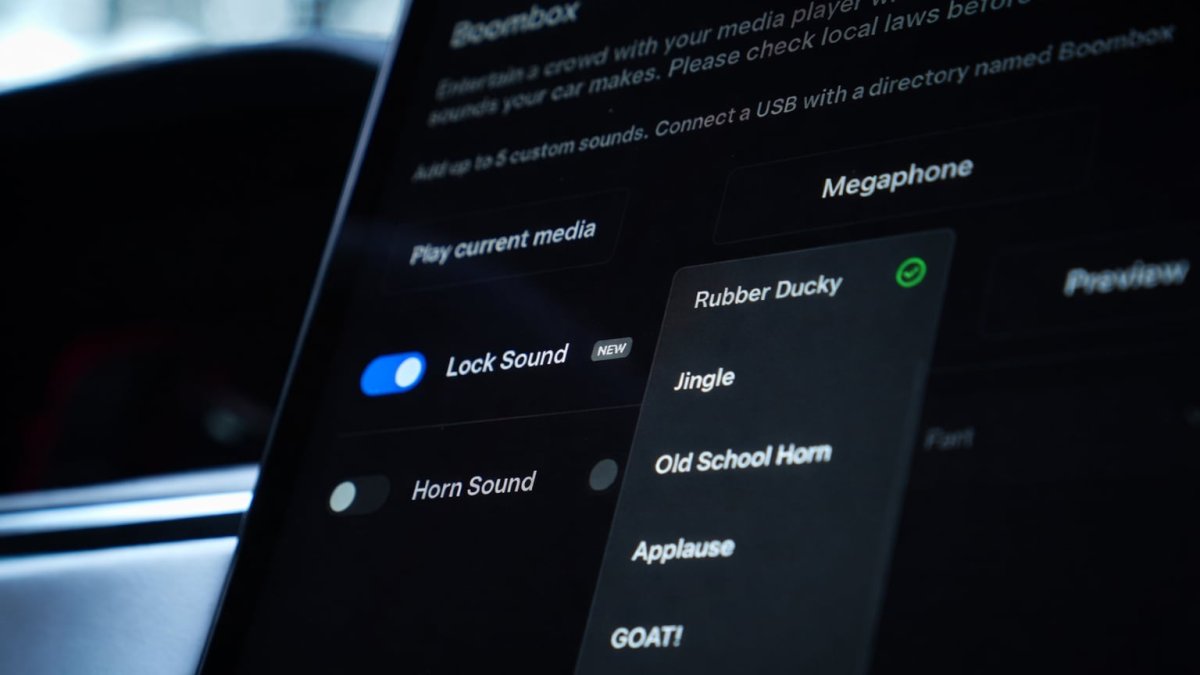
Back in 2023, Tesla added the ability to replace the standard “honk” when locking the car with custom sounds. Owners can choose from pre-loaded sounds like the Light Cycle from the Tron franchise by going to Toybox > Boombox > Lock Sound, or even upload their own via a USB drive.
Other Boombox features allow you to change the vehicle’s horn sound when parked, play music over the external speaker, and more.
Tesla Theater
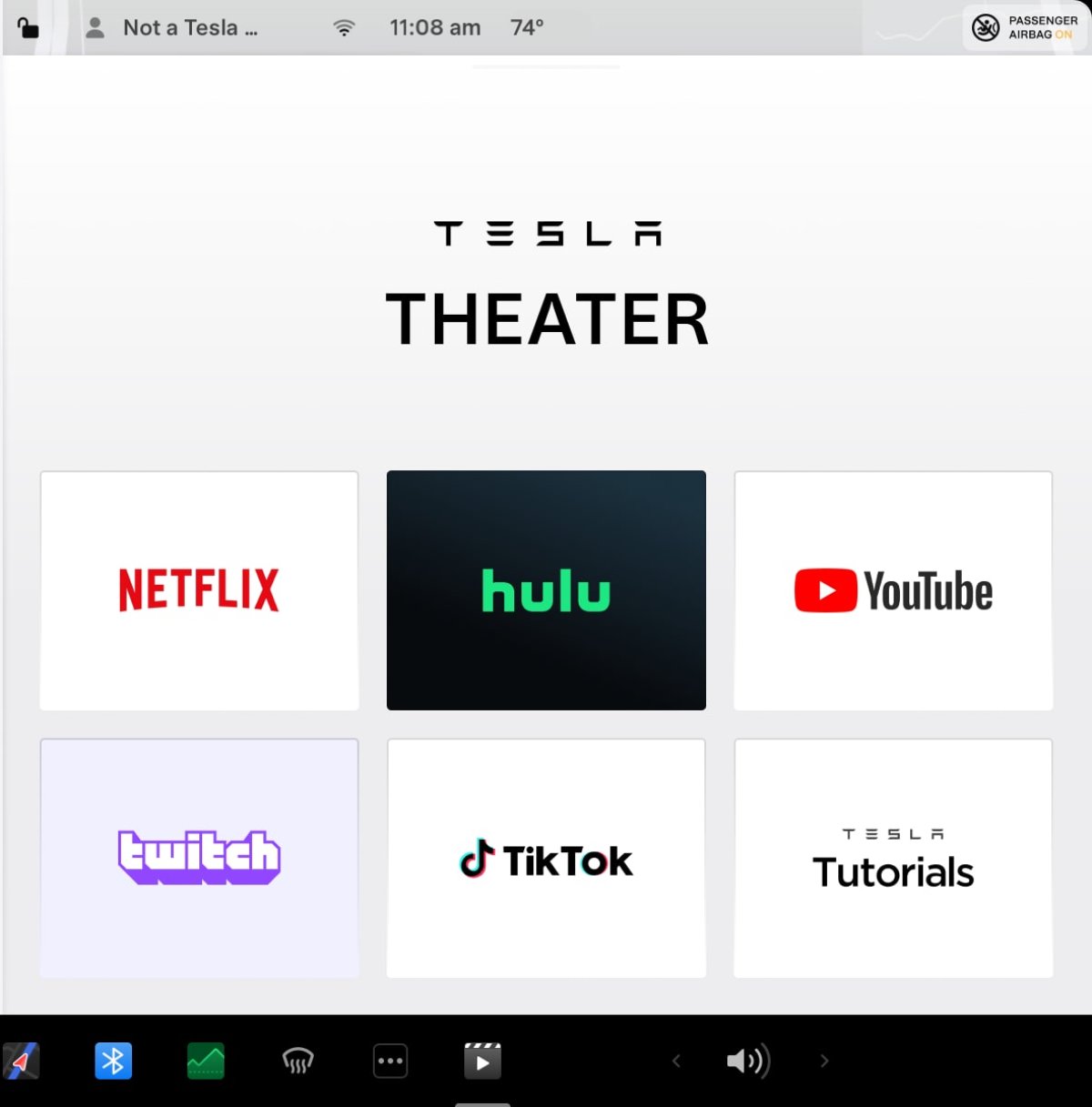
When your car is parked, Tesla wants it to be a lounge. The introduction of Tesla Theater back in 2019 brought apps for Netflix, YouTube, and Disney+ to the center screen. It allows owners to watch their favorite shows or videos while waiting at a Supercharger.
With a little workaround, you can even watch any web streaming service on your vehicle’s rear screen.
Video Games
Tesla Arcade, which started as TeslAtari, initially included classic Atari titles such as Centipede, but has since evolved into a modern video game hub. One of the coolest recent additions is the ISS Docking Simulator, which uses controls based on actual NASA interfaces. Owners can even use the car’s steering wheel to play certain titles. Beach Buggy Racing lets drivers compete on leaderboards at their local Supercharger.
High Fidelity Park Assist
To go along with AutoPark, Tesla also added High-Fidelity Park Assist, which renders the world around you onto the screen. This 3D representation of the world lets you see what the car understands and warns you when you’re getting too close to nearby objects, whether they’re in front of your vehicle or off to the side. Unlike the FSD visualizations, this feature creates its own 3D models that accurately represent the surroundings.
Car Wash Mode
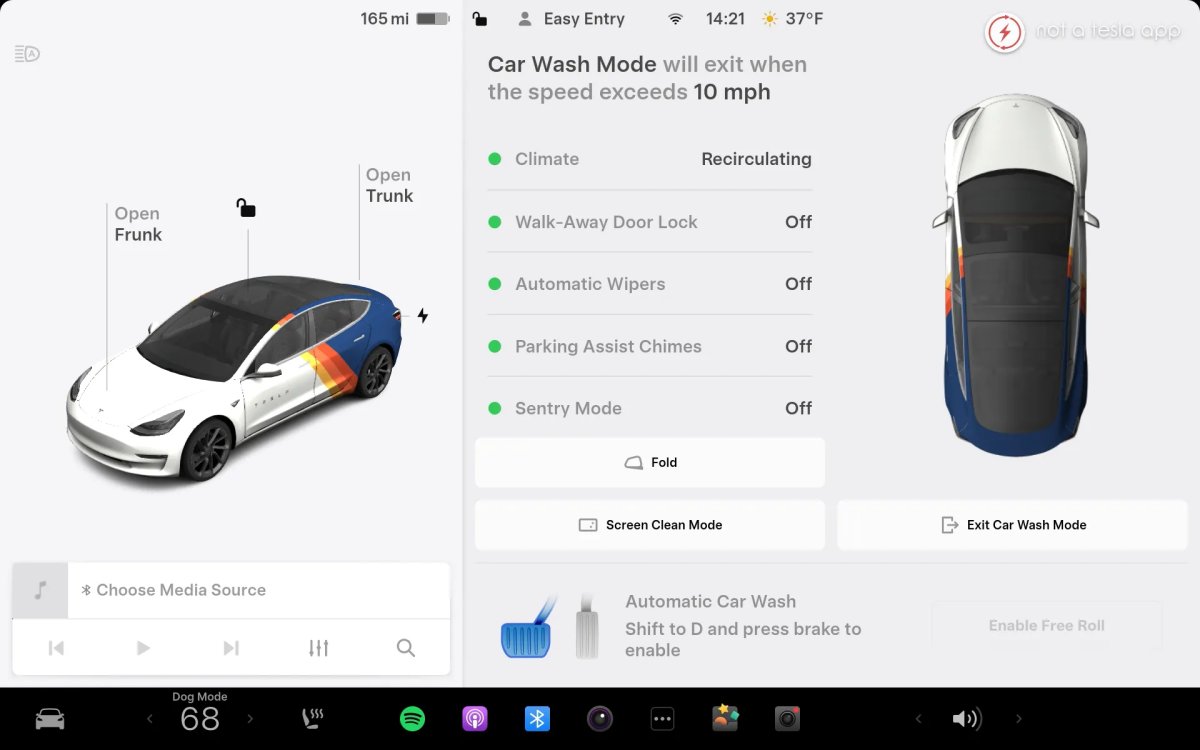
While it’s not difficult to go to a car wash with your vehicle, Tesla made it even easier with Car Wash Mode. This mode automatically disables important features in your vehicle while going through a car wash, like the auto wipers. However, it also makes it easier to put your vehicle in neutral and enables other convenient changes, such as disabling parking chimes and the HVAC system. The vehicle will even warn you if any windows, doors, or the trunk are left open.
Emergency Braking and Collision Avoidance
Tesla often adds safety features before regulators even ask for them. Features such as Automatic Emergency Braking were improved with a software update to respond to perpendicular dangers, such as a vehicle crossing at an intersection or when the vehicle is traveling in reverse.
This was pushed out to virtually the entire fleet, making older cars significantly safer overnight.
Lane Departure Avoidance
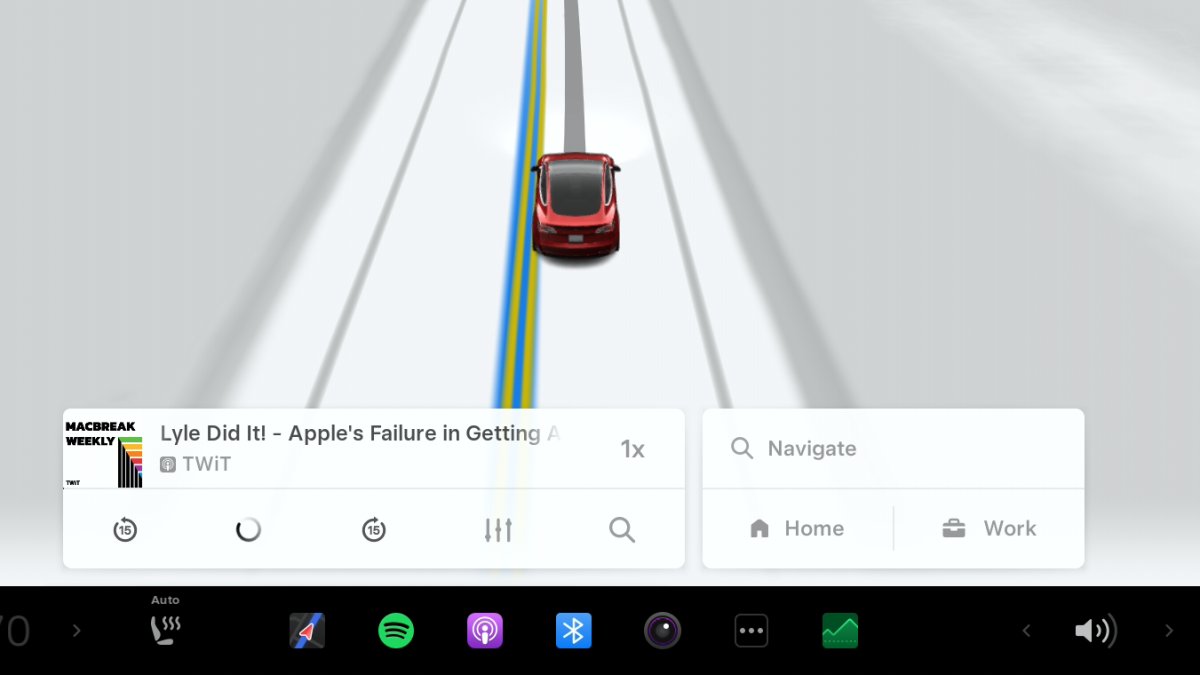
Emergency Lane Departure Avoidance used to issue warnings if the car drifted outside of its lane. However, in an update, Tesla added the ability for the vehicle to apply corrective steering and automatically return to its lane. Tesla detects if the vehicle is drifting without a turn signal, and if it’s traveling over 40 mph, it’ll automatically steer the vehicle back into its lane. It has become an additional safety layer that helps prevent accidents caused by driver distraction and fatigue.
Additional Music Services Expansion
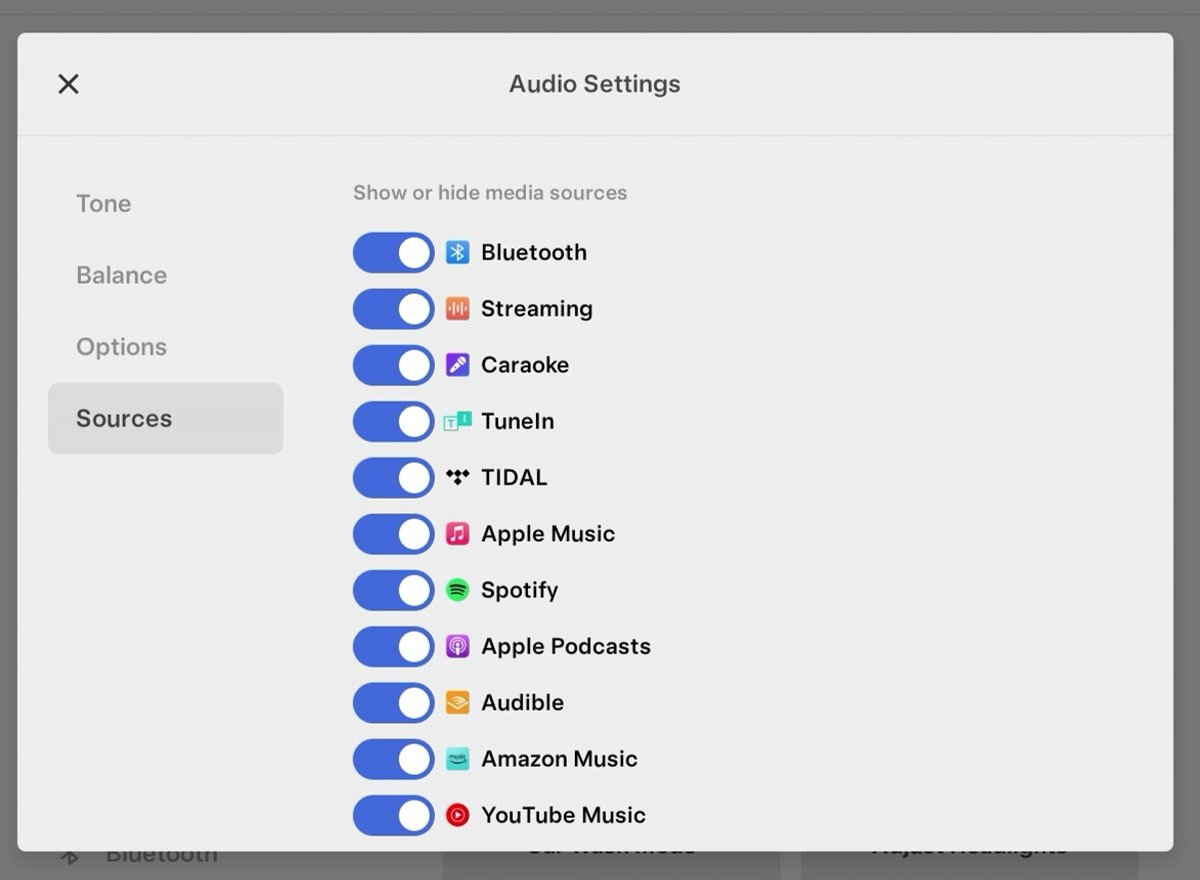
Tesla has significantly expanded its Music Services beyond the original LiveOne option. For any buyers who have had a Tesla for several years, they’ve witnessed Tesla adding a variety of music services, including Spotify, SiriusXM, Apple Music, Amazon Music, and YouTube Music, among others.
Apple Podcasts Integration
Tesla finally brought native Apple Podcasts integration to its infotainment system in 2023. It allows for seamless syncing of your favorite shows and playback progress between your phone and your car.
Grok Voice Assistant
In a major push toward artificial intelligence, Tesla integrated xAI’s Grok chatbot right into its operating system. And, a few software updates later, Grok can now even set and edit navigation destinations and act as a personal guide. You can use natural language to find specific types of stops along your route or easily navigate to your favorite destinations.
Dashcam and Sentry Mode
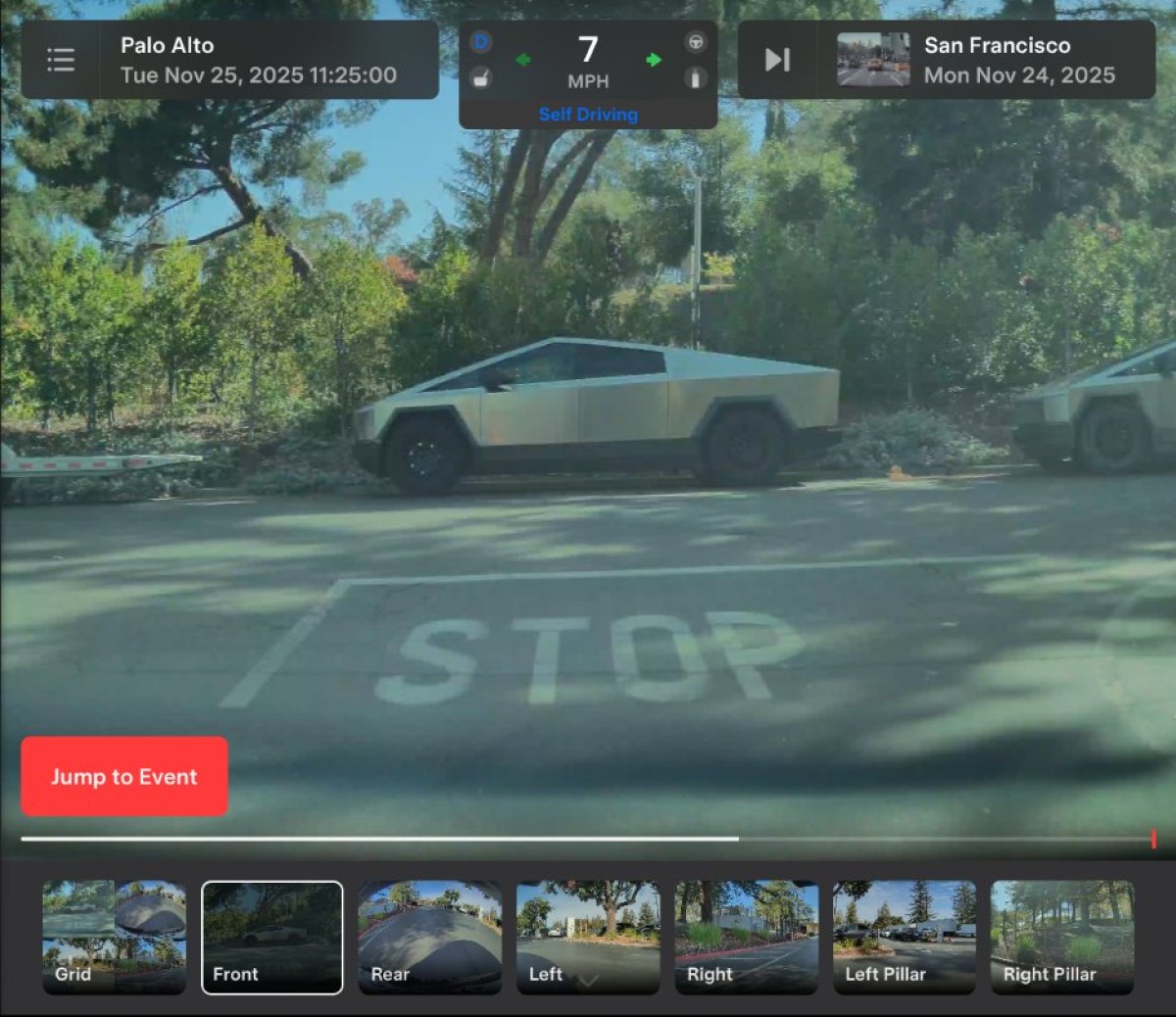
Sentry Mode uses the car’s external cameras to monitor the surroundings while parked. Meanwhile, the Dashcam feature records footage while driving, which now also includes telemetry like speed and steering angle.
This is an example of a feature that Tesla not only added through a software update but has also continuously improved. Tesla has added vehicle data to the UI, added app support, improved the layout, increased the number of cameras recorded, and more.
Tesla Light Show
For those who want a bit of flair, the Tesla Light Show allows your car to dance to music by flashing its lights and moving its mirrors. While Tesla continues to add new songs with updates, they also let you create your own, custom light show.
Auto High Beams
This feature automatically switches between high and low beams based on detected light and traffic. It prevents the driver from manually turning their high beams on and off.
Adaptive Headlights
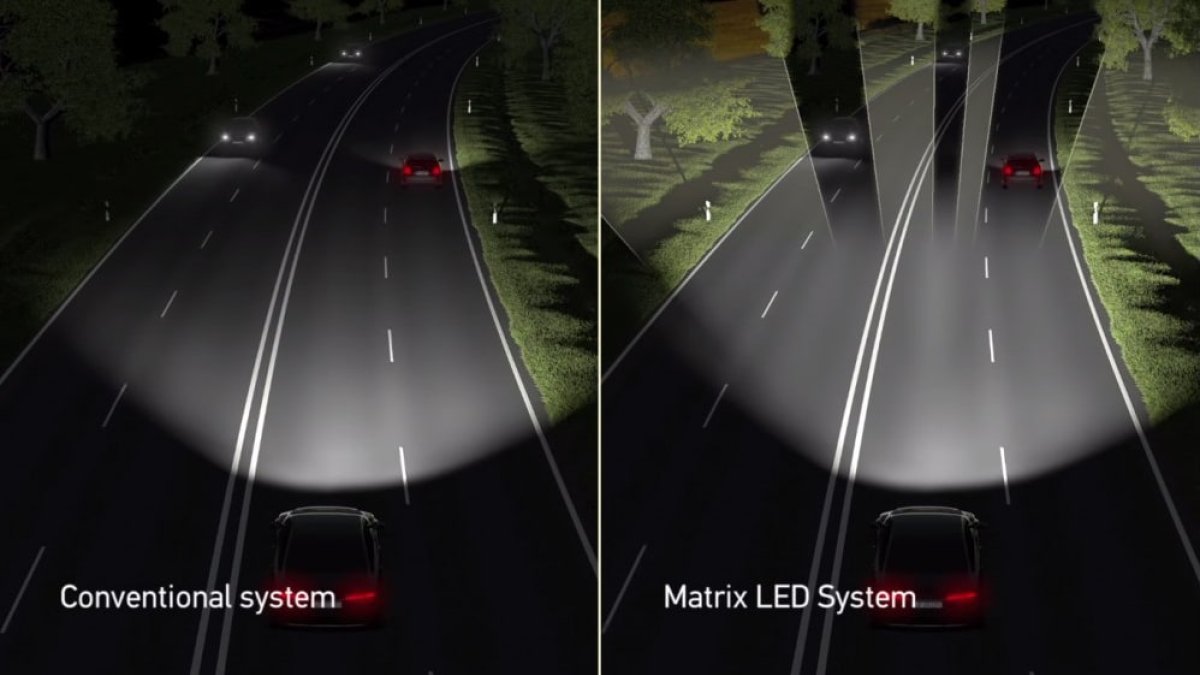
Adaptive Headlights take lighting a step further by keeping high beams on longer and selectively dimming areas with other vehicles. These headlights are made up of an array of pixels, and the vehicle is able to turn off individual light pixels around oncoming vehicles to reduce glare for those drivers, leaving you with an almost entirely lit-up road.
Auto Wipers
Even basic hardware, such as wipers, has received software-driven upgrades from Tesla. While Tesla’s Auto Wipers aren’t the best in the industry, the company has refined them using neural networks to better detect rain without requiring an additional sensor.
Dog Mode, Camp Mode, and Keep Climate
These climate features allow owners to maintain cabin temperature while parked. Dog Mode keeps pets safe with an on-screen message for passersby. Camp Mode keeps the car powered for overnight stays, while “Keep Climate” simply maintains the temperature while you run a quick errand.
Parental Controls
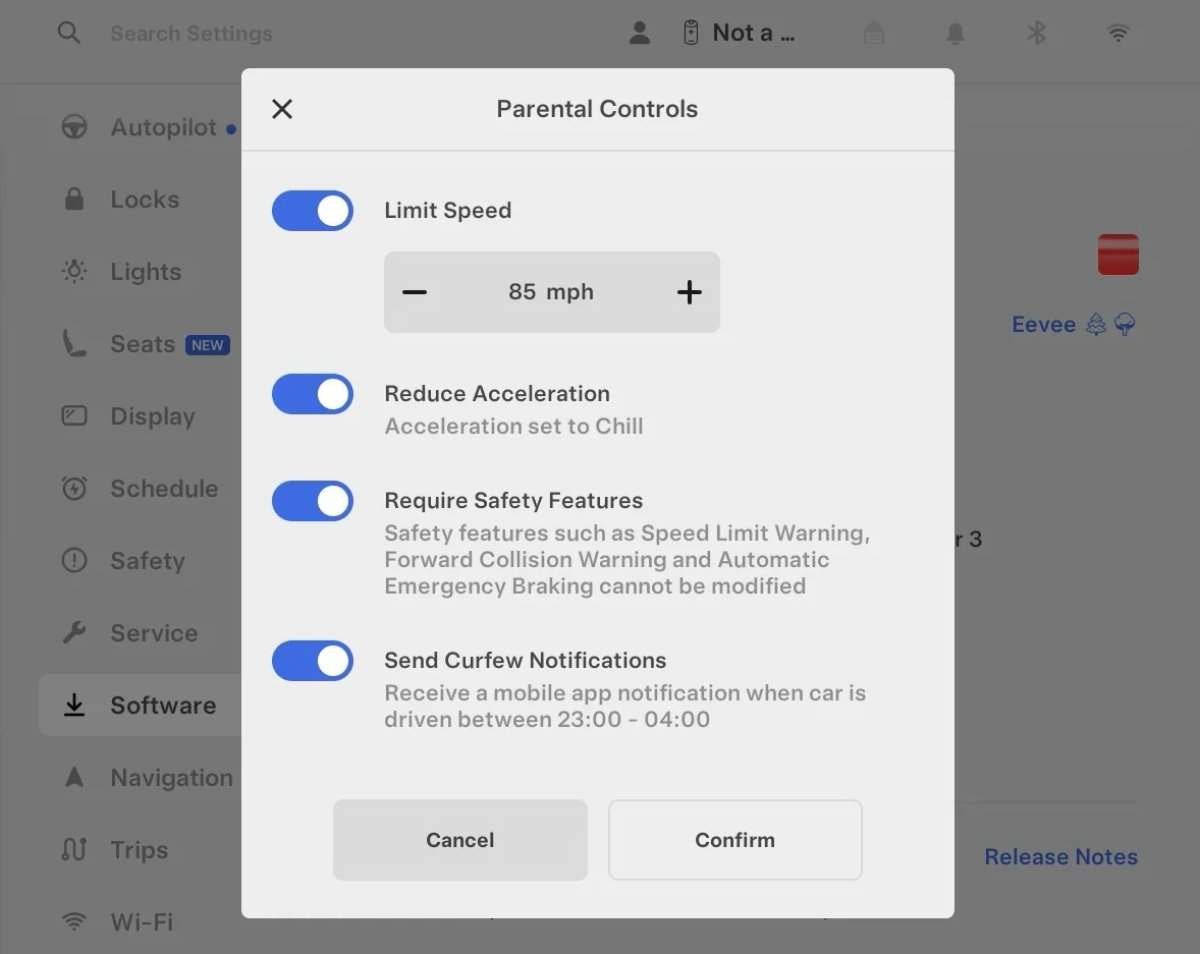
The introduction of Parental Controls allows parents to keep their teens safer by setting a maximum speed limit, reducing acceleration and preventing safety critical features from being turned off.
Valet Mode
Tesla’s Valet Mode keeps your car safer when using valet services. Not only does it prevent hard acceleration and lock the glove box, but it also keeps your personal information safe.
While Valet Mode is enabled, the driver won’t be able to see your home, work, or recent addresses. HomeLink is disabled, your calendar is not available, FSD is disabled, and more.
PIN to Drive / PIN to Open Glovebox
PIN to Drive adds an extra layer of security by requiring a four-digit code before the car can be shifted out of park. This helps prevent theft, even if someone gains access to your phone or key card.
Tesla also added the ability to lock the glove box with a PIN code, making sure any information in there stays safe.
Tesla even changes the placement of the on-screen keypad so that you can guess the PIN code by looking for smudges on the screen.
Weather, Radar Overlay, and Air Quality Index
With one of its 2024 software updates, Tesla brought Weather and Air Quality details directly to the status bar. It shows current local conditions and warns the driver if the air quality outside is poor. Tesla also added a weather radar, letting you follow the storm if you’re on a road trip.
Keeps Getting Better
If you’ve owned your vehicle since the early Model 3 days, you probably saw most of these features come through in a software update. It’s truly amazing how much better the vehicle is than it was when you first bought it.
Through the years, Tesla has proven that a car doesn’t have to stay stagnant. As the fleet moves closer to full autonomy, these free updates continue to redefine what it means to own a vehicle.
Which software update was the biggest “game-changer” for you? Is there a feature you’re still waiting for Tesla to add? Let us know.
Ordering a New Tesla?
Use our referral code and get 3 months free of FSD or $1,000 off your new Tesla.
By Karan Singh
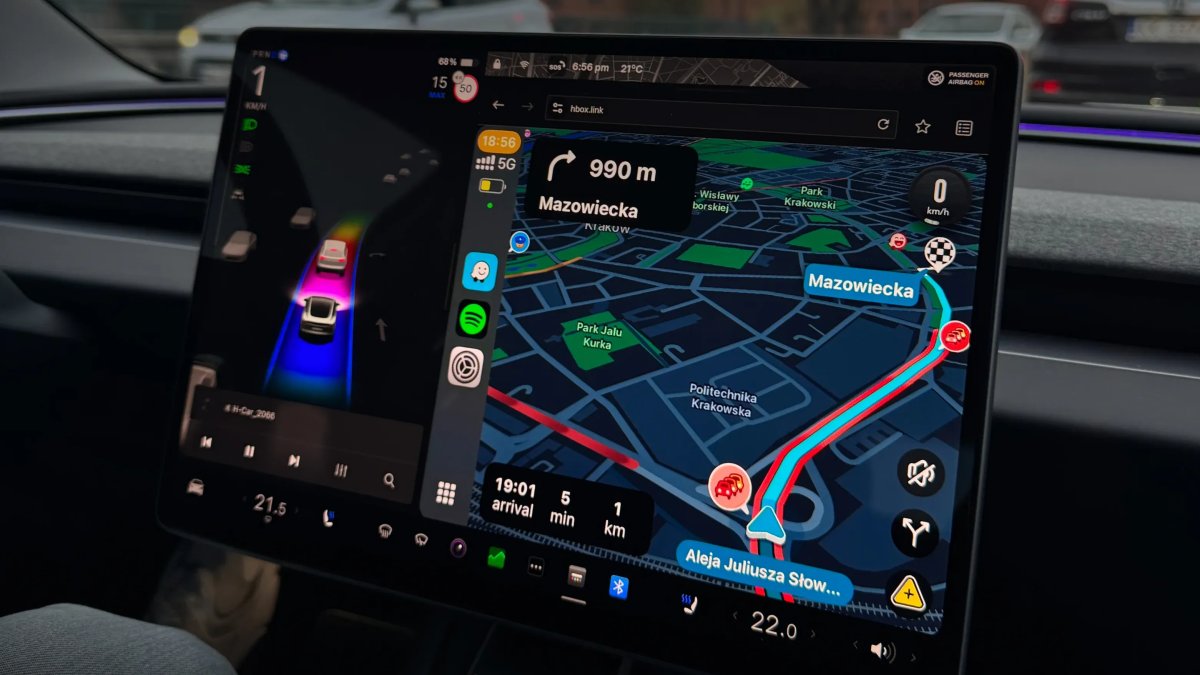
According to a fresh report, Tesla is still actively developing Apple CarPlay support, potentially ending a long standoff with direct phone OS integrations into Tesla’s UI.
The short update comes from Mark Gurman’s newsletter, where he says that Tesla is still working on the feature. Gurman’s originally reported that CarPlay was coming was back in November. However, when users didn’t see it included in the big holiday update, they thought that the rumor was inaccurate or that the feature was scrapped. The reality may be different. Tesla is apparently still working on the feature and may never have planned to release it in time for the year’s biggest update.
It’s possible we’ll see it in the big spring update or later this year. Gurman kept the update brief, but says that he’ll have more to share on the topic soon.
Tesla has been adding major new features recently, with China recently receiving big additions, including a custom Automations feature, the “Hey, Tesla” wake word for its assistant, and Dashcam improvements. CarPlay could be next.
However, for those expecting Apple to take over the entire primary display with CarPlay Ultra, the implementation will likely be far more restrained. Bloomberg sources indicate that Tesla is pursuing a more “windowed” approach, allowing its OS to coexist with CarPlay rather than letting Apple dominate the screen. If the feature is released, expect CarPlay to be another windowed app like Spotify or the browser.
CarPlay
Tesla’s in-house software is arguably one of its most valuable non-hardware assets, serving as the gateway to services like FSD and Premium Connectivity, which generate additional recurring monthly revenue. By integrating CarPlay within a dedicated app window, Tesla sandboxes the app.
Features such as FSD visualizations, trip planning, and climate control remain within Tesla’s native UI. Drivers gain access to the iOS ecosystem for apps Tesla currently lacks, such as Waze, Overcast, or Apple Books, without needing to look at their phones while driving.
Finally, by sandboxing CarPlay into its own app, Tesla prevents third-party software from interfering with safety-critical driving systems, ADAS visualizations, or any parts of Tesla’s essential safety software stack.
Standard vs Ultra
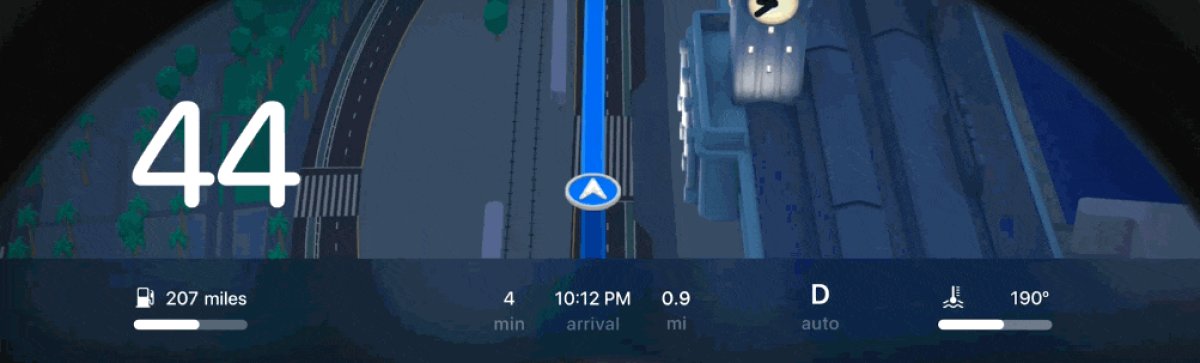
Notably, Tesla is reportedly testing the standard wireless version of CarPlay rather than the newer CarPlay Ultra. Ultra requires the car maker to map vehicle sensor data into Apple’s interface and has the car manufacturer give up a lot of control. This isn’t what Tesla or many other manufacturers are looking for and adoption of CarPlay Ultra has been slow.
Tesla’s pivot on CarPlay may be driven by the cold reality of market data. Recent studies show that roughly one-third of car buyers consider the absence of CarPlay as a deal-breaker. While many long-time Tesla owners say they see no need for CarPlay, there are several advantages, especially if Tesla doesn’t support apps you love to use, such as Waze.
Destined For the Spring Update?
Tesla has recently saved major UI changes and feature updates for what it’s been calling its Spring Update. There’s a good chance that with things lining up, CarPlay could be released this spring.
As with many recent major software improvements, the feature could be limited to the newer, more capable AMD MCU rather than the legacy Intel version.
By Karan Singh
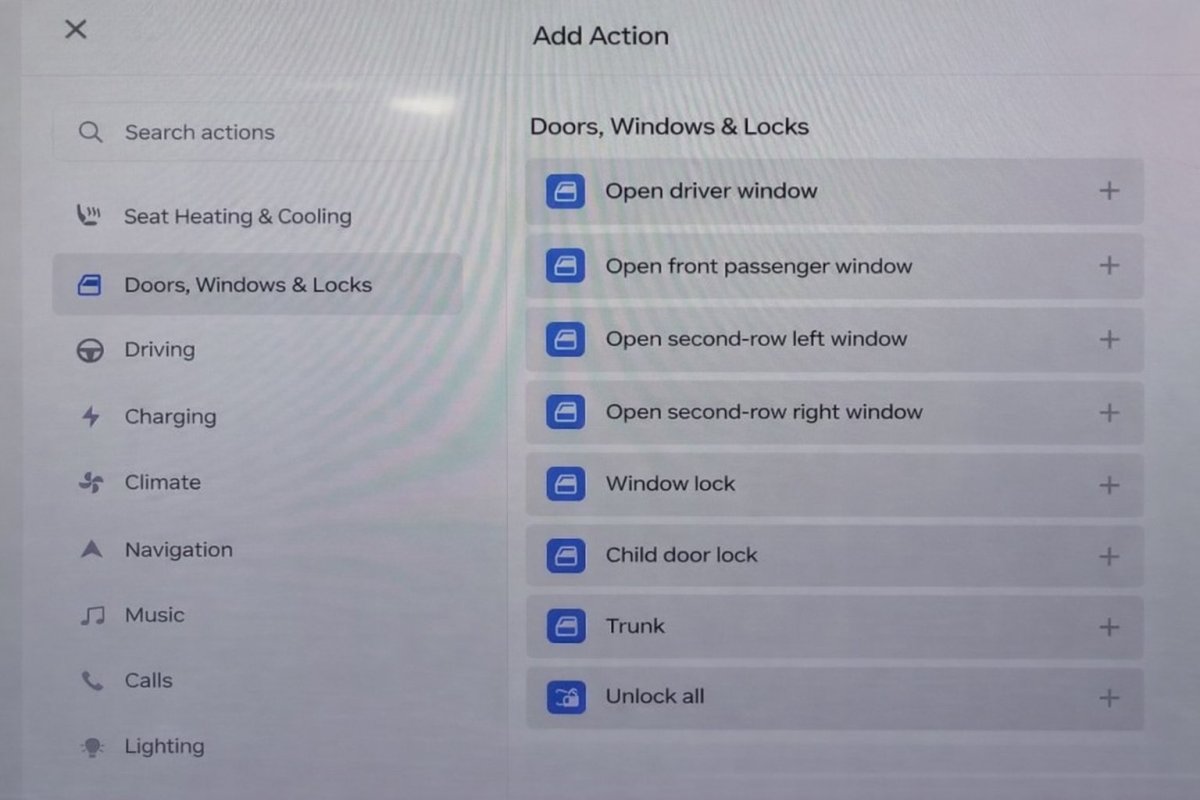
For years, owners have relied on third-party APIs or Home Assistant integrations to get specific behaviors in their vehicles. While Tesla often adds automations, such as enabling the vehicle’s climate when it’s parked and reaches higher temperatures (Cabin Overheat Protection), they’re now giving users the ability to create their own automations.
This new Automations app is a logic engine that lets users customize behaviors using the simple, easily understandable “If This, Then That” logic.
We previously looked at the release notes for this feature here, but we now have a quick overview of how the feature works and some of the events and actions that will be available.
Automations
Based on a sketch provided by a source familiar with the software in China, the user interface uses a grid layout, with each automation represented as a card that can be enabled or disabled.
Tesla includes several default automations to give you an idea of what’s possible, but users can dig into a huge set of events and actions to create their own automations.
When creating a new automation, Tesla puts triggers and actions into categories. Selecting a category will reveal the triggers and actions available. Categories will include seat heating/cooling, doors/windows, charging HVAC, media, and more.
The Conditions (Triggers)
The app allows users to initiate an automation based on a wide variety of vehicle states and environmental factors.
This includes a long list of vehicle triggers, such as gear changes, specific speed thresholds, seat-occupancy sensor status, and seat-belt status, among others. For environmental states, it’s just as extensive a list, including time of day, outdoor light level, cabin temperature, outdoor temperature, and Air Quality Index (AQI), among many others.
Among the triggers are also user-selected voice commands. This, in particular, may be an interesting stepping stone for feature development, as China uses a region-specific smart assistant, while North America integrates Grok, with Europe and other parts of the Indo-Pacific region expected to have access to Grok in the future. This voice trigger lets users create custom voice commands and have the vehicle perform specific actions.
The Actions
Once a condition is met, the car can execute specific hardware and software commands. This can include adjusting the temperature or HVAC settings, adjusting interior lighting (likely the dome lights and potentially the ambient lighting), adjusting driving dynamics on the fly, or providing feedback via user-customizable text-to-speech. For example, you could have the vehicle greet you with a custom message whenever you sit down.
Create Features We’ve Wanted for Years
While these may seem pretty simple at first, for power users or anyone interested in automating their car, there’s a lot to unpack.
Take the Air Quality Index (AQI) condition. Currently, users must manually toggle Bioweapon Defence Mode after checking the AQI themselves. That’s a rather reactive procedure, but with the new Automations app, you can set a simple rule. If Outdoor AQI > 150, Then Enable Bioweapon Defence Mode.
Similarly, the vehicle’s speed state could be used to adjust driving dynamics on the fly. If you’re going fast on a highway, maybe you’ll want to shift to Sport or Plaid mode automatically, and include a voice note remind you that you’re entering Plaid Space.
One of the demos includes a voice note that audibly announces “Gear Shifted” when the driver moves from Park to Drive or Reverse, which could be fantastic for those unfamiliar with Tesla’s UI or older folks who are forgetful.
Guardrails & Limitations
However, Tesla isn’t giving users total carte blanche. There is a safety limitation already baked in, and likely more coming. At the moment, Automations cannot be triggered or executed while Autopilot or FSD is active.
The restriction is fairly logical. Tesla cannot risk a user-created script interfering with driving dynamics, like changing the mode from comfort to sport on the fly during a high-speed highway overtake.
Tesla is also limiting the triggers and actions to a list that they feel is safe and not every vehicle option is available.
Less Feature Requests, More Tasker APIs
Historically, Tesla’s software development has operated like Apple: “We know what you want better than you do.” If you wanted the car to turn on the heated seats automatically at a certain exterior temperature, you had to wait for Tesla to push a feature update that added that specifically. The same applies to enabling Bioweapon Defense Mode. Now Tesla is giving users the power to do this, rather than filling their menus with a variety of options.
With the Automations app, Tesla is effectively democratizing feature development for quality-of-life features. It solves the Long Tail of user requests, the niche desires that aren’t popular enough for a global fleet update, but are crucial to individual owners.
If a parent wants Chill mode engaged automatically whenever the rear seats are occupied and buckled, they can now build that additional safety feature with a few taps on the screen.
This feature is releasing in China soon and is expected to become available in other regions in a later software update.
First Appeared on
Source link






