


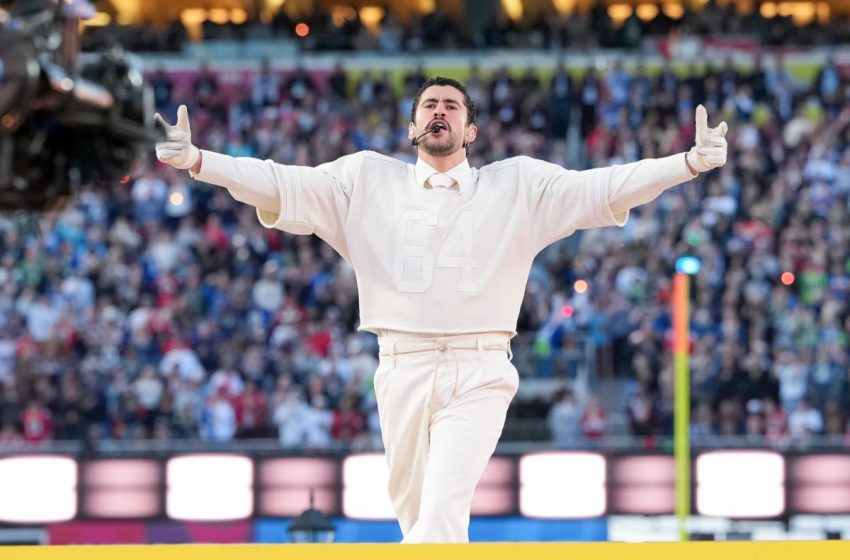
The dark secret behind the furious Bad Bunny Super Bowl controversy that divided America
Bad Bunny was targeted by the bad guys!
It turns out much of the online outrage surrounding this year’s halftime Super Bowl performance came directly from foreign disinformation bots.
In the weeks surrounding the Super Bowl on Feb. 8, online discourse surrounding the Puerto Rican sensation reached a fever pitch: he was either a torch-bearer for a more inclusive world, or a harbinger of the anti-American apocalypse, depending on who you asked.
Tensions got so high that conservative org Turning Point USA aired its own counter-programming, an “All-American Halftime Show” featuring Kid Rock, Lee Brice, Gabby Barrett and more. Suddenly, the great American pastime of chugging beers and noshing on buffalo wings became yet another political wedge, with virtually no middle ground: pick your side and watch the show.
But Bad Bunny and Kid Rock fans actually had more in common than they were aware of: Both of their social media feeds were being heavily manipulated by foreign actors who were hoping to sow political and cultural discord in the United States.
In a white paper report shared exclusively with Page Six Hollywood, predictive narrative intelligence platform GUDEA analyzed over 3.7 million Bad Bunny-related posts from more than 1.2 million users on 32 platforms between Jan. 14 and Feb. 10. They uncovered a troubling trend: Just 3.7% of accounts generated 25.85% of total content. And that small percentage of accounts includes, you guessed it: foreign bots.
If that sounds familiar, GUDEA’s research on the use of bad actors to push pop culture narratives went viral last year via a Rolling Stone report that bizarre accusations of Taylor Swift’s alleged ties to Nazism were similarly manufactured.
But while the Swift situation saw her bogus ties to Nazis being pushed, there was no single narrative being prioritized when it came to the Super Bowl. “Without a shadow of a doubt, the goal here was not to win an argument, but to make sure that the argument never ended,” GUDEA CEO Keith Presley says.
And it seemed to have worked. As soon as Bad Bunny received a standing ovation at the Grammys for saying “Ice Out” on stage — a week before the Super Bowl — the outrage machine was primed and ready to go. There was anger over the Halftime Show’s bucolic sets depicting working-class Puerto Ricans, which was criticized as anti-American. There was outrage over Bad Bunny gifting his Grammy to a young boy during the show who was rumored to be an ICE detention victim, (he wasn’t). And there was outrage by conservative lawmakers over some of Bad Bunny’s explicit lyrics. President Trump called the show “absolutely terrible,” and said it “doesn’t represent our standards.”
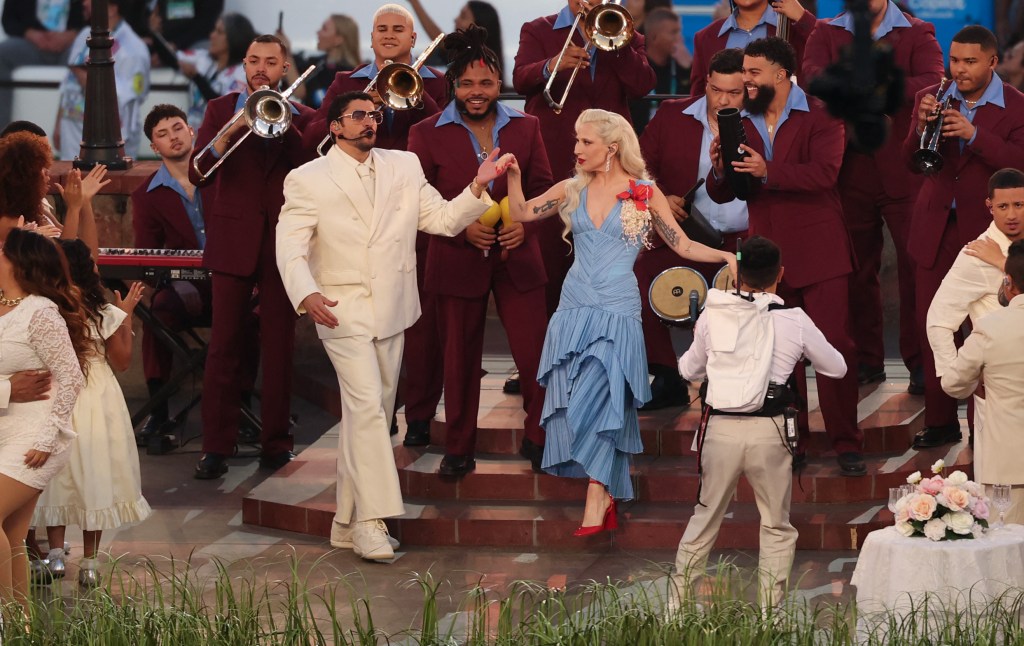
As Presley puts it, the aim was, “To put some dynamite in the fault lines in American culture and blow it up.” The fault lines made it remarkably easy to amplify the existing narratives. “They were just taking advantage of what they were already seeing. They didn’t create what the controversy was. They just made it worse.”
“The goal is destabilization, to erode shared trust, deepen existing divisions, and exhaust the public’s ability to distinguish what is real from what is manufactured,” the report reads. “A population that is confused, angry, and distrustful of its institutions is easier to influence, harder to mobilize, and less capable of collective civic action.”
Presley says it’s not just every day users that should take heed, but advertisers. “They get wrapped up into this, and then they make these million dollar decisions based on data that isn’t authentic to begin with.”
While there’s so far no way to point the finger at any particular foreign entity, past celebrity-based disinformation campaigns have been launched with fake endorsements of Russia by Swift, Selena Gomez, Kim Kardashian, Beyoncé, Oprah Winfrey, Justin Bieber, Shakira and Cristiano Ronaldo, among others.
In 2024, the U.S. Department of Justice said it disrupted a Russian propaganda bot farm using fake social accounts to spread disinformation in America and other countries. The bot farm used AI to make profiles impersonating Americans, and to post support for Russia’s war in Ukraine, among other issues.
First Appeared on
Source link






