


The deep cave bacteria resistant to modern medicine
Ancient bacteria, trapped in caves for millions of years, live in a miniature world of terror. Their only food source is each other. The survival tactics they develop make them resistant to almost all antibiotics. Now scientists hope to use their tricks to inspire new drugs and treatments.
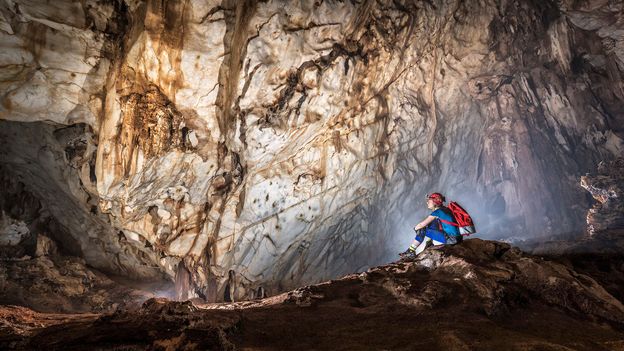
Deep underground, plunging 1604ft (489m) beneath the Chihuahuan Desert in southern New Mexico, lies the Lechuguilla Cave, a cavern which stretches on for 149 miles (240km). There is no light, and little to eat either. Any living thing must eke out an existence under conditions of near starvation.
“You can go in an entrance and travel for 16 hours in one direction before you get to the end of it,” says Hazel Barton, professor of geological sciences at the University of Alabama.
“So you’re a very, very, very long way from the entrance. You’re isolated, and there are places in that cave where more people have walked on the moon than have been in that area.”
Yet despite the darkness, there is a dazzling diversity of microbial life. Because the bacteria have been isolated for millions of years, they offer a unique window into the past. What’s more, each has evolved a different strategy to survive. Some extract energy from rocks and the atmosphere. Others are predators, feeding off other bacteria.
First Appeared on
Source link






