


The High-Major Jobs to Watch
The regular season is coming to a close, which means men’s college basketball’s coaching carousel is about to heat up. Kansas State was the first school to make a move among high-majors, parting with Jerome Tang earlier this month to set the tone for what could be an active cycle. And while there could be plenty of movement, don’t expect too many moves at some of the top jobs in the sport. Most of the rumored activity is expected at middle or bottom-tier high-major jobs, though things can always change.
Here’s Sports Illustrated’s latest intel on who’s in danger, who’s likely to stick it out and a few jobs to watch that could go either way.
Hot Seat
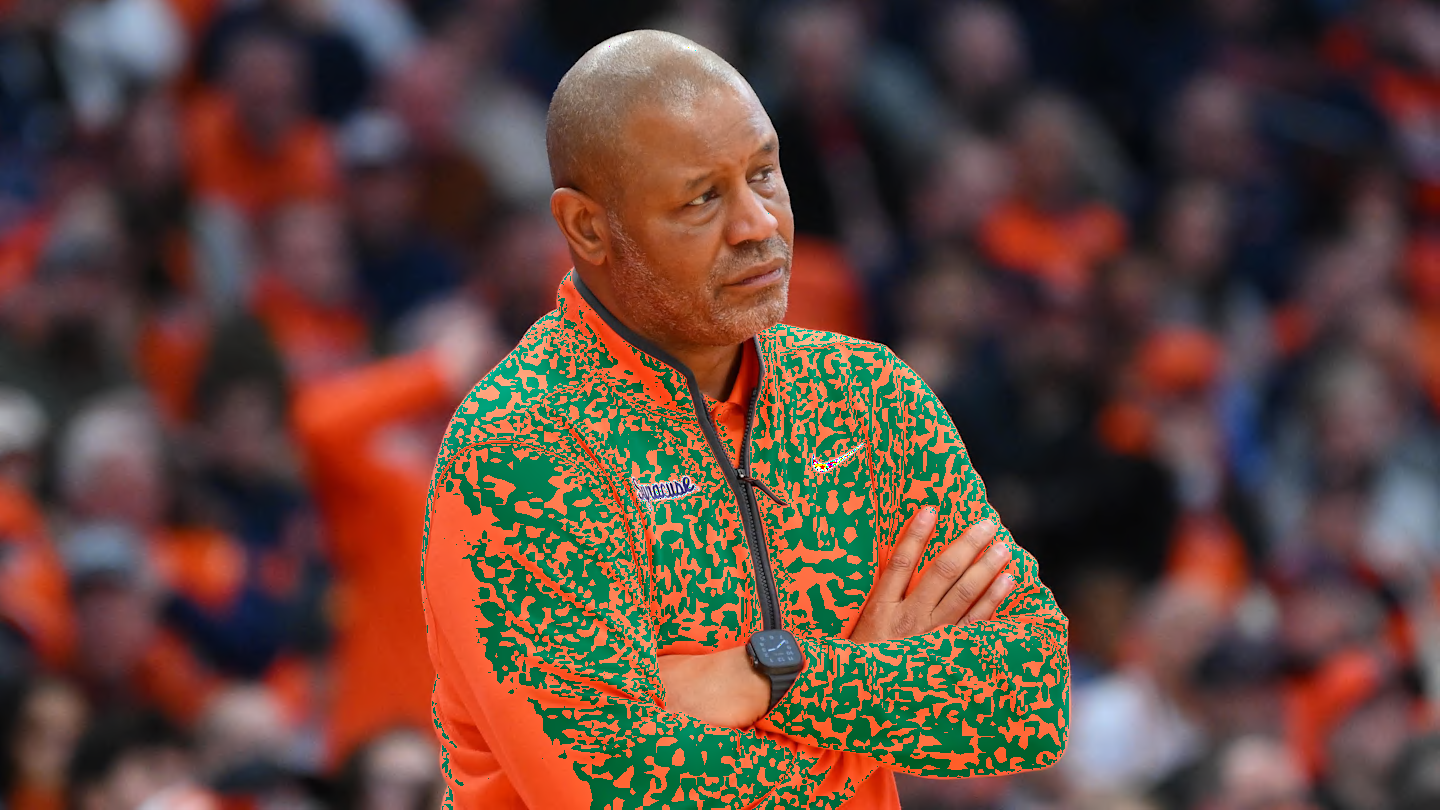
Adrian Autry, Syracuse
Replacing Jim Boeheim was always going to be a challenge, but Autry has done little in three seasons to suggest he’s the answer long term. For a third year in a row, the Orange are nowhere close to the NCAA tournament, and they’ve had a handful of ugly losses like a 37-point drubbing at the hands of Duke last week. The main complicating factor for a potential move: Who’s making the decision? Athletic director John Wildhack is retiring on July 1, and chancellor Kent Syverud will also depart this summer for Michigan. The expectation for now remains that the job will open, but for a program that has a lot of questions to answer about resources and overall direction in the post-Boeheim era, the lack of administrative certainty is complicated.
Jeff Capel, Pittsburgh
Pitt is mired in a miserable 10–17 season, intensifying questions about Capel’s long-term future. He has taken the program to the NCAA tournament just once in eight years, and the trend isn’t positive after last season’s disappointment has flowed into this season’s brutal campaign. It’d be an expensive move with a buyout believed to be in the eight figures, something Pitt may not be able to easily afford with its athletic department running a substantial deficit in recent years. But if Pitt can’t even make the ACC tournament, AD Allen Greene (who didn’t hire Capel) may not have a choice.
Kim English, Providence
English needed to win this season after a disastrous Year 2. The Friars have been close, but four overtime losses and five home conference losses are enough to make this quite the disappointment. And while English has built a strong young core with two elite freshmen in Stefan Vaaks and Jamier Jones, patience seems to be wearing thin. Providence has invested heavily from an NIL standpoint and could benefit from a cycle lacking many top-tier openings.
Earl Grant, Boston College
Boston College may well be the toughest high-major job in the nation, especially in the current NIL climate, but Grant has done little to inspire confidence of late and seems headed toward the most losses of his tenure in Year 5. BC has lost eight straight and has just one win over a top-100 team per KenPom this season. And even if it’s not fair to expect anyone to win significantly with the resources BC has put into the program, it becomes a self-fulfilling prophecy where it’s hard to raise the money necessary to compete with a coach perceived to be a lame duck. Change here feels likely.
Bobby Hurley, Arizona State
Hurley is in the rare position of being a high-major head coach coaching on the last year of his contract because AD Graham Rossini chose inaction last spring, allowing Hurley to coach in his lame duck year as the Sun Devils further evaluated him. Arizona State hasn’t been bad this season, but at 14–13, the Sun Devils are nowhere close to the NCAA tournament bubble. Hurley told The Athletic he’s had no substantial talks about an extension with Arizona State’s administration. The location and conference affiliation would make this a somewhat coveted gig, but Arizona State has serious questions to answer about its financial commitment to competing in the Big 12 to have a chance at top-tier candidates this cycle.
Matt McMahon, LSU
McMahon is a miserable 16–52 in SEC games in four years on the job and hasn’t shown tangible progress this season despite an NIL injection into the roster last offseason. But AD Verge Ausberry has cooled his commentary of late after what amounted to an “NCAA tournament-or-bust” declaration in January, telling Tiger Rag that firing McMahon would be “about a $40 million swing” and emphasizing fiscal responsibility. McMahon has also been hurt by a pair of key injuries to PG Dedan Thomas Jr. and forward Jalen Reed, which could add ammo to his case for a fifth year in Baton Rouge. Right now, it seems McMahon has a chance to stick, though finding a way to win a couple of games down the stretch and climb out of the SEC cellar would certainly help.
Wes Miller, Cincinnati
Miller entered the season on the hot seat, spent big on his roster this spring and seemed destined to get sacked after a 3–7 start in Big 12 play. But the Bearcats responded with four straight wins, most notably a road win at Kansas on Saturday, that opened the door for a backdoor NCAA tournament push. It’s still likely NCAA tournament or bust for Miller at a program with high expectations, and Cincinnati would be one of the top jobs on the board assuming it opens. Plus, highly coveted Utah State head coach Jerrod Calhoun is a Cincinnati alum. But this recent surge has added a bit of uncertainty to a job many have expected to be open since November.
Porter Moser, Oklahoma
Oklahoma made the NCAA tournament last year, but Moser has yet to finish over .500 in SEC play in five years on the job. Hurting Moser’s case for a sixth season is Oklahoma just hiring a new athletic director in Roger Denny, who could elect to make a move early in his tenure to have his pick of his basketball coach. Moser could also find an escape hatch even if Oklahoma doesn’t fire him, perhaps hunting a fit closer to his midwestern roots.
Damon Stoudamire, Georgia Tech
Georgia Tech hasn’t won since Jan. 17 against NC State and has lost six straight by 15-plus points. That’s the type of flop that can accelerate a change, especially when new AD Ryan Alpert didn’t hire Stoudamire. This is another tricky job that has fallen behind from an NIL standpoint, though bottoming out like this is hard to justify. There’s been increased buzz in recent days that a move could get made here.
Situations to Monitor
Jake Diebler, Ohio State
Diebler’s Buckeyes are sweating out life on the NCAA tournament bubble, lacking quality wins but maintaining a strong analytical profile entering the final few games of Big Ten play. If the Buckeyes can’t go dancing, expect questions about Diebler’s future to heat up, though he still seems to hold support from some key stakeholders in Columbus, Ohio, and has a commitment from five-star forward Anthony Thompson in the 2026 class that could help sell his long-term vision. Diebler’s buyout is one of the lowest of potential hot seat coaches though, and being the top job on the market this spring could appeal to Ohio State.
Steve Forbes, Wake Forest
Forbes has helped Wake Forest get back to relevance after some ghastly years late in the Danny Manning era. But failing to make the NCAA tournament in his first five seasons and trending toward missing again in his sixth has made patience within the fan base wear thin. He’s trending toward getting another year, though the pressure to dance next season should be on.
Penny Hardaway, Memphis
It has been a nightmare season in Memphis, now just 12–15 on the season and 7–7 in AAC play. That type of mark is unacceptable given how the Tigers lap the rest of the AAC from a resource standpoint, though it has been increasingly difficult for Memphis to keep up with its power-conference peers from an NIL standpoint. Hardaway is a legend in Memphis and deserves some benefit of the doubt after winning 29 games a year ago, but the Tigers likely need some sort of reset from a staffing and roster management standpoint if Penny is hoped to be the long-term answer.
Thad Matta, Butler
Matta’s return to Butler hasn’t been a success from an on-court standpoint, with the Bulldogs a disappointing 15–13 on the season after a six-game skid knocked them out of any realistic NCAA tournament conversations. Matta could retire on his own, but if not AD Grant Leiendecker may need to force his hand with Butler now nine years removed from its last NCAA tournament appearance. Keeping it in the Butler family is a possibility, but this is a program that has fallen behind the times and could use fresh perspectives on how to restore it to glory.
Likely Safe, for Now
Ed Cooley, Georgetown
Cooley was a great hire on paper for Georgetown, a proven winner in the Big East to try to climb a once great program out of despair. Things haven’t gone according to plan though: Georgetown is just 5–11 in the league in his third year on the job. Cooley reportedly has a seven-year deal at Georgetown, so it’d be a shock for this quick of a trigger. But he’ll likely enter next season under some pressure to make real progress toward the Big Dance.
Hubert Davis, North Carolina
Davis entered the season under pressure to bounce back from last season’s 14-loss campaign. The Heels are definitely improved enough to cool his seat (and beating Duke always helps), but also not quite good enough to quell long-term questions. A middling NCAA tournament seed and early exit could leave him right back on a warm seat entering next season.
Lamont Paris, South Carolina
Paris got a big extension after winning SEC Coach of the Year in 2024, but has struggled since and is trending for a second straight sub-.500 season. South Carolina has consistently been near the bottom of the SEC in roster resources and is expected to give Paris some much-needed help in that regard this spring.
Steve Pikiell, Rutgers
Pikiell was regarded as a miracle worker for getting Rutgers to back-to-back NCAA tournaments (with a third tournament-caliber team in 2020 pre-COVID), but has struggled mightily of late and is trending toward a third sub-.500 season in a row. That includes last season’s shocking collapse with two top-five draft picks. Rutgers has been behind from an NIL standpoint, but its issues run deeper than that with Pikiell’s offense struggling and his player development-centric approach harder to replicate in this era. But he has a massive buyout in his contract, and Rutgers seems likely to give him at least one more chance to right the ship.
Micah Shrewsberry, Notre Dame
Shrewsberry was universally lauded as a strong hire to replace Mike Brey in South Bend, but success has been slower than expected. Some of that can be attributed to injuries (Notre Dame lost star point guard Markus Burton to a knee injury in December) and Notre Dame is also not a “quick flip” job given academic restrictions that impact its portal recruiting, but he’ll likely enter next year under some pressure to right the ship especially if the Irish can’t even crack the ACC tournament this year.
Retirement Watch
Dana Altman, Oregon
Altman’s remarkable streak of 20-win seasons will come to an end this season in an injury-riddled campaign for the Ducks. He has batted away retirement rumors in past years, but perhaps this miserable campaign changes his thinking.
Rick Barnes, Tennessee
Barnes will turn 72 this summer, so he’s likely not far from walking away. He still has the Vols operating at an elite level though, cracking the top 15 on KenPom after beating Vanderbilt over the weekend. If he could deliver Tennessee to its elusive first Final Four, perhaps his timeline could get sped up to go out on a high note.
Tad Boyle, Colorado
The move back to the Big 12 hasn’t been kind to Colorado, which is among the lowest-resourced programs in the league. At 63, how much patience does Boyle have for a rebuild, especially with a new boss in AD Fernando Lovo? How successful Boyle is in retaining a promising young core might weigh into his decision.
Mark Few, Gonzaga
Retirement buzz with Few has been a constant in recent years, though it seems likely he’ll give Gonzaga at least one year in the new Pac-12. Few has already established his preferred succession plan with top aide Brian Michaelson likely to replace him when he goes.
Anthony Grant, Dayton
Expectations are rightfully high at Dayton, and this season has been a disappointment, with at-large bid hopes going up in flames with a four-game skid in late January. It seems unlikely Dayton would fire Grant outright, especially with AD Neil Sullivan on medical leave and president Eric Spina on the way out. But it might be best for all parties long-term for a fresh start.
Tom Izzo, Michigan State
Izzo is showing few signs of slowing down even in the face of all the changes to college basketball he’s clearly no fan of, and his program hasn’t suffered with last season’s Elite Eight run and another strong year this year. It’d be a surprise if he walked away now, but at 71 years old, it’s at least worth monitoring.
Greg McDermott, Creighton
McDermott lined up his successor in head coach in waiting Alan Huss, who had a successful run at High Point and was a hot name for high-major openings last spring. McDermott could walk away now and let Huss begin building the program in his image or run it back for another year.
Bill Self, Kansas
Self seems more energized this year by an overachieving Kansas bunch, fueling belief he could be back for at least one more year. If he does step aside, it seems likely that top assistant and former NBA head coach Jacque Vaughn gets a chance in the big chair.
Already Open
- Kansas State
- San Diego
- Air Force
- Tarleton State
- Cal State Bakersfield
- North Florida
More College Basketball from Sports Illustrated
Listen to SI’s college sports podcast, Others Receiving Votes, below or on Apple and Spotify. Watch the show on SI’s YouTube channel.
First Appeared on
Source link






