


The Iran War Is Breaking Global Humanitarian Aid Efforts
Humanitarian shocks: logistics, oil, and fertilizer
Incoming fire and bottlenecks at the Strait of Hormuz are grinding operations to a standstill at the International Humanitarian City (IHC) in Dubai, the world’s premier disaster aid logistics hub. On March 1, Dubai’s Jebel Ali—the Middle East’s largest container terminal, located ten minutes from the IHC—caught fire after debris from an intercepted Iranian missile struck the port.
The UN International Organization for Migration (IOM) reported that shipping containers now face a $3,000 emergency surcharge, while the World Food Program (WFP) warned that supply chain pressures are driving up the costs of life-saving operations.
Over two decades, the IHC became the linchpin of global humanitarian logistics, coordinating crisis response while keeping costs low. Today, as conflict spreads and millions of people wait for food and shelter, the humanitarian system fears Dubai could become its Achilles heel.
Beyond the immediate violence, the war in Iran is triggering three market shocks that threaten to deepen humanitarian crises worldwide: currency depreciation, fertilizer disruptions, and rapidly rising oil prices.
Since March 1, a global flight to safety has strengthened the U.S. dollar. The currency shift could reshape economies worldwide, but it will cut deepest in those least developed countries, where food insecurity could collide with depreciating currencies. Imported food staples, such as wheat and cereals, priced in dollars, are likely to slip further out of reach.
For those growing food closer to home, a separate shock is rippling from the Middle East: disruptions to fertilizer supply chains. Nitrogen fertilizers are produced from natural gas, and much of the global supply moves through Gulf export routes. Abu Dhabi-based Fertiglobe, one of the world’s largest producers, reported normal production on March 4. Yet that supply cannot leave the United Arab Emirates through the Strait of Hormuz.
Farmers could soon face rising fertilizer prices—or the prospect of abandoning their use altogether—thereby driving up global food prices. Sudan, which has become the world’s worst humanitarian crisis following back-to-back years of famine, imports more than 50 percent of its fertilizer from the Persian Gulf region.
And then there is the matter of oil shocks. As the United States’ and Israel’s first week of war with Iran unfolded, crude oil prices spiked dramatically. The spot price of Brent crude jumped 21 percent by March 6 and surged close to $110 per barrel on March 9 in intraday trading before sharply declining. Prices continue to whipsaw and Qatar has warned they could top $150 per barrel.
For humanitarian organizations, these increases translate directly into higher operating costs at every step, including efforts like transporting medicines by road and running diesel generators in health clinics.
Each of these shocks alone would harm the world’s most vulnerable populations. Together, they are becoming a polycrisis, as logistics gridlock, dollar appreciation, fertilizer shortages, and oil shocks push the hungry toward emergency—and those already in emergency toward famine.
The looming displacement crisis
As markets and supply chain disruptions reshape the global humanitarian outlook, communities in the Middle East are absorbing the immediate effect of war. Before the launch of Operation Epic Fury on February 28, the region was already managing twenty-five million displaced people. The current escalation threatens to push that number far higher.
In Lebanon—a country reeling from a historic economic collapse—the latest escalation is rapidly triggering a new wave of displacement. As tensions escalated between Hezbollah and Israel, aid groups were among the first to sound the alarm about the potential humanitarian fallout. On March 4, Mercy Corps’ Lebanon Crisis Analytics Team projected that up to five hundred thousand Lebanese could be displaced, even in a crisis scenario that lasts less than a month. Indeed, the Israeli military’s evacuation orders for parts of southern Lebanon last week, along with subsequent Israeli air strikes across southern Beirut suburbs, have triggered a rapid and dramatic displacement across the country, according to the IOM.
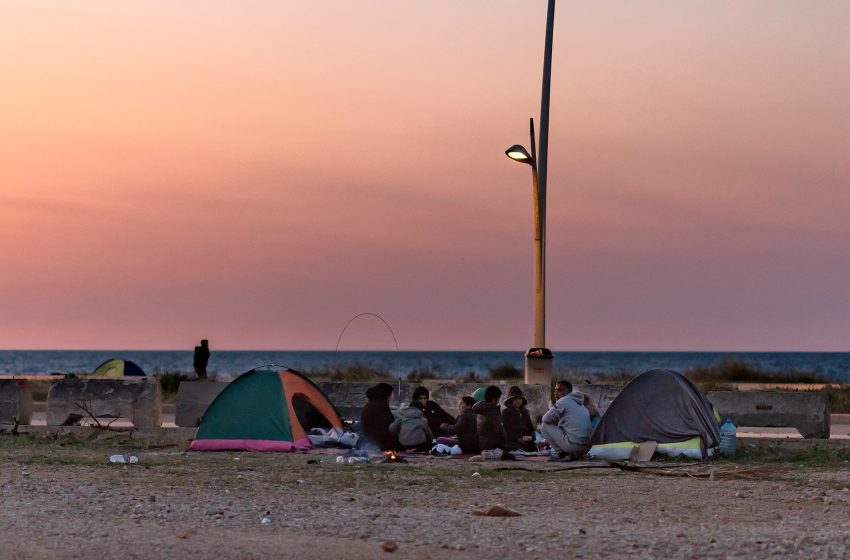
The UN refugee agency (UNHCR) now estimates close to seven hundred thousand people have been displaced in Lebanon. Hundreds of schools and public buildings are now part of a web of 440 shelters, many already stretched beyond capacity as people sleep on the streets. The situation is so dire that Syrian refugees who once sought safety in Lebanon are fleeing back to Syria, with UNHCR reporting more than thirty thousand departures in the past week alone.
Fears are also mounting about potential displacement from Iran, with European leaders raising alarms about a possible mass refugee outflow. German Chancellor Friedrich Merz recently warned that Iran “cannot become another Syria,” emphasizing efforts to prevent a new wave of refugees from reaching Europe. With a population of ninety million, even a 10 percent outflow from Iran would make it one of the largest refugee crises since World War II. To date, one hundred thousand people have fled Tehran, though there are no reports of significant cross-border outflows.
UNHCR—the largest UN agency operating inside Iran since 1984—is well positioned to respond. The organization maintains six field offices and has long supported millions of Afghan refugees living in the country, including those who were forced to return to Afghanistan last year.
While UNHCR has historically formed the backbone of any migration crisis, the agency enters this one weakened. Last year, the Trump administration cut 60 percent of U.S. funding for UNHCR and fired nearly all experts in the State Department’s Bureau of Population, Migration, and Refugees, testing the United States’ own capacity to manage the security implications of mass displacement.
Finally, in Gaza, where two-thirds of the population live in displacement camps, the latest escalation is compounding an already severe humanitarian emergency. Following Israel’s closure of all border crossings into Gaza, aid stocks have been depleted, causing price surges. While the Karem Abu Salem crossing has reopened, others have not, including the Rafah crossing between the Gaza Strip and Egypt. Medical evacuations have been suspended, and the United Nations can now bring in only half the fuel needed to sustain basic operations in the enclave.
It’s time for the United States to act
The question on humanitarian workers’ minds—how much worse will it get?—hinges, at least in part, on another question: will the Trump administration release the $5.5 billion that Congress recently appropriated to the WFP, UNHCR, and NGOs working to mitigate a global disaster?
Even that funding would not contain what is unfolding across the globe. That figure is less than half of what the United States historically devoted toward international humanitarian response, and it arrives at a moment of growing need.
Still, releasing those funds would be an immediate, and desperately needed, first step. As Congress debates supplemental funding for the war with Iran, the United States already has money appropriated for a humanitarian response sitting inside the State Department. Moving it quickly—and following up with a larger surge of funding—may determine whether millions of people teetering on the edge of survival fall into catastrophe.
This work represents the views and opinions solely of the author. The Council on Foreign Relations is an independent, nonpartisan membership organization, think tank, and publisher, and takes no institutional positions on matters of policy.
First Appeared on
Source link






