


The Lighthouse Opens in Greenpoint’s Old Kickstarter Offices
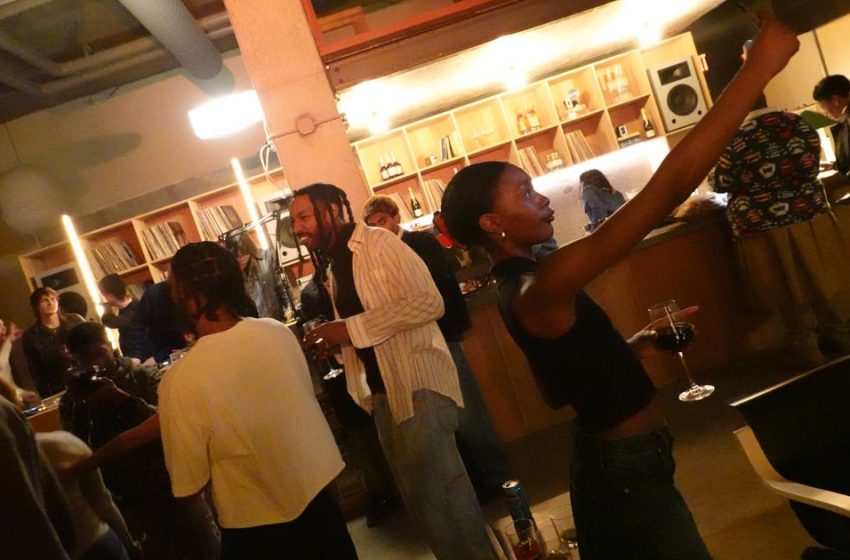
The model and influencer Monique takes a video while Beach Fossils does a DJ set.
Photo: Adriane Quinlan
On Wednesday night, greeters for a party at 58 Kent directed guests to a QR code posted by the door. This would be their map for the night, showing off rooms rigged with mics, cameras, and sound insulation — perks designed to please gamers, podcasters, TikTokers, and anyone else with a front-facing camera and a dream. It was the opening of the Lighthouse, a sort of Hype House–factory hybrid for the city’s ballooning numbers of “content creators.” Glommed around open bars serving Belvedere and Albariño were crowds of 20-somethings, dressed to be seen in statement furs and thigh-highs, Y2K purses and T-shirts of their own design. Two Instagrammers with brand deals chatted with a woman shilling cosmetics “for men.” A model who goes by Monique put down a red wine and dipped into a soundproof booth to broadcast an improvised polemic that began: “Discipline is sexy. Self-control is sexy.” Like everyone else, she shared her handle before her number. “TikTok or Instagram?” she said, typing into a stranger’s phone directly.
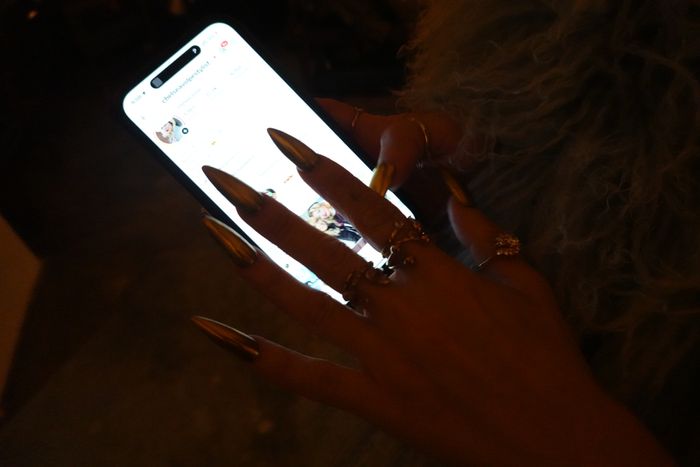
Sharing handles at the Lighthouse.
Photo: Adriane Quinlan
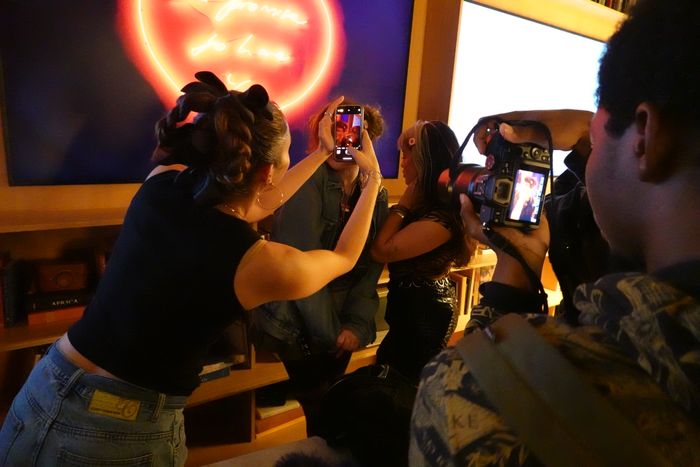
Filming the filmers in front of screens that can show other rooms in the office.
Photo: Adriane Quinlan
The business card is dead, the traditional office is dying, and these kinds of base camps for wellness influencers and dating podcasters may be on the rise. (WSA comes to mind and was also a topic of discussion among guests.) After all, these so-called creators are full-time workers in a professionalized industry, hustling for ad deals and event appearances but often without a place to do it beyond their bedrooms or the crowded streets of the West Village. The WeWorks of yesteryear aren’t suited to labor that sometimes needs tech support, soundproofing, and a certain dose of glamour. By contrast, the Lighthouse was designed so members can shoot everywhere, so the space feels like a map of what’s currently eating our attention: A slick kitchen on the top floor has a camera rig on the ceiling for downward shots of hands chopping onions. A “salon” on the ground floor embeds the camera in the mirror of a room that might pass for a walk-in closet at a high-end condo — a setup that anyone shooting a bronzer tutorial might prefer over the shared bathroom of a Bushwick rental. Down the hall, past an atrium, is a soundproofed studio set up with a camera, since all podcasts have video now. Hit record, finish a shoot, and a tablet helps drop the file into a laptop nearby — no setup, no lugging equipment, and if anything goes wrong, a nearby desk staffed with A/V types is there to help. On Wednesday, guests milling through these rooms could hit a button on their virtual map, earn a point for showing up, and see their name rising on a leaderboard blinking on a flat-screen by the open bar. But no one seemed to be actively checking.
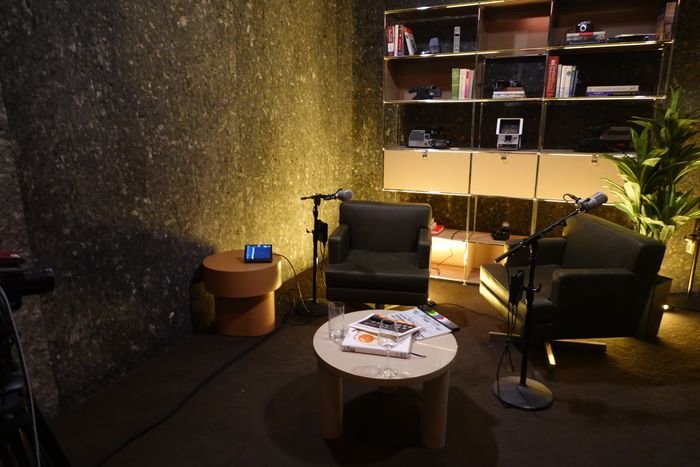
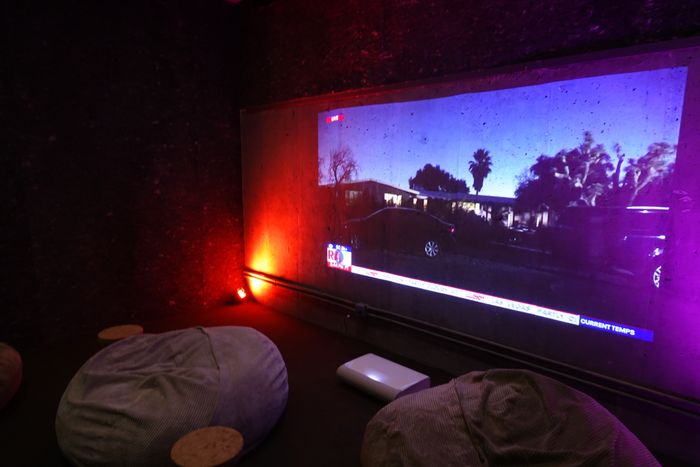
Sound-insulated, wired-up rooms for recording (left) or watching (right). From left: Photo: Adriane QuinlanPhoto: Adriane Quinlan
Sound-insulated, wired-up rooms for recording (left) or watching (right). From top: Photo: Adriane QuinlanPhoto: Adriane Quinlan
Maybe because there was already a sense of being watched. “Almost anywhere in this building, you can see what’s going on,” says Nathan Warkentin, the designer who was tapped to repurpose this 1872 former factory. He paused in a slender, vertical window cut into a concrete stairway, which peered over shared wooden desks that were walled in meeting rooms he custom-designed. (The whiteboards were modeled after a blackboard used by Le Corbusier.) Warkentin was tapped to turn what was once one of the flashiest tech offices of the 2010s — a hub for Kickstarter — into a flex office branding itself as one of the flashiest offices of the 2020s. The bones were there: a theater, a roof garden where TikTok chefs could grow herbs, and a central glass courtyard that gives views of the interior rooms — functioning like a red carpet that might help in a mission to spot talent. Funded by memberships and partnerships with brands (TikTok, iHeartMedia, Shopify, Samsung), the Lighthouse is a kind of cross between a flex office and a 21st-century movie studio, with a dash of elitist country club. A selection committee of other extremely online people vets anyone who’s signed up for pricey memberships at around $5,750 a year.
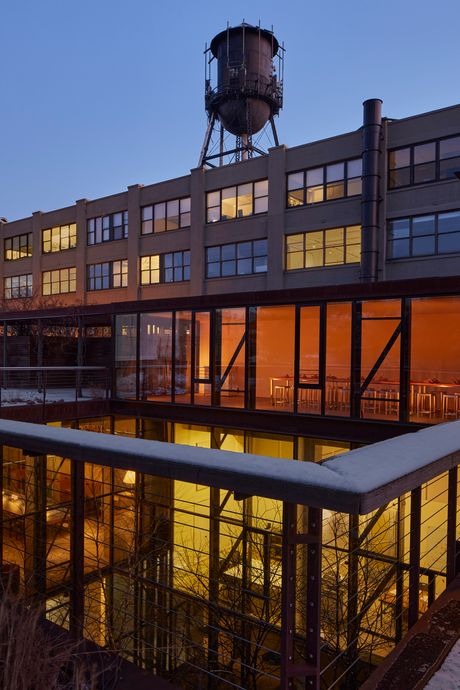
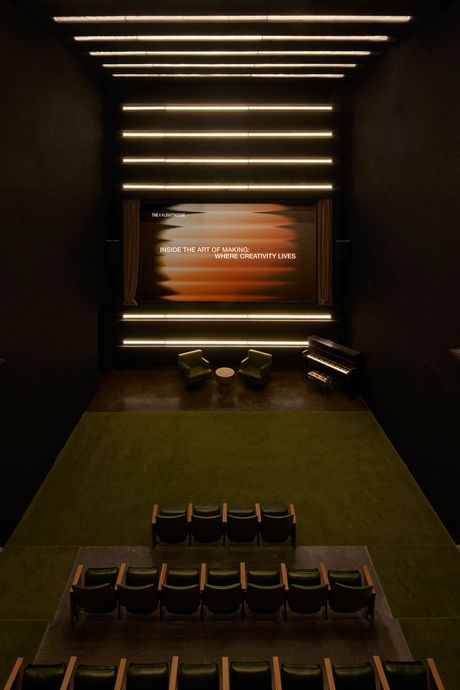
The roof garden (left) and the old theater, where seats were reupholstered in green leather and dated walls were replaced with a simpler black netting. Yoshihiro Makino / Courtesy of The Lighthouse .
The roof garden (left) and the old theater, where seats were reupholstered in green leather and dated walls were replaced with a simpler black netting…
The roof garden (left) and the old theater, where seats were reupholstered in green leather and dated walls were replaced with a simpler black netting. Yoshihiro Makino / Courtesy of The Lighthouse .
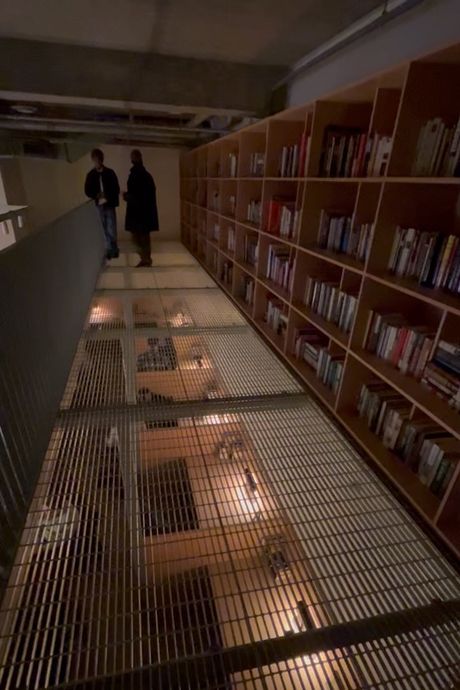
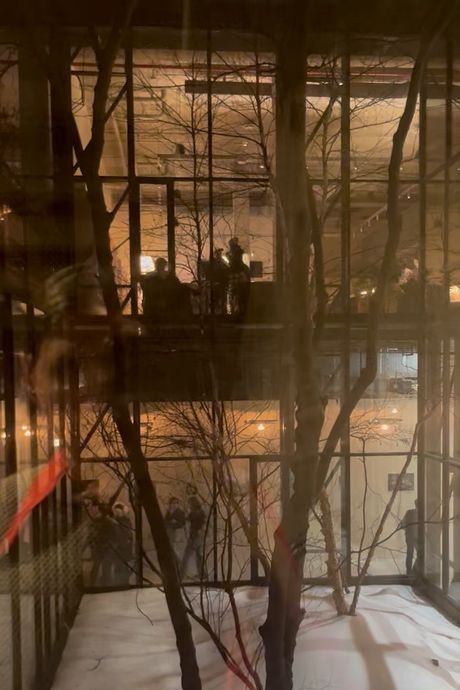
A catwalk gives a view into office carrels, and the central courtyard creates a kind of panopticon. Adriane Quinlan.
A catwalk gives a view into office carrels, and the central courtyard creates a kind of panopticon. Adriane Quinlan.
“It’s the Soho House for creators,” says Armiel Chandler, a plus-size fashion influencer who’s done branding deals with Fenty and Nike and who showed up in a khaki skirt over khaki pants, Timberland boots, and Bottega sunglasses. But he was almost underdressed compared to Chelsea Volpe, a stylist who spoke of celeb clients and editorial shoots and wore a netted, spangled black Poster Girl bodysuit; thigh-high boots by Current Mood; and a powder-blue fur. She was passing through a hall when she spotted someone: a middle-age man in a beanie and a button-down. “You look familiar. Are you in fashion?”
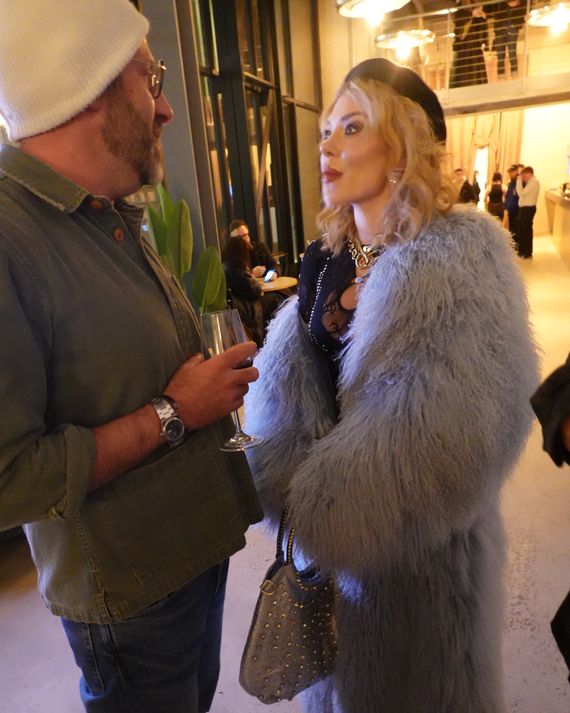
Goss and Volpe.
Photo: Adriane Quinlan
“No, I’m the CEO,” he said. It was Jon Goss, who’s overseeing the Lighthouse with two partners — the founders of a company called Whalar Group whose CEO bills it as a “global Creator company with a pioneering end-to-end ecosystem.” There’s a talent-management company, a social agency, a digital operating system, a gaming studio, a start-up venture, and the Lighthouse, which opened another location last year in Venice Beach. (That project took over a landmarked post office, whose interiors Warkentin also designed.)
Warkentin was a drummer with a love of design who lived in the area when Kickstarter opened and worked as a creative director for a company that was infamously all about its packaging, Mast Chocolate. That job led him to designing the Mast stores, and he met Goss through a pop-up at NeueHouse during Frieze, a similar kind of office brand, where Goss was marketing officer. At the Lighthouse, they leaned toward a nostalgia for the late 1980s with statement lamps, swoopy Artek chairs, and chic little meeting rooms softened with solid wall-to-wall carpet in a shade of sidewalk gray — a mix of softness and Brutalism that recalled the lounges of WSA, which might be because Warkentin has also been working for that group on another project.
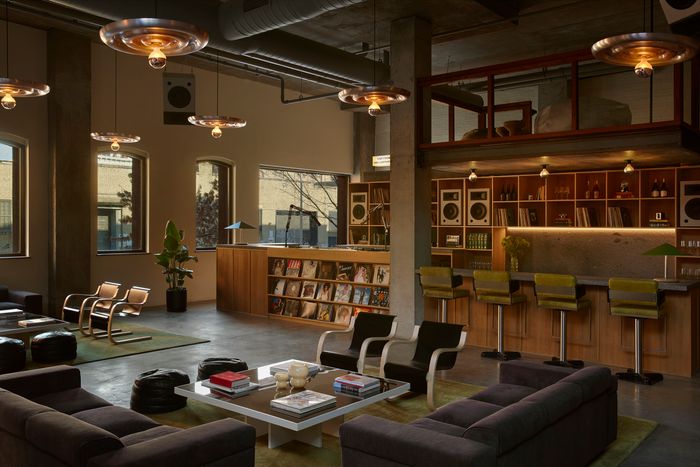
The space to network would be the Library Bar, where architects also added a mezzanine floor to peer over the action — giving creators yet another angle to shoot from.
Photo: Yoshihiro Makino/Courtesy of The Lighthouse
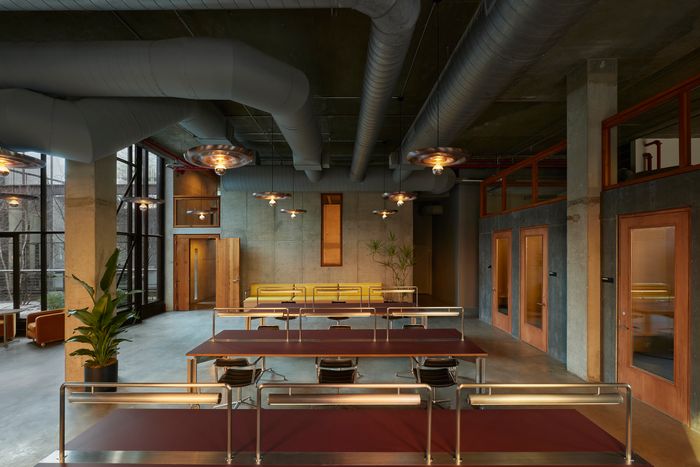
A more traditional workspace on the main floor where Warkentin cut into the open plan to create meeting rooms, phone booths, and private offices for rent.
Photo: Yoshihiro Makino/Courtesy of The Lighthouse
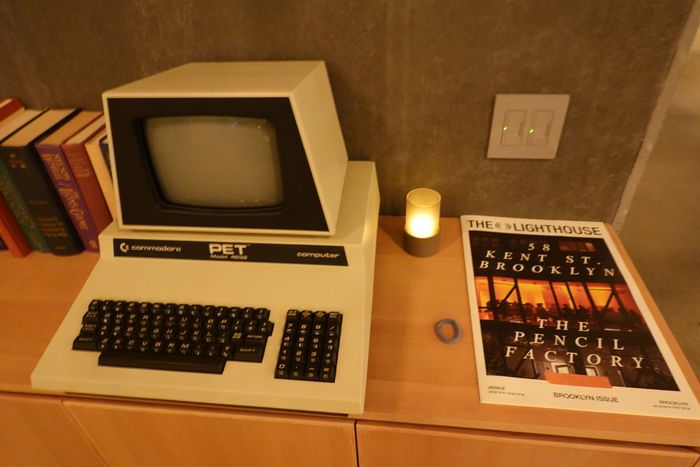
The team looked to pre-internet, analog tech to decorate spaces where other offices might stick a plant.
Photo: Adriane Quinlan
At the end of the night, in a room Warkentin designed to be a kind of living room for the building — there are two sets of couches facing a wall of shelving for vinyl records and a DJ booth — members of the band Beach Fossils played millennial nostalgia hits (“Since U Been Gone” and “Call Me Maybe”). On the other side of a wall, three screens broadcast the action elsewhere at the party live to guests sitting around a long shared desk and grouped in intimate wood-paneled study carrels. Volpe, the stylist in a powder-blue fur, was chatting with Storm Yokouchi, a designer who came to network, a goal that was helped by the T-shirt he was wearing, imprinted with the name of his brand. “It feels good to make things with your hands,” he said.
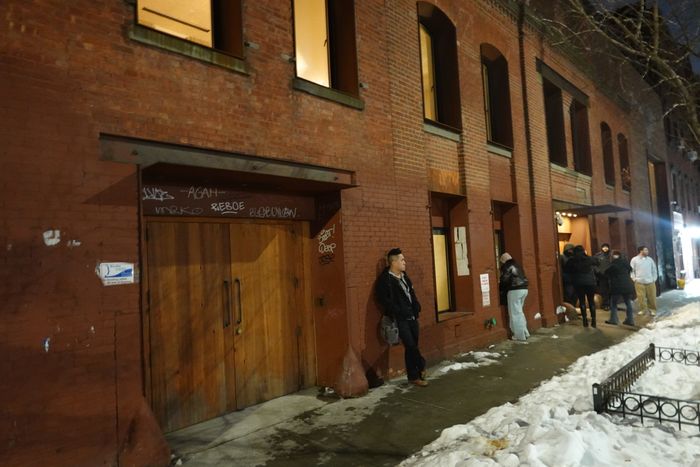
The untouched exterior of 58 Kent on a snowy night.
Photo: Adriane Quinlan
This article has been updated.
First Appeared on
Source link






