


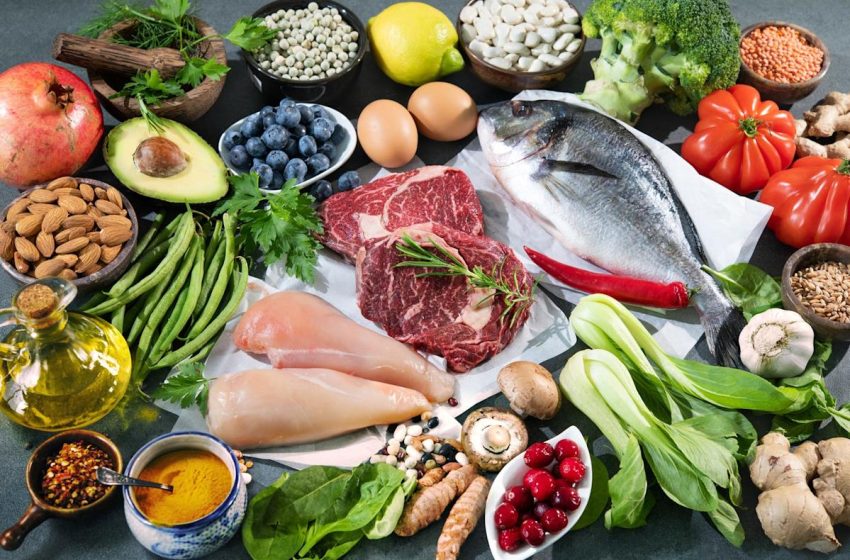
The Paleo Diet Never Existed. Scientists Found What Early Humans Were Really Eating.
This article contains affiliate links; if you click such a link and make a purchase, we may earn a commission.
Early Humans Weren’t Actually on The Paleo DietAlexRaths – Getty Images
“Hearst Magazines and Yahoo may earn commission or revenue on some items through these links.”
Here’s what you’ll learn when you read this story:
-
The paleo diet popularized the image of a meat-based caveman-style diet, but that image is far from the archaeological truth.
-
According to scientific research about what hominins and early humans ate, both fossil and genetic evidence show that they weren’t hypercarnivores.
-
The idea used to be that a plant-based diet during the transition to agriculture, but our ancestors were relying on plants hundreds of thousands of years before agriculture existed.
Paleo. Carnivore. Caveman. Whatever term you prefer to use for it, some of the most popular diets of recent decades are a throwback to hundreds of thousands of years ago, when early humans lived in caves and mostly ate the meat of megafauna they hunted with spears—right?
Wrong. The assumption that our Paleolithic ancestors ate nothing but animal protein and fat may be familiar from scenes of Fred Flintstone hoisting a monstrous dino drumstick or carting home a huge rack of brontosaurus ribs (never mind that dinosaurs and humans never actually coexisted). But that stereotype probably came from the plethora of fossilized bones we had to study versus the lack of plant materials, which never made it into the archaeological record because they decomposed too quickly.
Determined to find out whether meat was the only thing on a typical Stone Age menu, researchers from the Australian National University and the University of Toronto Mississauga went back in time by poring over scientific studies about whether the people we call cavemen were mostly carnivorous or not. As it turns out, the image of a hairy hunter ready to take a bite out of a bloody mammoth leg proved problematic. In fact, early Homo sapiens, and even their Neanderthal and Denisovan ancestors, sought out the most abundant sources of protein. Of course, that did mean meat to some extent. But it also meant plant materials like seeds and nuts.
“This focus on animals and hunting in the Paleolithic is, of course, in part due to the biases of the archaeological record,” the researchers said in a study recently published in the Journal of Archaeological Research, “including the high archaeological visibility of animal compared to plant remains, especially in the more distant past, and the challenges of assessing plant calories through isotopic analysis of bone collagen, which is only representative of protein intake and, therefore, underrepresents foods high in starches and fats.”
What the researchers found after poring through so many studies was that microscopic traces of plant-based foods, such as nuts, seeds, tubers, cereals, fruits, and vegetables, continue to surface at archaeological sites where Paleolithic human remains and evidence of hunting were also found. There was also evidence of processing plant tissues. Early processing methods such as pounding and grinding made tough plants easier to chew and digest, while cooking made them more palatable and possibly detoxified some species.
What many people still have trouble believing is that early humans were essentially flexitarians all along. Archaeologist Kent Flannery was the first to popularize a version this flexitarian idea with a 1969 theory called the Broad Spectrum Revolution, which suggested that hunter-gatherers began to look beyond megafauna during the Epipaleolithic, a stone age period between the Upper Paleolithic and Neolithic. Flannery thought this more diverse diet, which included wild grasses and other plant foods, was the predecessor to what he called the agricultural revolution. This was the accepted theory for decades.
Stereotypical caveman preferences for mammoth meat aside, there is a physiological reason that even hominins and early Homo sapiens who hunted to survive could not keep themselves alive on meat alone. Hypercarnivores are designed to process large amounts of lean protein. Humans, on the other hand, are limited in how much protein they can metabolize for energy. Because the human liver only has so much capacity to upregulate the enzymes that break down protein, overconsumption can lead to protein poisoning caused by ammonia and excess amino acids accumulating in the blood. This means several weeks of lethargy, nausea and diarrhea that could be fatal.
Recent analysis of ancient human and hominin genomes has strengthened the evidence for regular human plant consumption in the Paleolithic. AMY1, the salivary amylase gene that’s important in breaking down carbohydrates, began to duplicate before modern humans began to diverge from Neanderthals and Denisovans 800,000 years ago (agriculture, of course, would not appear until about 12,000 years ago). This gene is associated with high starch consumption, so finding it in the genomes of three Neanderthal individuals and one Denisovan suggests that our ancestors were eating plenty of starch before our species even diverged from them. Ancient DNA from plaque on the teeth of Neanderthal and Homo sapiens also showed starch adaptations.
Based on these findings, the researchers came up with a new hypothesis, the Broad Spectrum Species Hypothesis, which rewrites the history of what early humans and hominins ate. There were never any hypercarnivores in our evolutionary line. We are and always have been omnivores, flexible and adaptable to food availability. The Homo genus has mostly gravitated towards lipids and carbohydrates as opposed to lean protein. Our ability to process plant foods has contributed to the success of our genus and species. While Flannery thought plants were only consumed by stone age humans in the absence of meat, in fact we were already eating them.
So go ahead and savor that ridiculously expensive steak, but remember that man does not, cannot, and never really did live on meat alone.
You Might Also Like
First Appeared on
Source link






