


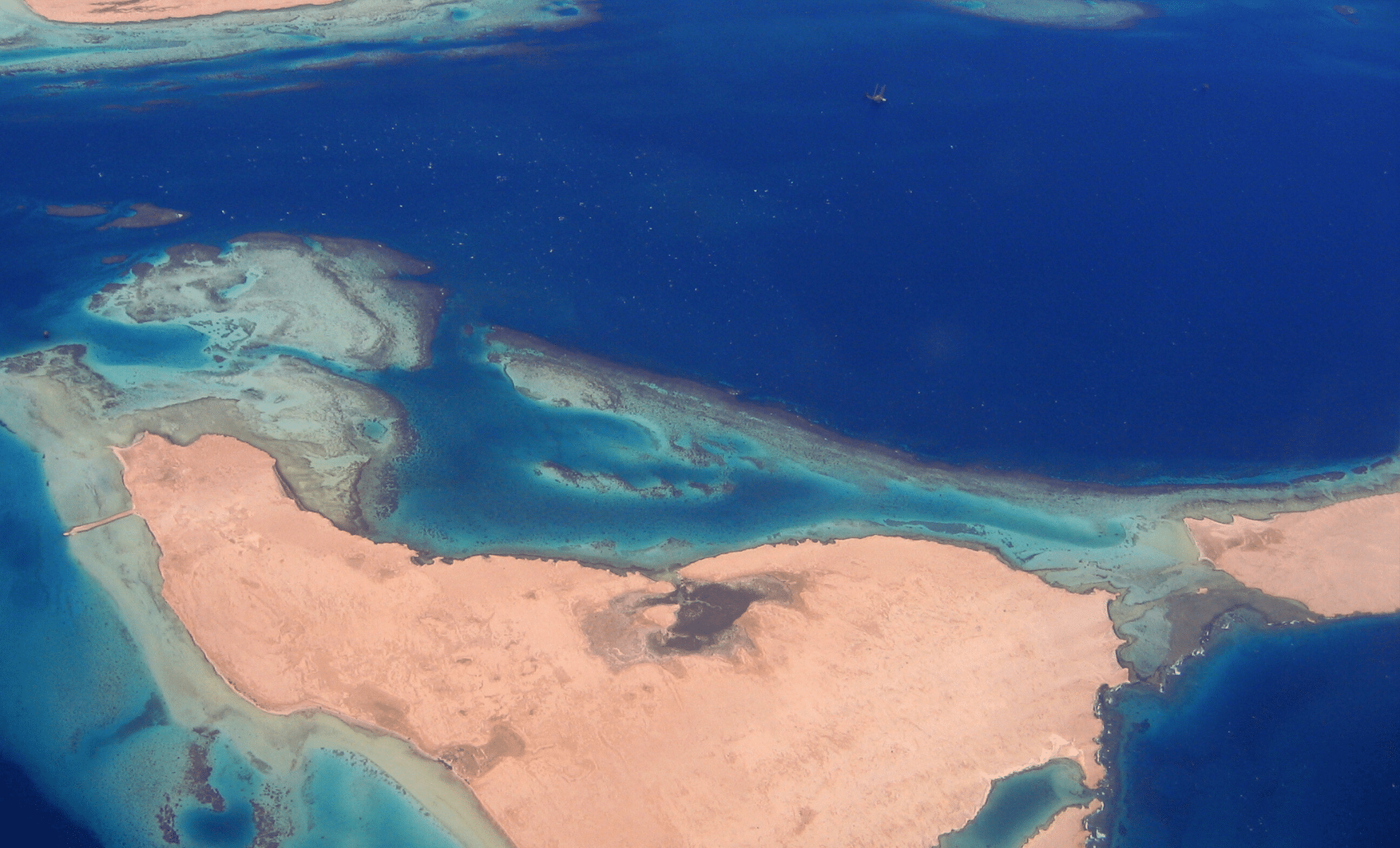
The Rift Between Africa and Asia Keeps Expanding—Defying All Scientific Predictions!
For millions of years, scientists believed the rift between Africa and Asia had ceased its tectonic pull. But recent findings challenge that assumption, revealing that the Gulf of Suez continues to widen, albeit at a much slower rate. Published on November 3 in Geophysical Research Letters, the study redefines how rifts evolve, suggesting that Earth’s tectonic activity is far more dynamic than previously thought.
The Unexpected Persistence of the Gulf of Suez Rift
The Gulf of Suez, a narrow body of water separating the African and Arabian tectonic plates, has long been considered a textbook example of a failed rift. About 28 million years ago, the Arabian plate began pulling away from Africa, creating the gulf. However, around 5 million years ago, it was thought that the rifting had ceased, and the gulf had no potential of transforming into a full ocean basin. Despite this belief, new research is uncovering ongoing tectonic activity in the region.
Researchers discovered that the gulf is still very slowly widening, at a rate of about 0.02 inches (0.5 cm) per year, much like the Basin and Range province in the western United States. David Fernández-Blanco, the study’s lead author and geoscientist at the Chinese Academy of Science’s Institute of Deep-Sea Science and Engineering, pointed out that this slow but steady expansion is evidence that the rift hasn’t fully “failed,” as once believed. Instead, it is taking a much slower and more complicated path of rift evolution.
“We believe our work fundamentally changes how we think about rift evolution,” Fernández-Blanco said. “The current conceptual model is rather binary: rifts either succeed (forming new ocean basins like the Red Sea) or fail (becoming completely inactive). We’re showing there’s a middle path by which rifts can decelerate without truly failing.”
Rethinking Rift Evolution: A Middle Path
Historically, tectonic rifts have been viewed through a simplistic lens. Rifts either progress to create new oceans, such as the Red Sea, or they shut down completely, leaving little sign of their once-active geologic processes. The new study, however, introduces the idea that rifts can decelerate without fully ceasing. As Fernández-Blanco explains, “Changing plate boundary conditions don’t necessarily shut down rifting. The forces driving rifting are more persistent and complex than simple plate motion would suggest.”
This discovery has far-reaching implications for how geoscientists understand rift systems around the world. The research suggests that many rifts once thought to be inactive may still harbor subtle tectonic movements that could eventually lead to renewed activity. The Gulf of Suez is just one example of how tectonic forces continue to shape the planet’s crust, albeit at a slower pace than traditionally understood. The study, published on November 3 in Geophysical Research Letters, presents a new perspective on plate tectonics, indicating that Earth’s geological systems may be far more persistent and dynamic than we’ve realized.
Ongoing Earthquakes and Shifting Faults: Signs of Hidden Activity
While the Gulf of Suez’s rift may not be as dramatic as the Red Sea’s, there are signs of continued tectonic activity that cannot be ignored. In addition to the slow widening of the gulf, researchers found other subtle but significant evidence of ongoing movement. Ancient coral reefs that once formed at sea level during warm periods have been raised up to 60 feet (18.5 meters) above the current sea level. These elevated coral reefs, along with the occurrence of small earthquakes and shifting fault lines, offer compelling proof that tectonic activity continues in the region.
“What struck us was the disconnect between the conventional narrative of complete tectonic quiescence and the hints of ongoing activity,” Fernández-Blanco noted. These findings suggest that tectonic forces are much more complex than the simplistic binary of “active” or “inactive” rifts that scientists have long relied on. As modern technology continues to enhance our understanding of plate tectonics, researchers are beginning to recognize that tectonic systems are far more intricate than originally imagined.
The Future of Rift Zones: Implications for Other “Failed” Rifts
The findings in the Gulf of Suez could change how scientists approach other rift zones around the globe. Many regions once thought to be “failed” rifts may still harbor hidden tectonic activity, waiting for the right conditions to flare up again. This research suggests that some of these areas could be more prone to earthquakes than previously thought. For example, tectonic systems like the Dead Sea fault zone, where the Arabian and African plates are converging, could reveal hidden rifting processes with the application of modern tools and techniques.
“We may reveal that Earth’s tectonic systems are more dynamic and persistent than we previously thought,” Fernández-Blanco said. The study’s findings emphasize the need for continuous monitoring of rift zones, as areas once considered dormant could suddenly experience renewed activity, leading to significant seismic events.
First Appeared on
Source link






