


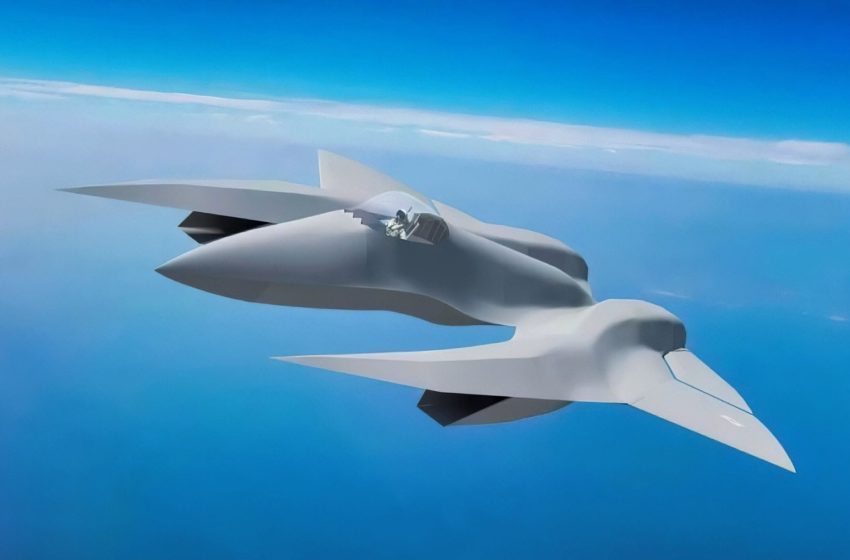
The SM-39 Razor Is the Mach 4 6th Generation NGAD ‘Rocket’ Fighter (The Air Force Doesn’t Have It)
Summary and Key Points: A private firm is promoting a sixth-generation concept jet called the SM-39 Razor, marketed as an air-dominance fighter/interceptor with all-weather strike capabilities and an unusual triple-fuselage layout intended to reduce drag for sustained high-speed flight.
-The concept highlights variable-cycle engines, advanced materials (including a titanium diboride cermet structure), and multiple configurations—single-seat, two-seat, and an uncrewed variant with “synthetic intelligence.”
-While internal bays and shaping nod toward stealth, the design also leans on speed as a survivability tool, raising questions about signature growth, external stores, and how realistically cockpit control of unmanned teammates could work in practice.
Mach 4? Stavatti Aerospace Says Its SM-39 Razor Could Outrun the F-47
A private company called Stavatti Aerospace is touting a sixth-generation stealth jet it says could reach Mach 4—a speed roughly twice as fast as the upcoming F-47 Next Generation Air Dominance fighter.
The new concept jet, called the SM-39 Razor, presents an unusual triple-fuselage design intended to reduce drag for sustained high-speed flight.
The SM-39 Razor is a concept aircraft. Stavatti characterizes the jet as a next-generation air dominance fighter, interceptor, and all-weather strike aircraft, as explained by Next-Gen Defense.
The Razor’s design emphasizes extremely high speeds, advanced materials, variable-cycle engines, and multiple configuration options (single-seat, two-seat, and autonomous variants).
The company’s literature also highlights the concept’s advanced avionics, active stealth features, and the integration of “synthetic intelligence” for autonomous operations.
SM-39 Razor Mach 4 “Hypersonic Interceptor”
The SM-39 Razor concept places high emphasis on high speed. It could exceed Mach 4 thanks to variable-cycle engines that balance cruise efficiency with supersonic thrust.
Its titanium diboride cermet structure and advanced engine designs suggest a push against the boundaries of conventional fighter performance.
The Razor concept claims a capability to maintain cruise above Mach 2.5, with bursts taking it to its max speed beyond Mach 4.
That would position the aircraft as a hypersonic interceptor or rapid-engagement platform.
Manned-unmanned teaming is a key consideration for the U.S. Air Force’s NGAD program as well as the Navy’s future F/A-XX fighter.
While it appears the SM-39 does have an unmanned variant, it is not clear how successfully a pilot could operate drones from the cockpit and employ the manned-unmanned concept.
SM-39 & Stealth
The SM-39 Razor includes low-observability design features and advanced airframe materials, but the overall design prioritizes performance and structural capability.
The platform has internal weapon bays to aid stealth, but its high-speed aerodynamic surfaces and external hardpoints could increase radar signature.
In addition, the SM-39’s modular design suggests an aircraft not innately optimized for stealth but able to be adapted for it.
F-47 Fighter from Boeing. Image Credit: U.S. Air Force Screenshot.

Shown is a graphical artist rendering of the Next Generation Air Dominance (NGAD) Platform. The rendering highlights the Air Force’s sixth generation fighter, the F-47. The NGAD Platform will bring lethal, next-generation technologies to ensure air superiority for the Joint Force in any conflict. (U.S. Air Force graphic)
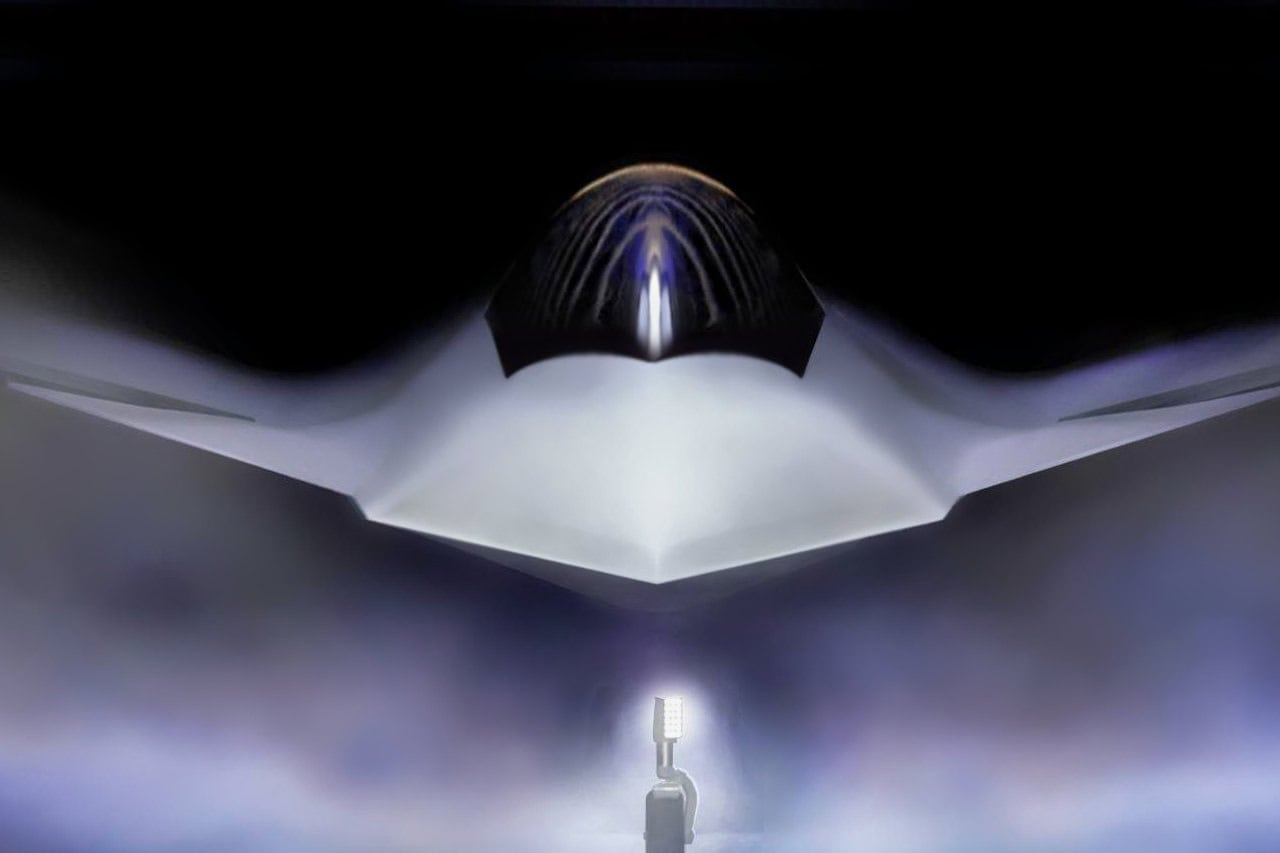
Shown is a graphical artist rendering of the Next Generation Air Dominance (NGAD) Platform. The rendering highlights the Air Force’s sixth generation fighter, the F-47. The NGAD Platform will bring lethal, next-generation technologies to ensure air superiority for the Joint Force in any conflict. (U.S. Air Force graphic)
SM-39 designers may believe that speed will stand in for stealth for survivability—although its smooth rounded contours and blended wing-body configuration do appear somewhat stealthy.
With three fuselage-type structures, one wonders whether the SM-39 will have a larger surface area, making it easier for enemy radar to detect.
The SM-39U unmanned configuration, with its AI-centric control system, could offer autonomous operations in contested airspaces or as part of a larger mixed force.
However, these autonomous features are conceptual and likely not ready to integrate into a family of systems as expected by the NGAD platform.
About the Author: Kris Osborn
Kris Osborn is the Military Affairs Editor of 19FortyFive and President of Warrior Maven – Center for Military Modernization. Osborn previously served at the Pentagon as a Highly Qualified Expert with the Office of the Assistant Secretary of the Army—Acquisition, Logistics & Technology. Osborn has also worked as an anchor and on-air military specialist at national TV networks. He has appeared as a guest military expert on Fox News, MSNBC, The Military Channel, and The History Channel. He also has a Masters Degree in Comparative Literature from Columbia University.
First Appeared on
Source link






