


The strange deep-sea creatures that eat whales
Rattail fish can grow up to a metre in length (3.2ft) and live at depths of up to 4,000m (13,100ft). Down there, far beyond the reach of the sun, the only light is made by living organisms – and the rattail’s big blue eyes can glimpse even the tiniest flickers of bioluminescence that give its prey away. Whisker-like barbels on its chin, too, sense any movement by tasty morsels – crustaceans or wriggling worms – that might be hiding just under the surface of the muddy ocean floor. A keen sense of smell, meanwhile, helps the rattail find its way to rotting carrion such as a whale carcass.
The opportunistic diners
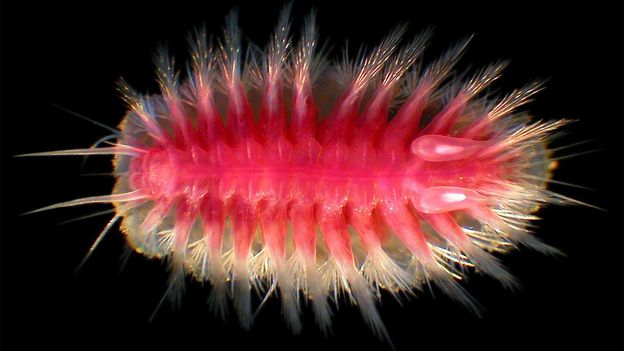
After the large scavengers have had their fill and the bones are stripped, smaller diners arrive. “Osedax – the ‘bone-eating worms’ – arrive in large numbers,” says Rouse. Osedax are a type of polychaete worm. Commonly known as bristle worms, these are a diverse and abundant group of segmented worms that populate a whale fall in their thousands. Some of the species at this “enrichment-opportunist” stage have only ever been found at the site of a whale fall.
 Adrian Glover
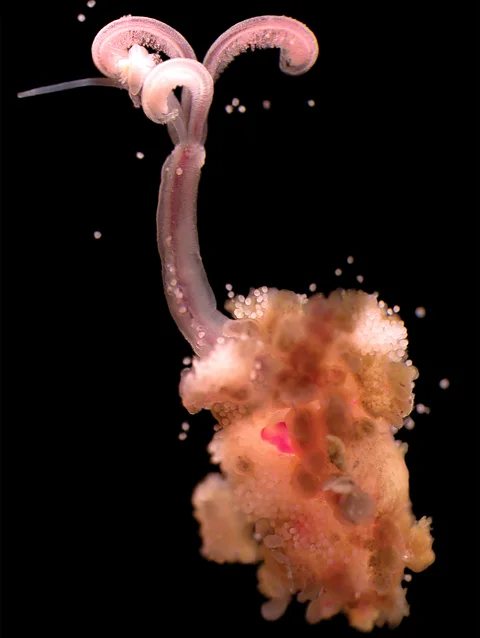
The “bone-eating snot-flower” – Osedax mucofloris – in a polychaete worm that was first discovered in 2005 on the carcass of a whale. These bone-eating worms inject acid into the bone. “It’s like they’re putting their gut inside the bone and absorbing it directly – quite strange,” says Glover.
Over the course of a decade, an entire population grows, lives and dies on a single whale fall. When all the skeleton has been consumed, just before they die, the Osedax release larvae that will travel on ocean currents in the hope of happening upon another whale carcass to settle on, and start the whole cycle again.
First Appeared on
Source link






