


The Stupidest Glitch Imaginable Killed a $72 Million Lunar Mission in a Single Day
NASA’s Lunar Trailblazer probe didn’t exactly live up to its name after it launched from Kennedy Space Center last year. The $72 million satellite—designed to map and study water across the surface of the Moon—mysteriously went dark on day one of its mission, and now we know why.
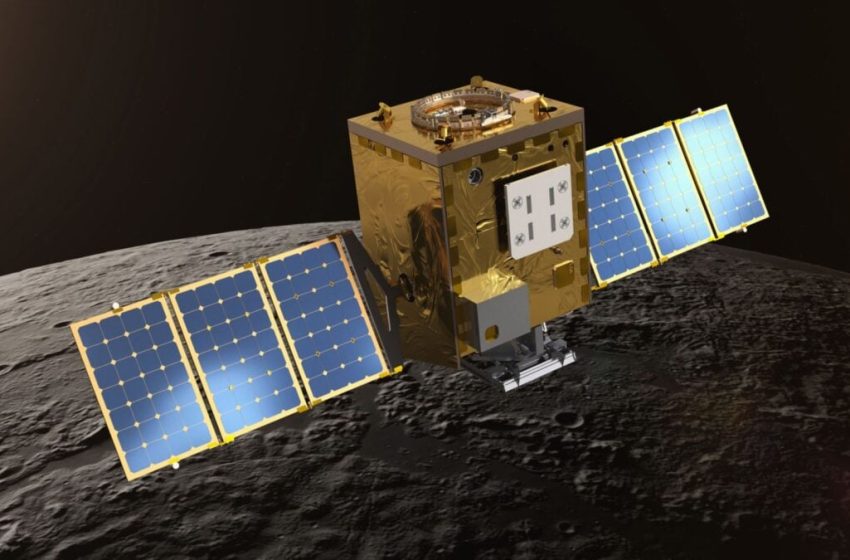
Following the incident, NASA convened a review panel to investigate what went wrong. The panel’s report, recently obtained by NPR via a Freedom of Information Act request, states that the software that should have pointed Lunar Trailblazer’s solar panels toward the Sun instead pointed them 180 degrees away from the Sun. Whoops.
This caused the satellite to enter a “cold state” with low power and no attitude control shortly after launch, resulting in a total loss of communications with ground teams, according to the report. This, coupled with “many erroneous on-board fault management actions,” ultimately led to Lunar Trailblazer’s failure.
“Any single anomaly could have been recoverable given enough time, but the combination was too much to overcome,” the report states.
NASA did not respond to Gizmodo’s request for comment, but said at the time of Lunar Trailblazer’s termination that it learned from the mishap. Lockheed Martin, the company that built the satellite, said in an emailed statement that it too has been applying “lessons learned” from the incident to enhance its small satellite architecture.
“While Lunar Trailblazer didn’t achieve its mission goals, the team successfully demonstrated many milestones, including navigating a main engine swap and an intense vibration test campaign,” the statement reads. “Across 50 years of deep space exploration, we have grown from mission anomalies, and Lunar Trailblazer is no exception.”
Insufficient testing
Lunar Trailblazer was one of the science payloads on the second Intuitive Machines robotic lunar lander mission, IM-2, which launched in February 2025 aboard a SpaceX Falcon 9 rocket. The satellite separated from the rocket as planned about 48 minutes after launch, and mission operators established communications. But the next day, they suddenly lost contact.
Mission operators tried to reestablish contact with Lunar Trailblazer for months before finally throwing in the towel in July. NASA officially announced the end of the mission in August, stating that the team was unable to fully diagnose the problem or keep the satellite on its flight path without two-way communications.
The agency selected Lockheed Martin to design and build Lunar Trailblazer in 2020. According to the report, the company did not sufficiently test solar array phasing prior to launch. A true end-to-end SA phasing test “should have caught the error in the flight code that could have then been corrected before launch, eliminating one of the main anomalies during the mission,” it states.
It’s important to note, however, that Lunar Trailblazer was a low-cost (Class D) mission. In a statement to NPR, Lockheed Martin suggested that lower-cost missions can be riskier, which is indeed a widely accepted tradeoff in spaceflight.
The Moon’s water remains mysterious
Had its deployment been successful, Lunar Trailblazer would have been a game changer in understanding the water on the surface of the Moon. While scientists know this precious resource is there, they know little about its form, abundance, or distribution.
The satellite would have used two cutting-edge instruments to help researchers investigate how different forms of water are distributed across the lunar surface, how thermal properties affect their distribution, and how the different forms of water change over time, according to NASA’s Jet Propulsion Laboratory. It would’ve been an incredible asset to NASA’s Artemis program, which ultimately aims to establish a sustained human presence on the Moon.
At the time of the mission’s termination, NASA said some of its technology will live on in the JPL-built Compact Imaging Spectrometer for the Moon (UCIS-Moon) instrument. The agency has selected that spectrometer, which is identical to Lunar Trailblazer’s, for an orbital flight opportunity. Hopefully the lessons learned from this failed mission will safeguard future efforts to investigate lunar water.
This article was updated to include comments from Lockheed Martin.
First Appeared on
Source link






