


The U.S. Brings Back Cold War-Era Base to Create the World’s Largest Weapons Hub Just Miles from Mainland China
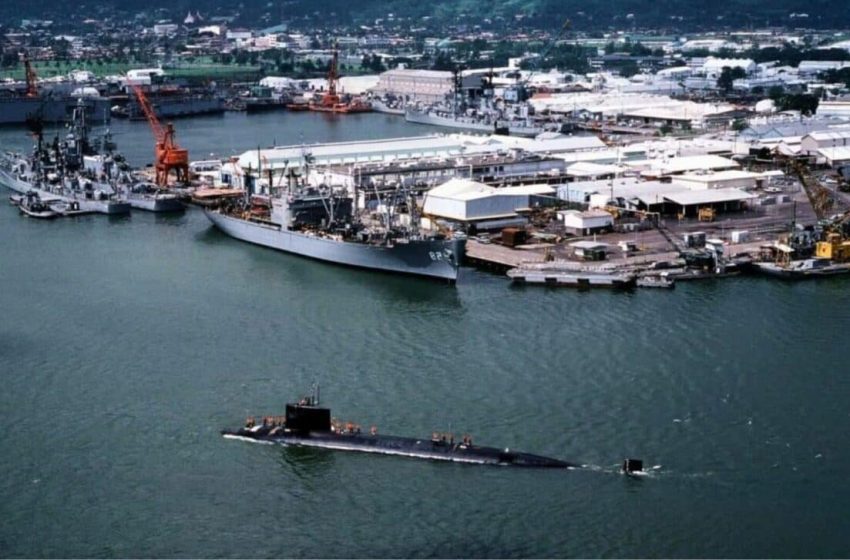
Once a dormant coastal facility in western Luzon, Subic Bay has reentered strategic calculations across the Indo-Pacific. Backed by foreign investment and rising regional tensions, the site has attracted renewed attention from policymakers, defense analysts, and military planners.
The activity is not limited to infrastructure. Trilateral collaboration between the Philippines, the United States, and South Korea is reshaping what had long been a civilian port into a zone of military and industrial interest. Developments have been steady but largely understated.
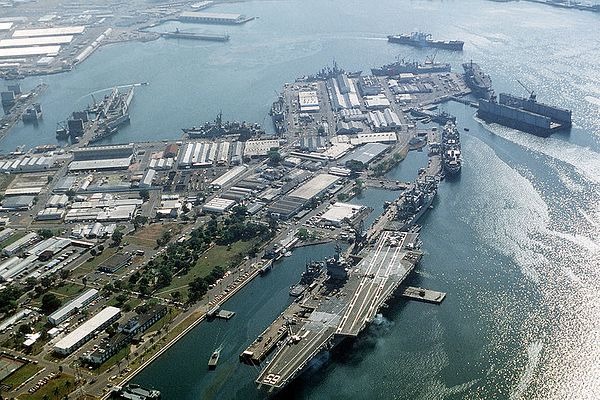
Located just over 1,000 kilometers from Taiwan, Subic Bay now hosts new logistical assets and commercial shipbuilding activity, alongside emerging defense considerations. What was once the largest US naval base in Asia may be entering a second operational life.
Shipbuilding Returns as Strategic Capital Fuels a New Era
In August 2025, Philippine President Ferdinand Marcos Jr. led the inauguration of a newly reactivated shipyard at Subic Bay, operated by HD Hyundai Heavy Industries Philippines, a local subsidiary of the South Korean conglomerate. The site, previously run by Hanjin Heavy Industries before its 2019 bankruptcy, has been rebranded Agila Subic following acquisition by US private equity firm Cerberus Capital Management.
According to figures reported by USNI News, the facility is expected to more than double the Philippines’ shipbuilding capacity, from 1.3 million to 2.5 million deadweight tons annually, and employ up to 4,300 workers by 2030. Marcos stated that the site would also increase the country’s annual production of large oil tankers from five to eight vessels.
Public announcements have emphasized commercial shipbuilding. However, Hyundai’s history with the Philippine Navy—supplying four frigates and six offshore patrol vessels since 2016—has positioned the company for further defense contracts under Manila’s ongoing military modernization program.
Hyundai officials have signaled their intent to use the Subic facility to support both civilian and regional naval orders. While military ship construction has not been confirmed for the site, it remains under consideration.
US Military Logistics Quietly Expand Around the Port
Subic Bay is now home to multiple tenants with defense links. Alongside Hyundai, the port complex houses the Philippine Navy, US defense contractor Vectrus, and SubCom, a US-based submarine cable firm.
As detailed by Interesting Engineering, the US Marine Corps has leased a 57,000-square-foot warehouse within the former Subic Bay Naval Supply Depot. This supports logistical prepositioning consistent with regional planning frameworks under the Enhanced Defense Cooperation Agreement (EDCA), which was expanded in 2023 to include four additional Philippine bases open to US forces.
Separately, a 2025 directive from the US House of Representatives instructed the Department of Defense to study the feasibility of forward-deployed ammunition production in the Indo-Pacific by 2026. According to reports from Indian Defence Review and Interesting Engineering, the Philippines—and Subic Bay specifically—is among the candidate locations under evaluation.
The study includes the potential local production of explosive precursor materials such as nitrocellulose and nitroglycerin. No construction related to these capabilities has been reported as of early 2026, and Philippine authorities have not issued public statements on the subject.
Marcos Shifts Defense Posture amid Regional Flashpoints
Subic Bay’s location—approximately 1,100 kilometers from southern China and Taiwan—places it within the effective range of regional missile systems and makes it a candidate for joint force projection in contingency planning.
Since taking office in 2022, President Marcos has pursued a realignment of Philippine defense policy toward closer US cooperation. During a 2025 visit to Washington, he described the Philippine posture as a move toward “self-reliant defense,” according to Indian Defence Review.
Expanded access under EDCA has already enabled US deployments of Typhon intermediate-range missile systems and Nemesis anti-ship missiles to Philippine territory, though not specifically to Subic Bay. These systems increase Washington’s deterrence posture in the western Pacific, particularly amid tensions in the South China Sea, referred to by Manila as the West Philippine Sea.
Local Criticism Intensifies as Foreign Footprint Grows
While national leadership has endorsed expanded US cooperation, the reactivation of Subic Bay has not been universally accepted within the Philippines. Vice President Sara Duterte has publicly expressed concern that the Philippines could become a “bullet shield” in a potential regional conflict.
The International Center for Human Rights in the Philippines, cited by Interesting Engineering, characterized the project as an extension of the US “military-industrial complex” and raised questions about national sovereignty and long-term implications for foreign military presence.
Incidents at Subic Bay have added to security concerns. In mid-2025, six Chinese nationals were detained in the area on espionage-related charges, according to reports from Interesting Engineering. Philippine authorities have not released further details, and the legal process remains pending.
Subic Operations Confirmed Through Q1 2026
As of February 2026, the Subic Bay shipyard is fully operational for commercial shipbuilding under the management of HD Hyundai Heavy Industries Philippines. The site has completed steel-cutting for its first new vessel under the reactivation program, according to official accounts reported by USNI News.
The feasibility study on forward-deployed ammunition production, mandated by the US Congress in 2025, is in progress and expected to conclude by Q4 2026. No additional construction related to weapons manufacturing has been confirmed at the site.
The US Marine Corps warehouse lease, EDCA logistics upgrades, and commercial vessel fabrication are the only verified ongoing activities at Subic Bay. No changes to the legal framework governing foreign military operations at the site have been announced by either the US or Philippine governments.
First Appeared on
Source link






