


The Y Chromosome Is Vanishing, And the Effects on Men Have Already Begun
The biological necessity of the Y chromosome is undergoing a fundamental reassessment as evidence confirms its disappearance in specific mammalian lineages. While this chromosome has served as the definitive trigger for male development for over 160 million years, it is currently in a state of terminal evolutionary decay. In most species, the loss of this genetic material results in the immediate cessation of male production and subsequent population collapse.
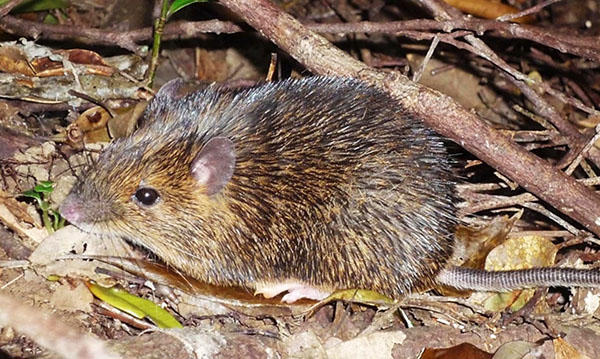
However, a rare rodent native to the Japanese island of Amami Ōshima has achieved the total elimination of the Y chromosome without losing the male sex. This evolutionary pivot reveals that the “master switch” for biological maleness can migrate from a dying chromosome to a stable one to ensure species survival. The discovery challenges the long-held theory that the degradation of the male-specific chromosome inevitably leads to species extinction.
Hokkaido University published the results of the study confirming this specific genetic sequence that now regulates sex in these rodents. The study, led by Professor Asato Kuroiwa and published in Proceedings of the National Academy of Sciences, focused on the Amami spiny rat (Tokudaia osimensis), an endangered species that lacks the SRY gene, the traditional “maleness” gene. Researchers identified a 17,000-base-pair DNA duplication located on chromosome 3 that has assumed the role of the primary male-determining switch.
Genomic Analysis of the SOX9 Regulatory Region
The human Y chromosome has shrunk significantly, retaining only 55 of the 1,438 genes it originally shared with the X chromosome. At the current rate of attrition, it is projected to disappear in approximately 4.6 million years. The Amami spiny rat serves as a completed model of this process. According to the 2022 research, the 17,000-base-pair duplication appears in all male members of the species but is entirely absent in females.
Technical analysis reveals that this duplication acts as an enhancer for the SOX9 gene, which is essential for testis development. In standard mammalian biology, the SRY gene triggers SOX9. In the Amami spiny rat, the duplicated sequence on chromosome 3 has evolved to activate SOX9 independently. This shift ensures the production of males despite the absence of the traditional male chromosome.
This genetic arrangement represents a “turnover” event, where a critical biological function migrates to a different part of the genome. A study published in Nature on January 14, 2025, confirmed that similar genomic pressures are active in other mammalian lineages. The Hokkaido team verified that this new regulatory mechanism has remained stable for approximately 2 million years, indicating a permanent evolutionary fix.
Regarding the broader implications, Professor Kuroiwa stated: “The Y chromosome is disappearing, but its disappearance does not mean the disappearance of males.” This observation is supported by the existence of the mole vole, another species that has survived this loss through a separate, yet-to-be-identified genetic bypass.
Escaping the Mutational Trap
The degradation of the Y chromosome is caused by a lack of recombination. Because it does not pair with a matching partner during meiosis, it cannot utilize homologous recombination to repair DNA damage. Consequently, it accumulates mutations that disable its genes. A study published in Cell in 2023 notes that by moving the sex-determining trigger to an autosome, the Amami spiny rat has placed this vital instruction in a region that undergoes regular repair.
This transition involves significant biological hurdles. In most mammals, females have two X chromosomes (XX) and males have one (XY). The Amami spiny rat has moved to an XO/XO system, where both males and females possess only a single X chromosome. Data from the National Institutes of Health indicates that this configuration avoids the lethal gene-dosage imbalances that often occur when sex chromosomes are lost or damaged in other species.
The Hokkaido researchers utilized long-read sequencing to confirm that the 17,000-base-pair duplication is located upstream of the SOX9 locus. This specific location allows the duplication to interact with the gene’s promoter region. This suggests that the “maleness” program is hardware-independent; the instructions can be executed from various locations within the genome if a suitable promoter evolves.
How Different Species Solve the Post-Y Puzzle
The findings are being contrasted with data from the Transcaucasian mole vole (Ellobius lutescens). Unlike the Amami spiny rat, the mole vole does not appear to use the SOX9 duplication. Initial genomic mapping suggests it may utilize variations in the Sox3 or DMRT1 genes. These differences indicate that mammals may have multiple backup pathways for sex determination that only become active under extreme evolutionary pressure.
There are clear limitations to the current reporting. Because the Amami spiny rat is an endangered species, the team was restricted to a limited number of tissue samples. Researchers have not yet confirmed if the 17,000-base-pair duplication is the only factor involved, or if other subtle genetic modifiers are required. The species’ survival in a stable XO/XO system remains a subject of investigation regarding its long-term genomic health.
The discovery refutes the theory that the loss of the Y chromosome leads to species extinction. Instead, it demonstrates that sexual dimorphism can be maintained through autosomal regulation. This relocation of genetic duty protects the male-determining mechanism from the mutational decay that defines the chromosome’s history. The spiny rat serves as a successful proof-of-concept for mammalian reproduction in a post-Y-chromosome era.
First Appeared on
Source link






