


These Cheap Russian Drones Are Breaking NATO’s Billion-Dollar Defenses
As Russia ramps up drone production and more countries replicate the technology, NATO members are turning to Ukraine’s battle-hardened model for inspiration. From laser-guided missiles to electronic warfare and interceptor drones, a complex strategy is emerging to address both the military and psychological impact of persistent drone attacks.
Russia’s evolving use of strike drones has triggered alarm across the alliance. During the 2025 cross-border drone raid, Patriot missile systems tracked incoming aircraft but held fire to conserve their expensive long-range missiles. Meanwhile, only four drones were downed by scrambled Dutch and Polish fighter jets, despite a total of 20 breaching Polish airspace. Thirteen others crashed across Polish and Latvian territory. Poland invoked NATO’s Article 4 emergency consultation clause following the incursion.
The scale and speed of the raid underscored how Russia’s strategy aims less at military precision and more at exhaustion, forcing defenders to drain resources while delivering terror and economic disruption. “That’s what makes it really deadly,” said Samuel Bendett of the Center for a New American Security (CNAS), who emphasized the psychological nature of these weapons alongside their tactical role.
Low-Cost Kamikaze Drones Shift the Balance
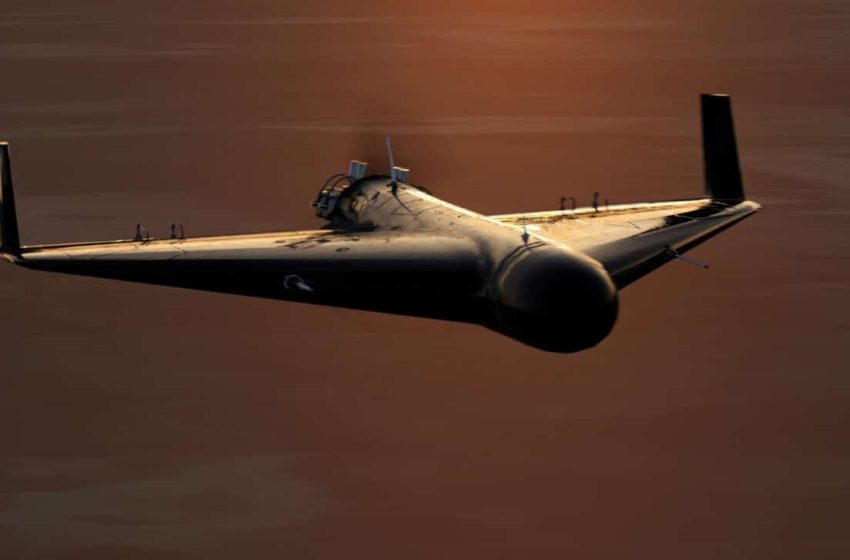
The Shahed-136, mass-produced for between $20,000 and $40,000, can travel hundreds of miles with a 200-pound explosive payload. With delta-wing construction for better stability and compact storage, these drones are not only efficient but also widely replicable. According to Popular Mechanics, Russia currently produces up to 5,500 strike drones per month and continues refining their accuracy, destructiveness, and resistance to countermeasures.
These drones are already inspiring clones worldwide. “China and Turkey have a Shahed clone,” said Bendett, adding that North Korea likely has one too, potentially built with Russian parts. While not particularly effective against military targets, Russia uses them against poorly-defended civilian infrastructure. Their slow cruising speed of about 115 mph gives defenders some time to react, but their volume and stealth, hugging terrain to avoid radar, make many of them difficult to intercept.
The risk isn’t limited to Ukraine. Shahed-136s can reportedly travel up to 1,500 miles, putting central European capitals like Berlin and Paris within reach if launched from Belarus. A similar drone launched from Yemen reached Tel Aviv in 2024, illustrating the plausibility of such long-range attacks.
Existing Defenses Are Too Expensive to Scale
Traditional air defense systems are financially unsustainable for countering cheap drones. Even short-range weapons like Sidewinder or Stinger missiles cost hundreds of thousands of dollars per shot, far exceeding the value of their targets. The U.S. Army’s new Freedom Eagle missile comes with a price tag of up to $200,000, enough to manufacture several Shaheds. Guided munitions like the $35,000 APKWS II, laser-guided Hydra rockets, offer a more cost-effective alternative and are already used by Ukrainian and American F-16s.
But these systems come with their own challenges. Airborne APKWS deployments demand costly flight hours, up to $44,000 per sortie, and risk from new Russian tactics, such as arming Shaheds with air-to-air missiles. APKWS launched from ground platforms like the U.S. Navy’s VAMPIRE are more affordable but limited in range.
Other efforts include point defense systems. Ukraine relies on WWII-style machine gun trucks and automated gun emplacements. German-supplied Gepard self-propelled anti-aircraft vehicles, equipped with radar and computer-guided autocannons, have proven more effective. Naval forces have resorted to ship-mounted howitzers and CIWS to avoid wasting high-cost missiles. Energy weapons like lasers and microwaves are also entering service, with Israel’s Iron Beam reportedly neutralizing 40 Hezbollah drones by mid-2025. But their high power demands and poor performance in fog limit their effectiveness.
Intercepting Drones with Drones
One of the most promising developments is drone-on-drone interception. While advanced interceptors like the jet-powered Coyote Block 2 can match the Shahed’s flight path, they cost between $120,000 and $200,000, still significantly more than their targets. But in 2024, Ukraine began mass deploying low-cost interceptors capable of targeting Russian reconnaissance drones.
By the following year, Ukrainian forces introduced the Sting, an anti-Shahed drone costing roughly $5,000 per shot. Meanwhile, former Google CEO Eric Schmidt helped fund the Surveyor AS3, a $15,000 interceptor already operational in Ukraine and Poland. Reusable drone interceptors using net guns or energy pulses are also being tested, though effectiveness against heavier strike drones remains uncertain.
According to Bendett, defeating drone swarms will require layered systems that combine various technologies and coordinate via shared sensors and command structures. Ukraine’s experience offers a model: using diverse, affordable, and geographically distributed defenses to disrupt drone attacks without overextending resources. “There’s no need to reinvent the wheel,” said Bendett. “Just look at what Ukraine has done.”
First Appeared on
Source link






