


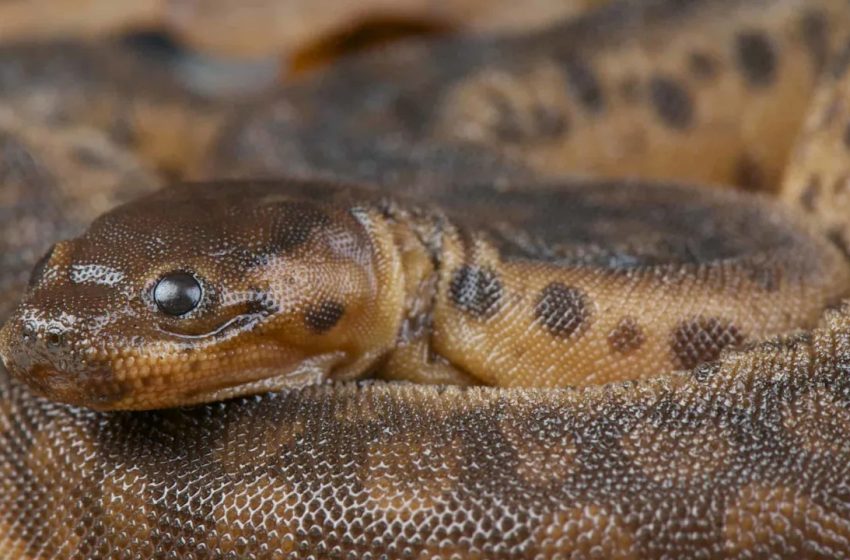
This 37-Million-Year-Old ‘Paradox Snake’ Sat in a Museum Drawer for 40 Years Before Scientists Realized It Was New
The post This 37-Million-Year-Old ‘Paradox Snake’ Sat in a Museum Drawer for 40 Years Before Scientists Realized It Was New appeared first on A-Z Animals.
Quick Take
-
A 37-million-year-old snake fossil discovered at Hordle Cliff in England has been identified as a new species, Paradoxophidion richardoweni.
-
The tiny vertebrae fossil sat unnoticed in the Natural History Museum collection for more than 40 years before researchers recognized it as something new.
-
The species is an early-branching member of the caenophidians — the group that includes over 80% of today’s living snake species.
-
The fossil may represent the oldest known relative of modern elephant trunk snakes (family Acrochordidae), hinting that it could have been aquatic.
Millions of years ago, England was a much different place than it is today. In the Late Eocene, England was rich with tropical, swampy forests — the perfect habitat for reptiles. A newly found snake species, discovered from a fossil dug up in southern England in 1981, dates back 37 million years. The unusual species (Paradoxophidion richardoweni) sheds light on the evolution of snakes in the British Isles.
Many ancient reptile fossils have been found at Hordle Cliff in Hampshire, England.
©Andy Tait/Shutterstock.com
(Andy Tait/Shutterstock.com)
A Discovery Made From a Fossil Found Over 40 Years Ago
The fossils consisted of 31 vertebrae of a prehistoric snake uncovered at Hordle Cliff on England’s south coast. The ancient bones sat in a museum drawer in the Natural History Museum in London, untouched for decades. That is, until Dr. Georgios Georgalis began investigating the museum’s old fossil collection.
Georgalis explained in a statement how he recognized the old fossil was something special. “It was my childhood dream to be able to visit the Natural History Museum, let alone do research there,” said Georgalis. “So, when I saw these very weird vertebrae in the collection and knew that they were something new, it was a fantastic feeling.” Georgalis was the lead author of a study published in November 2025 announcing the discovery of the new species.
The cliffs of Hordle Cliff are comprised of soft clay and sand. Because the material erodes quickly, relatively well-preserved fossils become exposed, making Hordle Cliff a prime spot for fossil collecting. Larger fossils found at Hordle Cliff have been well studied, such as Paleryx, one of the earliest named constrictor snakes in the fossil record. But many of the smaller fossil snakes uncovered at the site have been overlooked until now.
What Do We Know About Paradoxophidion richardoweni?
The only bones in the fossils were from the snake’s backbone. It revealed a large nerve canal and a strong support structure in the spine. Its shape is different from that of primitive snakes and today’s modern species. The Paradoxophidion fossil is only a few millimetres long. Georgalis estimates the full-size adult snake was probably around 3 feet long. The research team used micro CT scans to create three-dimensional models of the fossils. The models revealed the bones belonged to a single species that hadn’t yet been discovered.
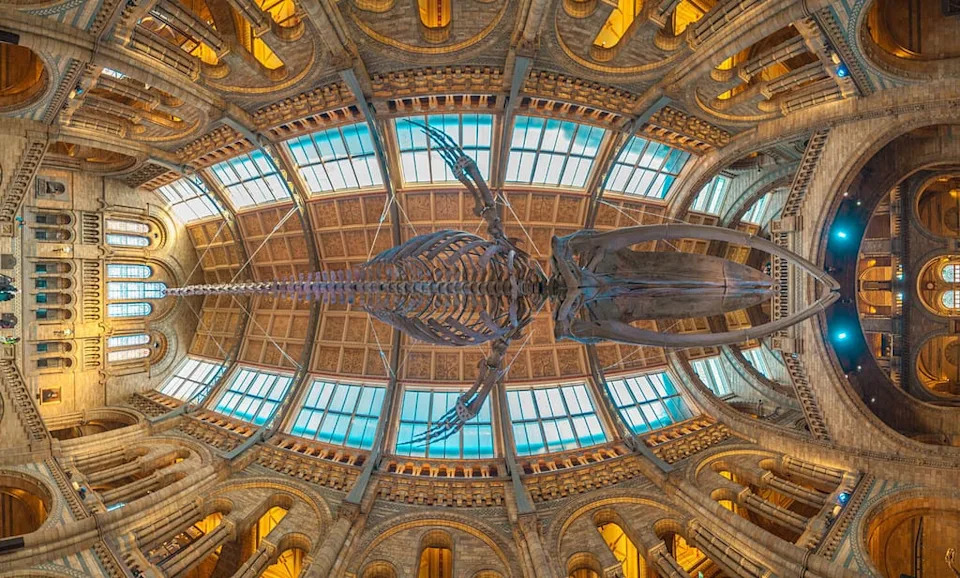
The Natural History Museum in London houses numerous fossils, including snake specimens found at Hordle Cliff.
©Londons Finest Eye/Shutterstock.com
(Londons Finest Eye/Shutterstock.com)
Because the fossil pieces did not contain a skull, scientists don’t have many clues about what the ancient snake ate. However, the vertebrae do provide some fascinating information. Paradoxophidion is an early-branching member of the caenophidians, a group that contains over 80% of today’s living snake species.
The Tiny Fossil Offers New Clues Into Snake Evolution
The bones revealed a strange mix of characteristics that are found in different snake species today. Researchers named the new species Paradoxophidion, which means ‘paradox snake’ in Greek. Its species name, richardoweni, is in honor of the British biologist, Sir Richard Owen. Owen played a key role in founding London’s Natural History Museum and also named the first fossil snakes from Hordle Cliff.
“It’s especially exciting to have described an early diverging caenophidian snake, as there’s not that much evidence about how they emerged,” said Georgalis, “Paradoxophidion brings us closer to understanding how this happened.”
The Ancient Snake Could Be the Oldest Member of the Elephant Trunk Snake
Another interesting insight, Paradoxophidion is similar to a modern group of non-venomous aquatic snakes, known as the Acrochordids. Georgalis explained, “As Paradoxophidion is really similar to the acrochordids, it’s possible that this snake could be the oldest known member of this family. If it was, then it could mean that it was an aquatic species, as all Acrochordids are aquatic.”
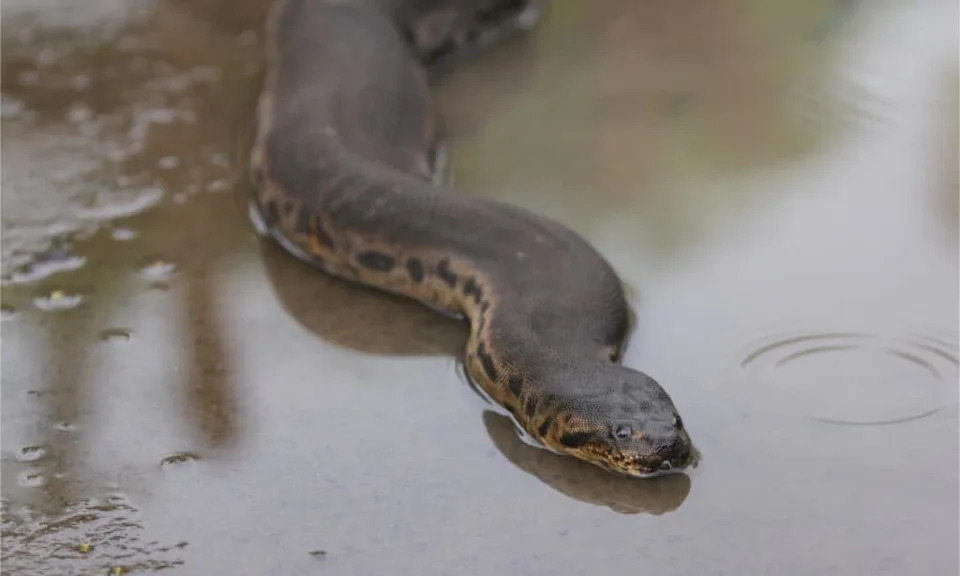
Paradoxophidion might be an early member of the Acrochordidae family.
©Mufti Adi Utomo/Shutterstock.com
(Mufti Adi Utomo/Shutterstock.com)
The Acrochordidae family is a non-venomous, aquatic snake family living in Southeast Asia and Australia. They have loose, baggy skin and are commonly called elephant trunk snakes, file snakes, and wart snakes. Scientists believe Acrochordids branched from the Colubroide family over 50 million years ago.
What Comes Next?
To find out more about Paradoxophidion and what family it belongs to, scientists will continue to investigate the remaining snake fossils in the museum collection. Researchers hope to find more clues on snake evolution. Georgalis explained that there are many remains to study, including the bones of a giant aquatic snake, Palaeophis, and other bones of different shapes, which may even lead to another new species discovery.
The post This 37-Million-Year-Old ‘Paradox Snake’ Sat in a Museum Drawer for 40 Years Before Scientists Realized It Was New appeared first on A-Z Animals.
First Appeared on
Source link






