


This Dark Berry Drink Is Quietly Rewriting the Rules of Metabolic Health
Researchers at Montana State University used an innovative humanized mouse model to test whether polyphenol-rich Aronia juice could shield the body from diet-induced inflammation. Their findings, published in Frontiers in Nutrition, suggest the berry’s protective effects are real, but they don’t work the same way for everyone.
The study is part of a broader scientific conversation about how food, microbes, and metabolism interact. Rather than treating diet as a one-size-fits-all intervention, this research points to a more nuanced picture: the same food can produce very different outcomes depending on the inflammatory profile of a person’s gut ecosystem.
The Experiment: Human Microbiomes in Mice
To get around the complexity of human genetics, the research team transplanted gut bacteria from two carefully selected human donors into germ-free mice. According to the study, both donors were women with similar body measurements, but one had low systemic inflammation at rest and after a high-fat meal, while the other had high systemic inflammation under the same conditions.
The mice were bred to carry these human microbial communities into a second generation, effectively creating two distinct mouse populations with “humanized” gut ecosystems. Blood chemistry and stool analysis confirmed that each group reflected its respective human donor, not just in microbial composition, but in measurable metabolic markers as well.
Over eight weeks, mice drank either Aronia juice or a sugar-matched control beverage. After two weeks on a standard diet, all mice switched to a high-fat diet designed to mimic Western eating patterns, consisting of over 40% fat and rich in sugars and trans-fatty acids.
What the Juice Did, and Didn’t Do
The results showed Aronia juice provided meaningful protection against the metabolic disruption caused by the high-fat diet, but the degree of protection varied sharply by donor. According to the findings, mice carrying the low-inflammation microbiome were significantly more resistant to high-fat-diet-induced losses in microbial diversity, a key marker of gut health, when they consumed Aronia juice. Mice with the high-inflammation microbiome showed the same decline in diversity as the control group, regardless of juice treatment.
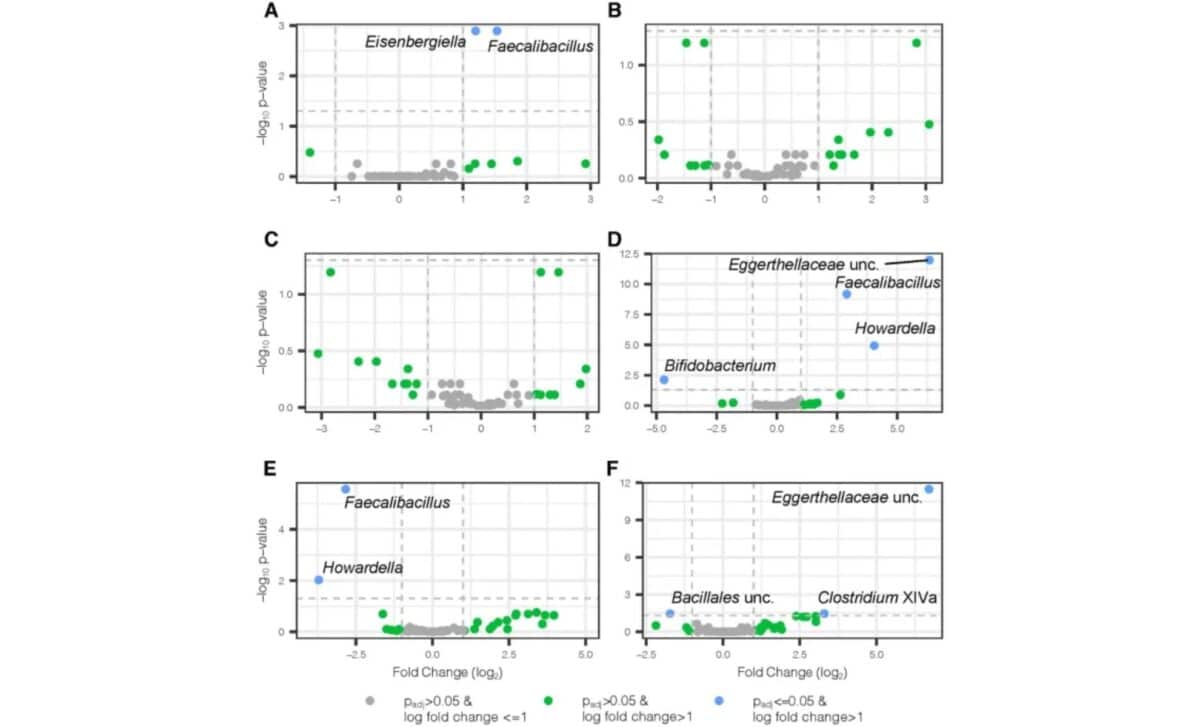
One of the study’s notable findings involved a bacterial family called Eggerthellaceae, which increased approximately seven-fold in Aronia-treated mice. This family is known for its ability to break down polyphenols into smaller compounds the body can actually use, suggesting the juice was actively reshaping the microbial environment in beneficial ways.
Blood analysis added further evidence. According to the researchers, Aronia-treated mice showed higher levels of phosphatidylcholines, lipid molecules essential to cell membrane integrity and gut barrier function, as well as significantly lower levels of trimethylamine-N-oxide (TMAO), a compound linked to elevated cardiovascular risk. Lower TMAO, in this context, points to a healthier pattern of choline metabolism and a likely reduction in the kind of microbial activity associated with chronic disease.
Why the Microbiome Makes All the Difference
Perhaps the most clinically important takeaway from the study, published in Frontiers in Nutrition, is that Aronia’s benefits were not universal, they were microbiome-dependent. According to the authors, one specific metabolite called indoleacrylic acid, which has antioxidant and anti-inflammatory properties and supports gut barrier integrity, was only elevated in Aronia-treated mice carrying the low-inflammation microbiome. Only certain bacterial species carry the enzymes needed to produce it.
This finding reinforces what researchers increasingly suspect: that polyphenol-rich foods don’t act directly on human cells so much as they feed and shape the microbial populations that then act on human cells. The same juice, consumed by two people with different gut ecosystems, can produce measurably different biological outcomes.
The study’s authors are careful to acknowledge its limitations, small sample sizes, female-only donors, and the inherent gap between animal models and human populations. According to the paper, further research with more donors and mixed-sex populations is needed before these findings can be broadly generalized. Still, the mechanistic detail the humanized mouse model provides is exactly what’s been missing from earlier observational work on Aronia and similar polyphenol-rich foods.
First Appeared on
Source link






