



This Sea Creature Found the Secret to Immortality, and Now Scientists Want It
Somewhere along the muddy shores of the U.S. East Coast lives a creature that may hold the blueprint to biological immortality. The scarlet sea anemone (Nematostella vectensis), a seemingly modest marine animal, is now the focus of cutting-edge research that could shift our understanding of aging.
Researchers from the University of Vienna have uncovered a population of what appear to be multipotent stem cells in this sea creature. These cells might be the key to its regenerative abilities, and, potentially, to unlocking similar processes in humans.
While humans possess limited regenerative functions, like healing wounds and repairing broken bones, our capacity to reverse aging is minuscule in comparison to creatures from the Cnidaria phylum. This group includes hydras, jellyfish, and sea anemones, all known for their full-body regeneration. One species, the jellyfish Turritopsis dohrnii, is even described as functionally immortal. The scarlet sea anemone is now the go-to organism for aging studies due to its capacity for asexual and sexual reproduction, as well as its suitability for laboratory conditions.
A Cellular Discovery Rooted in 600 Million Years of Evolution
The study, recently published in Science Advances, centers on the discovery of small, undetected stem cells that may explain Nematostella vectensis‘s regenerative power. Until now, these cells eluded scientists because of their minuscule size. Using single cell genomics, a relatively new method, the researchers were able to trace the lineage of specific cells through their transcriptome profiles, essentially the collection of mRNA transcripts in a cell.
By focusing on highly conserved genes, nanos and piwi, known for their roles in stem cell differentiation and gametogenesis, the team was able to connect these genes to cell regeneration processes. When they altered the nanos2 gene using CRISPR gene scissors, they found it was essential not only for germ cells but also for somatic cells. This suggests that the gene, which likely evolved around 600 million years ago, plays a fundamental role in the anemone’s resilience to aging, reports Popular Mechanics.
Why Nematostella Vectensis Is the New Model for Anti-Aging Research
Because the scarlet sea anemone can be easily cultivated in labs and shows almost no signs of aging, it has become a “model organism” for studies in biological longevity. Its dual reproductive strategy allows it to be studied in a wide range of experiments, offering scientists a unique platform to observe regeneration and aging in real time.
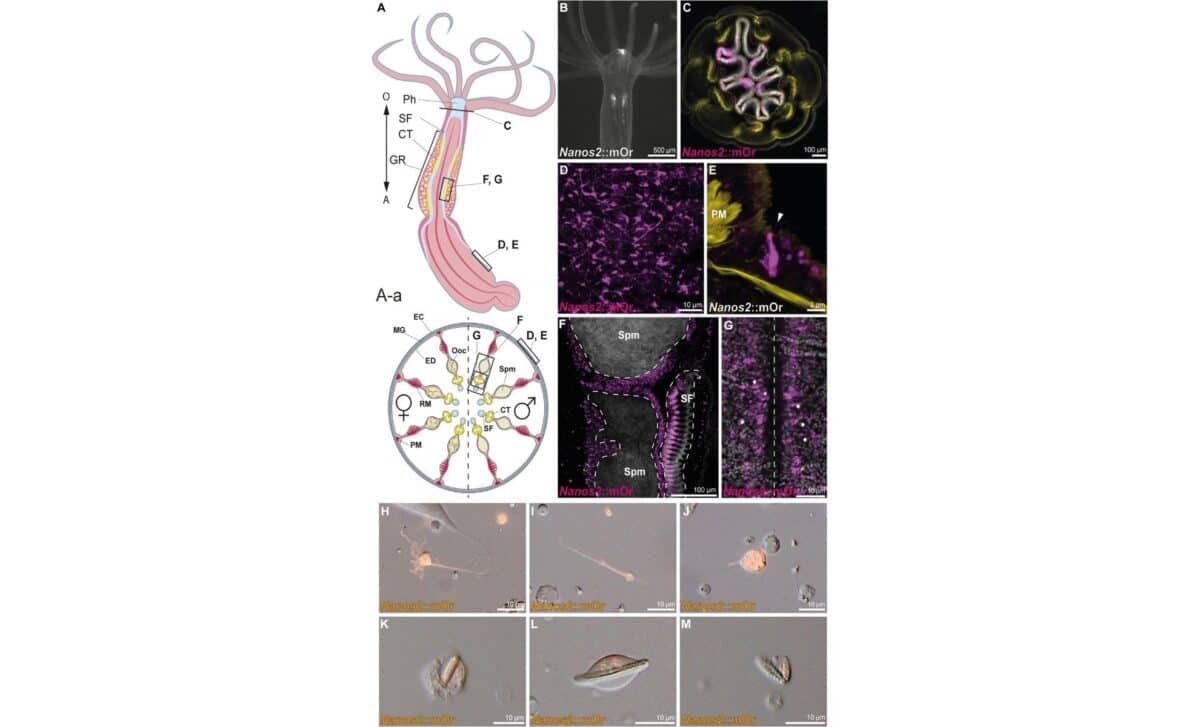
Andreas Denner, lead author of the study, explained in a press statement that their combined use of single-cell gene expression analyses and transgenesis allowed them to identify a large group of cells in the sea anemone. These cells could become various types of differentiated cells, such as nerve and glandular cells, confirming their potential as multipotent stem cells. This capacity mirrors the versatility researchers are trying to achieve with human stem cell therapies.
A Biological Fountain of Youth or a Scientific Milestone
According to the University of Vienna, this discovery provides a concrete entry point into understanding how some animals essentially escape the wear and tear of aging. While humans are far from replicating this mechanism, identifying the molecular structures behind such traits is a significant leap forward.
Ulrich Technau, senior author of the study, emphasized the significance of this breakthrough, noting that while stem cells are central to human regenerative medicine, the level of whole-body regeneration seen in cnidarians remains unparalleled. With these findings, future studies are expected to dive deeper into the genetic mechanisms that shield creatures like the scarlet sea anemone from age-related decline.
First Appeared on
Source link






