


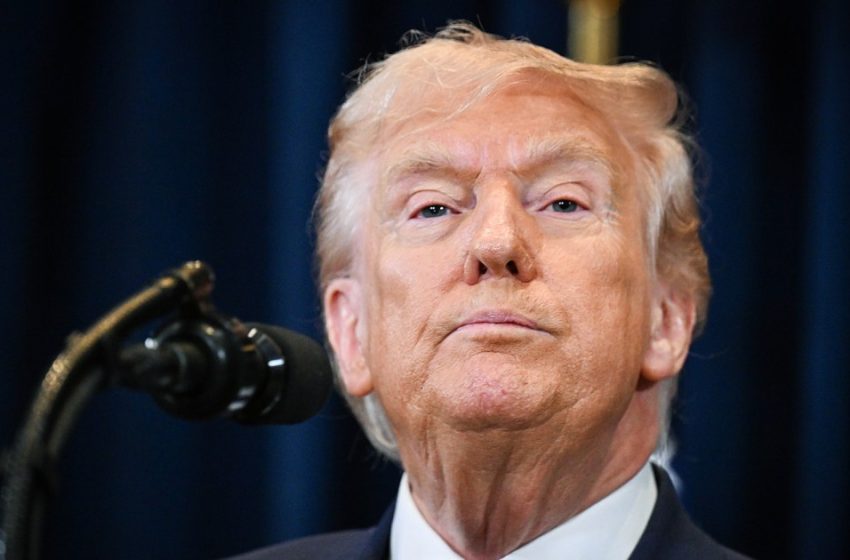
Trump does not have to turn over presidential records, Justice Department says
The Justice Department has issued a legal opinion arguing that President Donald Trump does not have to turn over his presidential records to the National Archives at the end of his administration.
Subscribe to read this story ad-free
Get unlimited access to ad-free articles and exclusive content.

The Presidential Records Act of 1978 requires presidential documents be sent to the National Archives and Records Administration. In an opinion released Thursday, the Justice Department’s Office of Legal Counsel found the law “is unconstitutional for two independent but interlocking reasons.”
It exceeds Congress’ powers and it does so at the expense of the autonomy of the presidency, T. Elliot Gaiser wrote in the opinion, noting that Congress can’t order the papers of Supreme Court justices to be sent to the archives.
The president “need not further comply with its dictates.”
If the Trump administration chooses to follow the opinion from the office, which offers legal advice to the executive branch but does not set law, he could face outside legal challenges should he violate the Presidential Records Act in the future.
The determination is a signal that the president will not turn over his documents to the archives. Trump was accused violating the Presidential Records Act by refusing to turn over documents he kept after leaving office following his first term.
According to federal prosecutors, Trump willfully retained national defense documents at his private home in Mar-a-Lago, obstructed justice and concealed materials, including a classified military map reportedly shown to unauthorized individuals. The case was dismissed by Judge Aileen Cannon in 2024 before he won re-election.
A memo by the special prosecutor’s office later released found that the president kept a document that was previously accessible by only a few people at his home.
“Trump had in his possession some highly sensitive documents — the type of documents that only presidents and officials with the most sensitive authority have,” the memo said.
Trump has long argued he did nothing wrong. Shortly after he took office, he dismissed the head of the National Archives, following through on a vow to change the leadership atop the agency, which was involved in the criminal case against him.
The office of legal counsel serves as a quasi-judicial office within the executive branch. It was once involved in the George W. Bush- era memos authorizing the use of “enhanced interrogation techniques” like waterboarding against terrorism suspects.
Axios first reported details of the opinion. Gaiser, who previously clerked for Supreme Court Justice Samuel Alito, was part of Trump’s 2020 campaign team, and was named in testimony before the Jan. 6 committee in which former White House press secretary Kayleigh McEnany named him as someone she “really trusted on the matters of election integrity.”
McEnany said that Gaiser advised that the vice president had a “substantive” role to play in the election certification process, the type of view which gave Trump supporters hope that Mike Pence could overturn Trump’s 2020 election loss.
Responding to written questions during his nomination process, Gaiser declined to discuss his views in detail, and wrote that his “ethical duties as an attorney include a duty of confidentiality regarding the advice I provided to a former client.”
The Presidential Records Act, signed into law by President Jimmy Carter in 1978 following the Watergate scandal, requires official records of the president and vice president, created or received after January 1981, to be made public, and for the National Archives to manage a president’s records after the individual leaves office.
The act requires that the president “take all practical steps” to keep presidential records separate from personal records, and it allows the president — once the archivist weighs in — to dispose of records that no longer have “administrative, historical, informational, or evidentiary value.”
The act also states that presidential records are automatically transferred into the legal custody of the archivist as soon as the president leaves office.
First Appeared on
Source link






