


Trump Justice Department’s probe of the 2020 election gets first public test in court
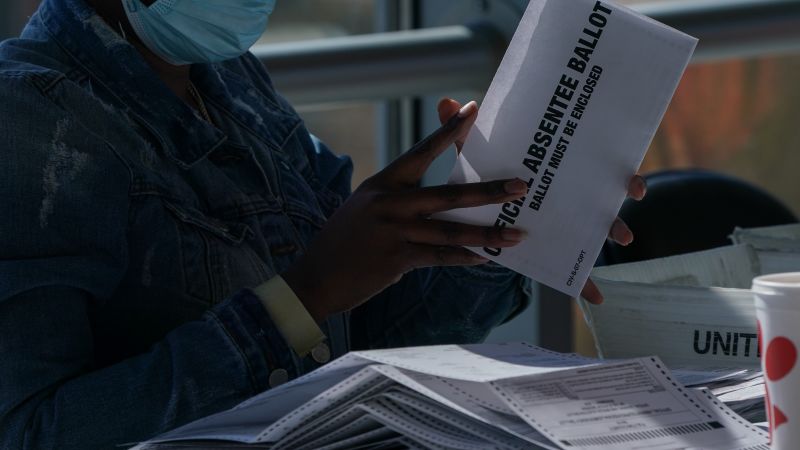
The Justice Department on Friday faces the first public court test of its effort to investigate President Donald Trump’s 2020 election defeat, as it fends off a lawsuit seeking a return of 2020 Atlanta-area ballots the FBI seized in an unprecedented move earlier this year.
The litigation has already revealed the administration’s probe is being driven by Trump allies with a history of putting forward debunked theories alleging fraud in the 2020 election. The presence of Director of National Intelligence Tulsi Gabbard at the January ballot seizure further has raised questions about the scope of the investigation, as her office has no authority over domestic election administration and the FBI’s warrant application for the search did not make allegations of foreign meddling.
Fulton County Board of Commissioners Chairman Robert Pitts and other local officials are suing to have the materials returned. They argue that the FBI misled the magistrate judge who approved the warrant allowing the seizure by allegedly not including all relevant information in the application. The Justice Department has defended the seizure and argued the county officials have not met the high threshold for requiring the return of the election materials.
Friday’s hearing will be closely watched for what it reveals about the administration’s larger investigation in the 2020 election, which has also included a grand jury subpoena of 2020 election records in Arizona.
County officials told US District Judge JP Boulee, a Trump appointee, in court filings that if legal guardrails are not imposed on the Trump administration’s approach, the FBI could use a similar search warrant to seize ballots “even in the middle of recounts in contested battleground states.”
That concern is what makes Boulee’s ultimate opinion in the dispute so important, said Michael Moore, who was a US attorney in Georgia during the Obama administration.
The judge must make sure “whatever he writes, it’s not used as a weapon in the fall of 2026,” Moore told CNN.
The warrant was sought by a US attorney in Missouri, Tom Albus, who is also serving as a “special attorney” in the Justice Department to investigate election issues nationwide. According to the warrant affidavit, the probe was launched because of a referral of Kurt Olsen, a lawyer who was involved in Trump’s schemes to overturn the 2020 elections and who is now the White House’s director of election security and integrity.
The Justice Department says it is investigating supposed discrepancies in the county’s records of scanned ballot images, alleged “irregularities” in the tabulator tapes created by its election machines, and claims that some absentee ballots were suspect because they didn’t have fold marks. The Justice Department alleges possible violations of federal statutes that require election officials to preserve voting records for 22 months after an election and that prohibit tampering with the vote.
Among the witnesses the FBI cited in its affidavit are members of the State Election Board who have relentlessly been pursuing theories that the 2020 count in Georgia was flawed. The allegations surfaced in the warrant have been previously aired and largely debunked.
The county says the Justice Department erred by neglecting to include that full context, and filed a declaration from a seasoned election expert, Ryan Macias, to push against the claims the election was unlawfully mishandled. It also says the DOJ should have told the magistrate judge that the affidavit was citing witnesses who had faced court sanctions or had other credibility issues.
The parties have not indicated on the public docket the witnesses they intend to call. However, Boulee has already sided with the Justice Department in deciding on Thursday that the affiant, FBI agent Hugh Raymond Evans, did not have to testify at Friday’s hearing, as Fulton County had sought.
Still, Boulee was not convinced by the Justice Department’s larger arguments that the dispute was a narrow legal question that did not warrant an evidentiary hearing. The administration has stressed the role a magistrate judge played by approving the warrant, but Boulee has said that the fact that the Justice Department obtained a warrant for the search does not, by itself, decide whether there was a “callous disregard” of the Fulton County officials’ rights with the search — the legal question he will be considering Friday.
He is giving each side two-and-a-half hours to use as it pleases, whether that’s presenting evidence, cross-examining the other side’s witnesses or making legal arguments.
The Justice Department said in filings that if the judge were to side with Fulton County’s request, it would “open the floodgates to parties who” would use similar challenges to search warrants “as a way to get a sneak peek at ongoing criminal investigations.”
Ironically, the Trump administration is touting the president’s appeals court loss in his efforts to challenge the FBI’s search of Mar-a-Lago in 2023 to argue that the court should not meddle with the criminal probe into the 2020 election now.
The lawyers who represented the defendants in the prosecution that grew out of that search now occupy top roles at the Justice Department. Trump’s personal lawyer Todd Blanche is now the deputy attorney general, while the lawyer who represented a Trump employee charged in that case, Stanley Woodward, serves at the department’s no. 3 lawyer and was the top signatory on the DOJ’s legal filings in the current dispute.
Fulton County says that the DOJ is wrong to wield the appeals court precedent in that case — which was issued by the 11th US Circuit Court of Appeals, the appeals court that oversees courts in Florida and Georgia. The local officials argue that they’re using a different legal framework — the callous disregard framework, set forth by a legal procedure known as Rule 41(g) — than Trump did when he sued over special counsel Jack Smith’s investigation.
First Appeared on
Source link






