


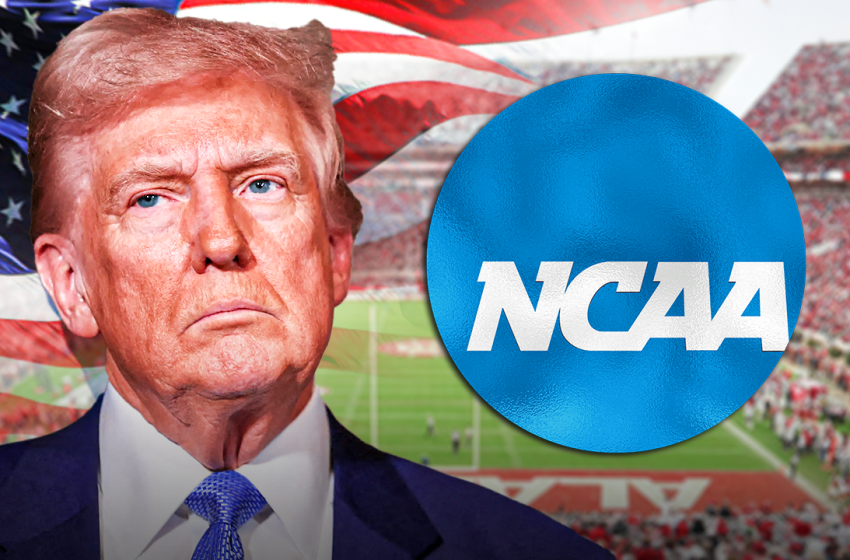
Trump signs executive order regulating college sports, transfer limits
President Donald Trump signs an executive order to regulate college sports in the near future, sources tell On3. The order encompasses transfer movement, player eligibility, funding requirements for women and Olympic sports and reins in NIL collectives.
The order threatens to review federal government grants and contracts for colleges and universities that don’t comply with NCAA rules. Specifically, athletes will be given one “free” transfer as an undergraduate and again as a graduate.
The order directs the NCAA to create rules that mandate college athletes can play for “no more than a five-year period.” The rule changes are scheduled to go into effect Aug. 1.
“College sports cannot function without clear, agreed-upon rules concerning pay-for-play and player eligibility that can’t be endlessly challenged in court, as is the case now,” the White House said in a news release about the order.
SUBSCRIBE to the On3 NIL and Sports Business Newsletter
Multiple provisions of the executive order address areas that federal and district courts have previously ruled on. However, it creates a situation where NCAA members will have to follow Trump’s order or ignore previous judicial decisions.
Executive orders can be legally challenged. Courts have struck down several of Trump’s orders in recent months. Trump previously predicted that the order would be challenged in the courts. A key sticking point will be whether the president has legal authority over NCAA eligibility rules.
The release of the executive order comes a month after Trump gathered college sports leaders at the White House for a roundtable. The group discussed pushing forward the SCORE Act and similar Congressional legislation, but the president was emphatic that an executive order would also be drafted.
NCAA president Charlie Baker said in a statement that the executive order is “a significant step forward, and we appreciate the Administration’s interest and attention to these issues.”
The new transfer guidelines are expected to cause havoc. Currently, athletes can transfer as many times as they want, as long as they are academically eligible. The change was made in 2024 following a West Virginia judge’s ruling in 2023 that intended to stop the organization from enforcing its bylaw barring athletes from transferring multiple times and playing right away.
The men’s and women’s basketball transfer portal opens next week. Hundreds of athletes who have already transferred before have made plans to re-enter the portal.
“It’s terrible for the schools, do they ignore the presidential order or a court order? Coaches are going to be pissed,” said Darren Heitner, who added he’s expecting to represent multiple athletes in suing the NCAA and schools over new transfer restrictions.
Other critical pieces in the order include defining the length of collegiate eligibility. In courtrooms across the nation in recent years, players with expiring eligibility have filed lawsuits against the NCAA.
In March’s roundtable, Trump also highlighted his desire for the order to require schools to fund women’s and Olympic sports.
In recent weeks, Trump formed five college sports committees covering legislation, rules, NCAA reform, media and player issues, with meetings being held. The President’s Oversight Committee collected the groups’ recommendations and made final calls.
“This Executive Order identifies some of the key issues facing college sports, including continued funding for women’s and Olympic sports,” Sen. Maria Cantwell said in a statement. “Congress should continue to have bipartisan discussions about how to increase revenue to meet these goals. I’m glad to know the President wants Congress to pass something.”
First Appeared on
Source link






