


Trump’s border czar says immigration crackdown in Minnesota will ‘conclude’ | Minnesota
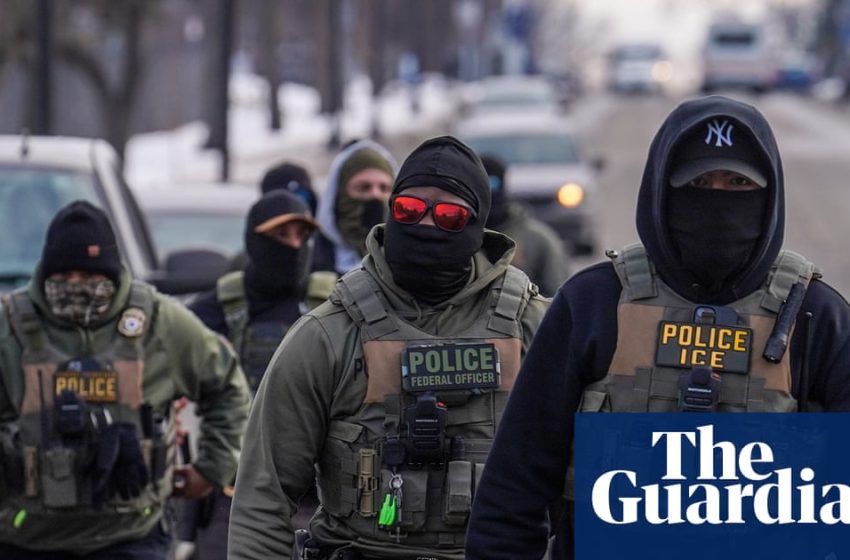
The Trump administration has claimed it is drawing down its immigration crackdown in Minnesota that led to the death of two US citizens, mass detentions and widespread protests.
The move was announced by Tom Homan, the US border czar, at a press briefing on Thursday.
“I have proposed, and President Trump has concurred that this surge operation conclude,” Homan said, claiming that “a significant drawdown” had already been under way this week and would continue to the next week.
Agents in Minnesota will be returned to their normal duties or assigned elsewhere, Homan said. The number of agents in Minnesota will return to normal levels, which is about 100 agents, officials have previously said. But security teams will stay in place to respond to what Homan called “agitators” who oppose immigration agents’ work in the state.
Homan said he would remain on the ground in Minnesota for “a little longer” to oversee the drawdown of agents.
Local and state officials had expressed they were hopeful for a drawdown, based on meetings with Homan, but that they would not believe it until they saw the evidence on the ground.
During the months-long crackdown, federal agents killed two US citizens – Renee Nicole Good and Alex Pretti – who had been observing agents’ activities, sparking protests nationwide and a surge in local organizing to follow agents and provide food and supplies for immigrants, including those with legal status, who didn’t feel safe leaving their homes.
Homan took over the immigration crackdown in Minnesota from Greg Bovino, a senior border patrol official, who was overseeing the operation when both of the killings happened.
The surge of agents began in early December with thousands of agents, then increased again in January. The number of agents outnumbered the largest police departments in the Twin Cities.
Homan announced earlier this month that he was sending home roughly 700 agents, which left about 2,000 still in the state. Since that announcement, agents have been removing people from their communities throughout the state, increasingly in suburban and rural areas.
Homan cited an “unprecedented level of coordination” with local law enforcement as a factor in the drawdown, claiming that local law enforcement agencies were now responding to scenes when people protesting agents posed a public safety threat or violated local ordinances. He also said agents were now working with jails in the state to have them turn over undocumented people in their custody, though not keeping them detained locally for any longer than their sentences.
He claimed Minnesota was “now less of a sanctuary state for criminals” because of the federal incursion, which he called a “success”.
At a press conference on Thursday morning, Minnesota’s governor, Tim Walz, praised Minnesotans for their response to the federal surge, saying they “showed what it means to stand up for what’s right”. He said he was “skeptically optimistic” and had been told by Homan that the agents would be leaving quickly.
“We will help you get to the airport,” Walz said. “We will clear the roads to get you to the airport. I will come over and pack your damn bags, if that’s what it takes.”
Walz also said the state had not changed its policies on immigration – the state was already turning people in state prisons over to immigration authorities. He said one of the federal government’s asks to him was to urge protesters to be peaceful, which he has done, but he said: “I’m not going to ask [protesters] to not be in the streets.”
The damage done by the federal agents would leave a mark on Minnesotans, he said. He announced he would propose a $10m program for small businesses in the form of forgivable loans to address the economic disruption caused by the surge. The proposal would need legislative approval.
“The fact of the matter is, they left us with deep damage, generational trauma,” Walz said. “They left us with economic ruin. In some cases, they left us with many unanswered questions. Where are our children? Where and what is the process of the investigations into those that were responsible for the deaths of Renee [Good] and Alex [Pretti]?”
The Minneapolis mayor, Jacob Frey, a Democrat, also praised the city’s residents for their response to the surge.
“They thought they could break us, but a love for our neighbors and a resolve to endure can outlast an occupation,” Frey wrote on social media. “These patriots of Minneapolis are showing that it’s not just about resistance – standing with our neighbors is deeply American.”
Frey added that the operation had been “catastrophic” for the city’s people and businesses, and that it was time for a “great comeback”.
“We will show the same commitment to our immigrant residents and endurance in this reopening, and I’m hopeful the whole country will stand with us as we move forward,” he said.
Elliott Payne, the president of the Minneapolis city council, said he would not stop his vigilance. Payne has been in the streets monitoring immigration agents’ activity since the surge began. He told the Minnesota Star Tribune: “This administration has lied about every aspect of this surge, so I don’t believe a word that comes out of Homan’s mouth. I’ll believe it when I see it and will continue patrolling my community.”
During his announcement on Thursday morning, Homan reiterated that Donald Trump’s mass deportation scheme would continue nationwide.
“For those who say we are backing down from immigration enforcement or the promise of mass deportations, you are simply wrong,” he said. He added that the priority was to go after people who pose public safety or national security threats, but that “doesn’t mean we forget about everybody else. We will take action on everybody else.”
First Appeared on
Source link






