


Trump’s Iran Gamble | Foreign Affairs
For the second time in eight months, the United States and Israel have conducted military strikes in Iran. Last June, Washington’s focus was almost entirely on Iran’s nuclear program, with the U.S. strikes hitting three of the Islamic Republic’s key nuclear facilities, and Israel hitting a wider set of strategic targets, including military commanders, missile launch and production facilities, and nuclear infrastructure.
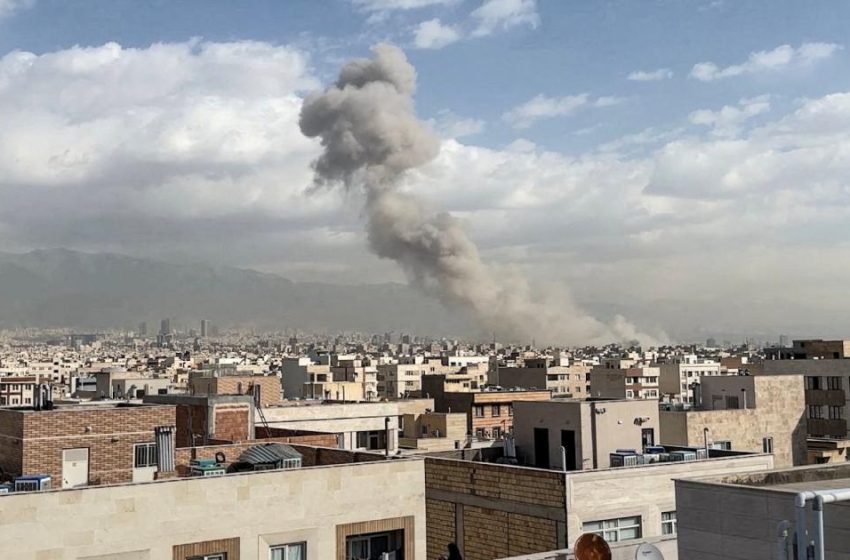
This time, the United States and Israel conducted a sweeping joint military operation against Iranian leadership and capabilities, and U.S. President Donald Trump has called for “regime change” after Iranian protesters were viciously repressed by their own government early this year. On Saturday, February 28, the U.S. and Israeli militaries struck hundreds of sites across the country and targeted several top leaders, including Iran’s supreme leader, Ayatollah Ali Khameini, who was killed along with members of his family and key advisors.
But the likely next phases of the conflict are significantly more complicated than those Washington faced in the wake of last year’s strikes. “Operation Midnight Hammer,” as that attack was named, was bold but limited, with Iran’s response—striking an evacuated U.S. base in Qatar—telegraphed in advance. The objectives were clear, the sites familiar to military planners, and the two sides avoided an escalatory cycle.
By contrast, the recent attack, dubbed “Operation Epic Fury,” has opened a Pandora’s Box, with no clear objective within reach nor any clear path to deescalation. Before the strikes, Iran had warned that it would retaliate, which now backs it into a corner and raises the overall risk level. Even in its weakened state, the regime still has formidable lethal power. Since last June, it has moved to rebuild its ballistic missile arsenal at what an Israeli military assessment described as “a rapid pace.” It can fire hundreds of missiles at U.S. bases, interests, and allies, and it can activate the remnants of its regional network of partners and proxies.
“When we are finished, take over your government,” Trump exhorted the Iranian people in announcing the strikes. “It will be yours to take.” But the path to a popular uprising that successfully dislodges the regime is far from clear. Bombs can degrade infrastructure. They can weaken capabilities and eliminate leaders. But they do not manufacture organized political alternatives. The Iranian public is unarmed, fragmented, and facing one of the most securitized states in the region. Even a weakened regime retains coercive institutions—the Revolutionary Guards, intelligence services, internal security forces—that are built precisely for moments like this.
PROTEST PIVOT
Trump put down an early marker for this attack after Iranian protesters flooded the streets in late December. The anger was initially centered among merchants who were dismayed by the collapsing national currency, but it quickly expanded around the country with calls for the regime’s demise. What followed was an intensely bloody campaign by the regime to quell the protests: at least several thousand were killed. With the death toll mounting, Trump warned on January 2 that the United States was “locked and loaded” to support the protesters.
Though the Iranian government has faced, and suppressed, repeated uprisings in recent years, this threat from the United States was a marked shift. Past American responses had largely revolved around statements of support for the rights of protesters, condemnatory rhetoric against the government, and sanctions against those involved in repression. By contrast, Trump—who had already demonstrated his willingness to make good on threats against Iran in June’s operation—was now raising the prospect of direct U.S. intervention.
Still, Trump’s first concrete reaction was economic, announcing 25 percent tariffs on those trading with the Islamic Republic and subsequently adding U.S. sanctions against Iranian “shadow banking” networks and regime officials. The second was personally engaging Elon Musk to help counter Tehran’s internet blackout and reportedly dispatching thousands of Starlink units into Iran. A third step was rejecting, albeit briefly, the continuation of diplomatic engagement with the regime so long as repression continued. (Prior to that, Iran’s foreign minister had reportedly been in contact with Trump’s special envoy.) This was all accompanied by Trump’s call to Iranians to “keep protesting—take over institutions.”
For its part, Tehran sought to deter U.S. intervention with threats of its own. Regime leaders made clear that they would treat any attack on the Islamic Republic, large or small, as requiring a major response—suggesting that U.S. troops and assets (and those of its security partners) throughout the region would be in the cross hairs.
If Iran’s leadership was concerned about Trump, however, it was more immediately alarmed by the intensity of the anger it faced in the street. Even by the standards of a ruthless regime, it moved with alarming alacrity to kill both thousands of its own people and the movement’s swelling momentum. In fact, precisely because Trump’s threats were not immediately backed by military posture preparedness, they may have served as a perverse incentive for the regime to reestablish control, whatever the cost, before the United States could deploy military assets to the region.
MOMENTUM MOUNTING
As tensions mounted, U.S. allies and partners in the region entreated Washington not to act too hastily since they would be exposed to any Iranian retaliation. In mid-January, then, the United States boosted its military assets in the region, including two aircraft carrier groups and scores of aircraft—a buildup in scale and scope not seen since the Iraq war more than two decades ago. As U.S. firepower took position across the region, Trump sharpened an ultimatum to Tehran: the amassing force could deliver an attack “far worse” than in June unless Tehran accepted a “fair and equitable deal” that included abandoning its nuclear program at a minimum and, more ambitiously, its ballistic missile development and support for regional nonstate allies.
A flurry of calls and engagements among regional intermediaries sought to jump-start diplomacy that had been largely stagnant since last year’s 12-day war. In February, there were three separate rounds of talks in Oman and Switzerland. While these were able to narrow some gaps, stubborn points of divergence remained, especially on Iranian nuclear concessions and on U.S. sanctions relief. Iran’s efforts to set aside nonnuclear issues, including its missile program and support for nonstate allies, also failed to match Washington’s expectations.
The incremental steps forward proved no match for momentum marching toward confrontation, with hawkish voices in both the United States and Israel pushing for war. The president himself expressed dissatisfaction with how the talks were unfolding. In his State of the Union address, Trump asserted that the Iranians were “at this moment again pursuing their sinister ambitions” on the nuclear front and “working to build missiles that will soon reach the United States of America.”
Neither of these threats, however, were imminent. Although Tehran has refused international inspectors access to its damaged nuclear facilities, the United States has assessed that no uranium enrichment is currently taking place, let alone to weapons-grade quality. Likewise, after the June strikes significantly hampered Iran’s conventional capabilities, the prospect of an Iranian intercontinental ballistic missile being able to hit the U.S. homeland is years away. Nevertheless, on February 28, Trump approved the strikes.
A STRUGGLE FOR SURVIVAL
As Iran launches retaliatory salvoes against Israel and U.S. bases in the Gulf states, its logic isn’t hard to understand. Any strike that costs the United States lives and treasure could be a potentially significant political blow to Trump, particularly given that he ran for office based in part on avoiding military entanglements. Iran also seems to believe that Trump’s preference is for the limited and spectacular rather than sustained and open-ended campaigns. Tehran may be hoping that if it demonstrates the potential for unlimited escalation, Iran may be able to dissuade Trump from pursuing his campaign further, just as he pulled the plug on a costly and unwinnable war against the Houthis in Yemen last year.
That could be a costly miscalculation. Since October 7, 2023, when Hamas attacked Israel, Iran has repeatedly overestimated its own capability and underestimated its adversaries’ resolve and appetite for risk. Over the longer term, Trump may well pay a political price for this war, but in the short term, the risk for escalation is still very high. Indeed, a U.S. climbdown appears less likely in response to Iranian counterstrikes lest a major gamble appear to have backfired. And if the Islamic Republic believes that foreign attacks will help it shore up popular sentiment domestically—the rally around the flag effect—it might be sorely mistaken given that the regime itself has just spilled the blood of thousands on home soil.
Still, if the U.S. bet is that airstrikes will finish the job from above while Iranians complete it from below, that bet rests on no clear historical model and ignores the resilience of entrenched authoritarian systems under external pressure. Other scenarios seem easier to imagine: for example, more overt control by a Revolutionary Guard that has already become a preeminent political and economic actor under Khamenei, or prolonged civil strife between those seeking to topple the system’s remnants against those clawing to preserve it.
Of course, with the Islamic Republic in a struggle for its survival, it is impossible to predict what will happen next with any confidence. Whatever shape events take, however, the change will be profound.
Loading…
First Appeared on
Source link






