


Trump’s plan to ‘grab Iran by the balls’
Reclining in the marbled opulence of his Manhattan penthouse, one thing is on Donald Trump’s mind: Iran.
“I’d be harsh on Iran. They’ve been beating us psychologically, making us look a bunch of fools,” he says from the comfort of the 68-storey Trump Tower skyscraper.
“One bullet shot at one of our men or ships, and I’d do a number on Kharg Island. I’d go in and take it.”
The remarks, made to The Guardian newspaper in 1988 when a 41-year-old Mr Trump was still best known as a property tycoon, may have been off-the-cuff. But now, almost 40 years later, they’re prophetic.
The US president, who is entering the fourth week of his war against Iran, is seemingly on the cusp of following through with his threat to “do a number” on Tehran’s critical oil depot on Kharg Island by invading it with thousands of US marines.
2103 How the US could invade Kharg Island
Pentagon officials have started to make detailed preparations to deploy ground forces into Iran, The Telegraph understands.
Mr Trump has already dispatched the 31st Marine Expeditionary Unit (MEU), made up of the USS Tripoli, an amphibious assault ship, and two amphibious transport docks, USS San Diego and USS New Orleans, with about 2,200 marines embarked across the fleet.
A second, similarly sized fighting force, led by amphibious assault ship USS Boxer, set sail from San Diego on Wednesday, reportedly destined for the Middle East. It is accompanied by two transport docks, USS Comstock and USS Portland.
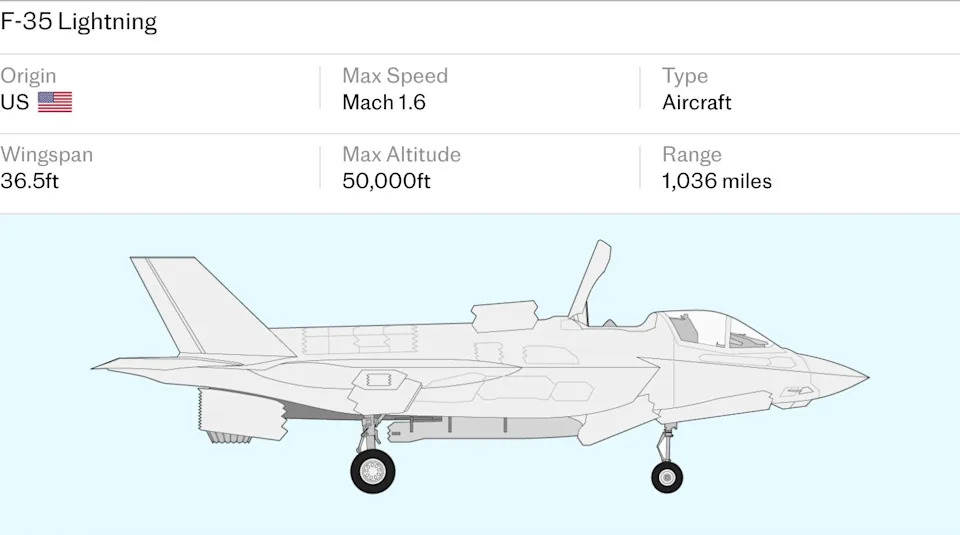
Combined, the two task groups have the potential to deliver an invasion force of more than 4,000 marines, who could storm Kharg Island in a matter of weeks, supported by US marine corps F-35B stealth jets from the Tripoli and V-22 Osprey troop transporters.
“We need about a month to weaken the Iranians more with strikes, take the island and then get them by the balls and use it for negotiations,” a source with knowledge of the White House’s thinking told US news website Axios.
Located 15 miles from the Iranian coast in the Strait of Hormuz, the five-mile-long territory is seen as the “crown jewel” of the Islamic Republic, processing more than 90 per cent of Tehran’s crude oil exports, which is vital in funding the country’s war effort.
About 1,000 Iranian military troops, including around 250 elite soldiers from the Iranian Revolutionary Guard Corps (IRGC) were once thought to guard Kharg, which was fortified with surface-to-air missile systems and more than a dozen anti-aircraft artillery batteries.
US forces already bombarded Kharg last week, striking more than 90 Iranian military targets across the island, including air defence systems, missile storage bunkers and a naval base.
It is unclear how much of a fighting force still exists, with Mr Trump claiming on social media that the US “totally obliterated every MILITARY target” on Kharg.
Analysts say the initial strikes could have opened the door for the US to land troops on the island from the south-west, to secure its piers, oil facilities and storage tanks, while avoiding the small residential area in the north-east.
The White House has not yet announced any formal decision on such an invasion, but it’s understood Mr Trump is considering it.
When asked whether the US would put troops on the ground on Kharg Island, Karoline Leavitt, the White House press secretary, told The Telegraph: “It’s the job of the Pentagon to make preparations in order to give the commander in chief maximum optionality.
“It does not mean the president has made a decision, and as the president said in the Oval Office yesterday, he is not planning to send ground troops anywhere at this time.”
In an invasion, marines could deploy from their warships in 35-ton armoured Amphibious Combat Vehicles equipped with 30mm cannons and .50-calibre machine guns, while Landing Craft Air Cushions – similar to hovercrafts – would ferry tanks onto beaches.
The Tripoli’s formidable embarked air wing, which includes 20 F-35B stealth jets from the Marine Fighter Attack Squadron 121 nicknamed the “Green Knights”, could provide air support, while a trio of Arleigh Burke-class destroyers from the nearby USS Abraham Lincoln carrier strike group in the Arabian Sea could be used to stop missiles, rockets and drones from raining down on the exposed invasion force.
But simply getting to the island would be treacherous. The invasion force would need to sail hundreds of miles through the Strait of Hormuz, which has probably already been mined by Iran.
It would also put the US navy in the crosshairs of Iranian ballistic missiles, anti-ship projectiles and kamikaze drones, which could be fired “relentlessly” at the armada from the shore.
“This would be a juicy target for the Iranians, who would throw absolutely everything at it,” said Phil Ingram, a former colonel in British military intelligence.
“It will be a bloody battle to get in and properly secure the island. The Americans will have to be prepared to take quite significant losses… They would need to be prepared for 10 or 20 per cent of the force dead or wounded.”
Sustaining the invasion force, which would need regular resupply, would also be a challenge, potentially leaving the naval task group vulnerable to repeated attack.
“The Iranians will know where everything is,” said Matthew Savill, the director of military sciences at the Royal United Services Institute.
“The US won’t be moving into prepared defensive positions. They will have to improvise and dig in with the Iranians able to target it.
“Whoever is sitting on the island would be a natural magnet for the Iranians to throw whatever they have at it.”
First Appeared on
Source link






