


Ukraine peace talks with Russia, US to continue in UAE Feb. 5, Zelensky says new POW exchange to come soon
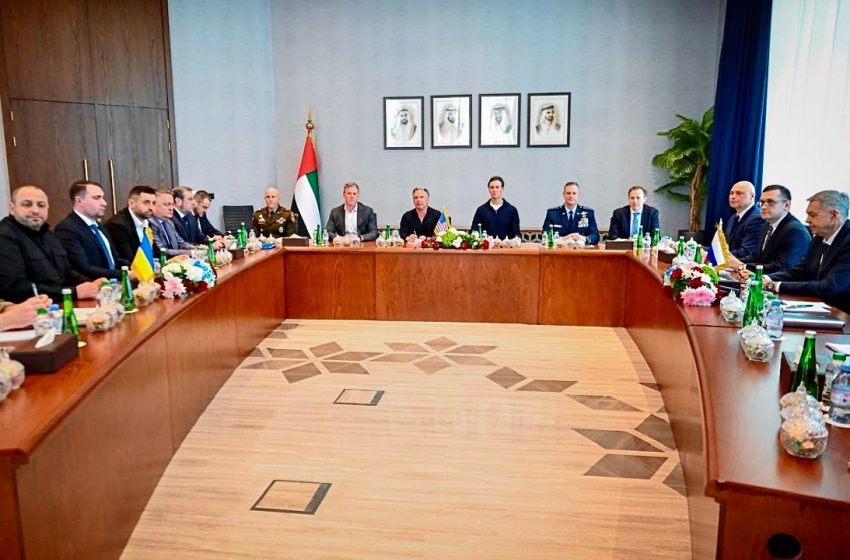
Russia, Ukraine, and the United States concluded the second round of trilateral talks in Abu Dhabi on Feb. 4, with another round of peace discussions expected to follow on Feb. 5.
President Volodymyr Zelensky said on Feb. 4 that one ‘significant’ result of the latest talks was an agreement on an upcoming prisoner of war (POW) exchange.
“There will also be a significant step: we expect an exchange of prisoners of war in the near future. The prisoners must be returned home,” Zelensky said after being briefed on the discussion.
The announcement comes a week after Zelensky said on Jan. 30 that Russia had halted POW exchanges because “they do not feel that it gives them anything.”
Rustem Umerov, the secretary of Ukraine’s National Security and Defense Council, described the talks as “meaningful and productive,” saying they were focused on concrete steps and practical solutions to end the war.
The meetings in the United Arab Emirates took place a day after Russia launched its most massive strike against Ukraine this winter, as Moscow resumes its campaign aimed at knocking out the country’s power grid.
While the discussion was expected to focus on the two thorniest unresolved issues — the status of the Donbas region and post-war security guarantees for Ukraine — the re-escalation of Russian strikes led many to question the Kremlin’s seriousness about peace talks.
Zelensky accused Russia of violating the one-week energy truce, which he said took effect on Jan. 30, by launching 71 missiles and 450 drones against Ukraine overnight on Feb. 3.
The weeks-long campaign of attacks has severely damaged Ukraine’s energy infrastructure, leaving many in Kyiv and other cities without light or heat amid freezing temperatures and increasing pressure on the war-torn country amid peace talks.
According to Zelensky, Ukrainian delegates will adjust their negotiating position in response to the ongoing strikes.
“There should be no rewards for the aggressor,” he reiterated on Feb. 4. “If there are any rewards for the aggressor, Russia will eventually break any agreement.”
U.S. President Donald Trump, whose one-year push to broker an end to the war has so far failed to produce a peace deal, rejected that Russian President Vladimir Putin violated the truce, saying it was set to last only until Feb. 1.
The U.S. side is represented by Special Envoy Steve Witkoff and Trump’s advisor and son-in-law, Jared Kushner, who participated in the previous round of talks in Abu Dhabi on Jan. 23-24.
The Ukrainian delegation is led by Umerov and Kyrylo Budanov, a former spy chief who now serves as Zelensky’s chief of staff.
After the trilateral talks, separate groups will continue discussions on separate topics, Umerov said, adding that heads of state will be regularly informed of progress.
The Kremlin does not plan to publicly comment on the outcome of the initial round of talks on Feb. 4, according to spokesperson Dmitry Peskov.
Peskov also said that the “door to a peaceful settlement remains open,” but Russia will continue the war until Ukraine adopts the “relevant decisions.”
Zelensky said earlier that the discussions with Western capitals on security guarantees have concluded. Kyiv and its partners have reportedly agreed on a multi-tiered response plan that would involve a European-led, U.S.-backed military intervention in case of repeated ceasefire violations by Russia.
The Coalition of the Willing, a group of countries led by France and the U.K., has agreed to deploy its troops in Ukraine after the ceasefire to help secure the land, air, and sea. Moscow, in turn, has repeatedly rejected the post-war presence of Western troops as part of a potential agreement.
Another sticking point is the fate of the partially occupied Donetsk and Luhansk oblasts, as the Kremlin demands that Ukraine withdraw from these regions completely — a condition Kyiv has rejected.
The upcoming round of negotiations was initially set to begin on Feb. 1, but was postponed as the Trump administration shifts attention to renewed tensions with Iran. Kushner and Witkoff are expected to travel to Istanbul after Abu Dhabi talks to negotiate a potential nuclear deal with Iranian officials.
First Appeared on
Source link






