


‘Unbelievably contagious’: Measles cases soar nationwide: What you need to know
More than 980 have been reported across 26 states as of Monday, according to the CDC. That’s more than four times the total number of measles cases recorded for all of 2025.
The United States is seeing nearly 1,000 cases of measles in the first two months of 2026, a record surge that has alarmed health care providers.
More than 980 have been reported across 26 states as of Monday, according to the Centers for Disease Control and Prevention. That’s more than four times the total number of measles cases recorded for all of 2025.
Virginia has recorded 10 cases, including six in children ages 0 to 4.
In Maryland, health officials have reported several possible exposure locations after people with confirmed measles cases traveled through the state in January and February. None of those cases are connected, and Maryland has not recorded a confirmed measles case since March 2025.
Jennifer Walsh, an assistant professor at the School of Nursing at George Washington University, told WTOP that what’s “so scary to pediatric providers is how unbelievably contagious and how devastating measles can be.”
Walsh said unvaccinated people are most at risk for contracting the disease.
“If you’re unvaccinated, (and) you’re in a room even up to two hours after someone with measles is in that room, you basically have a 90% chance of contracting measles,” she said.
According to the CDC’s website, severe complications from measles can include pneumonia, encephalitis or swelling of the brain, and death. CDC data show that nearly three of every 1,000 children infected with measles will die from complications.
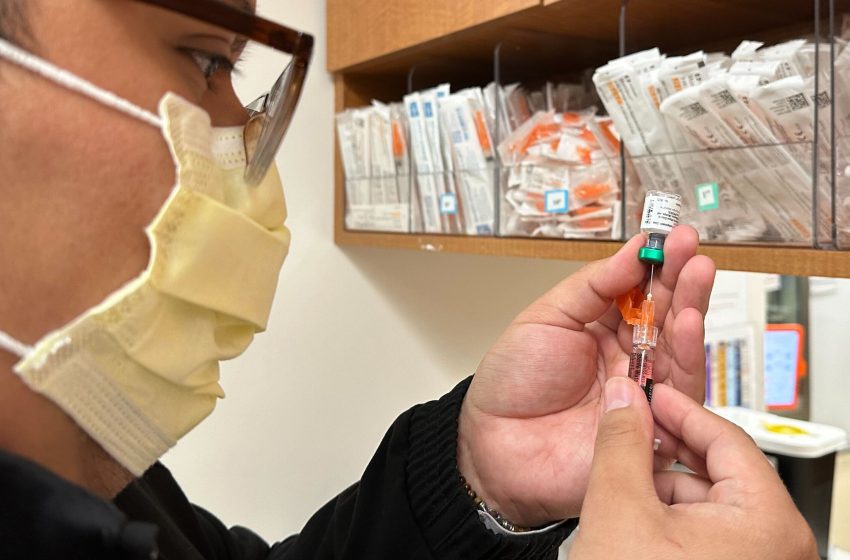
The current spike is happening despite the widespread availability of vaccines that have protected against measles for decades.
Walsh said families may opt out of vaccinating their children because of conflicting information about the safety of the MMR and MMRV vaccines. In most cases, doctors recommend two doses of the MMR vaccine to protect against measles, mumps and rubella. The MMRV vaccine also protects against chickenpox.
Walsh, who is also a certified pediatric nurse practitioner in primary care, said it’s important for providers to listen to families’ questions and concerns regarding the safety of the vaccines.
She suggested that health care providers “try to find out what they have been hearing, what they’re most concerned about, what they’re worried about,” then “determine what is based in evidence, and what is misinformation that they’ve been fed.”
Walsh said families are most receptive to vaccinating their children when someone they know, or someone in their community, has been affected by measles or when there’s a confirmed case nearby.
Walsh said she often shares her own experience as a parent, telling other parents that “for me and my family, vaccination was definitely what I did, and what I continue to recommend.”
Get breaking news and daily headlines delivered to your email inbox by signing up here.
© 2026 WTOP. All Rights Reserved. This website is not intended for users located within the European Economic Area.
First Appeared on
Source link






