


US strike on Iranian warship tests India’s neutrality
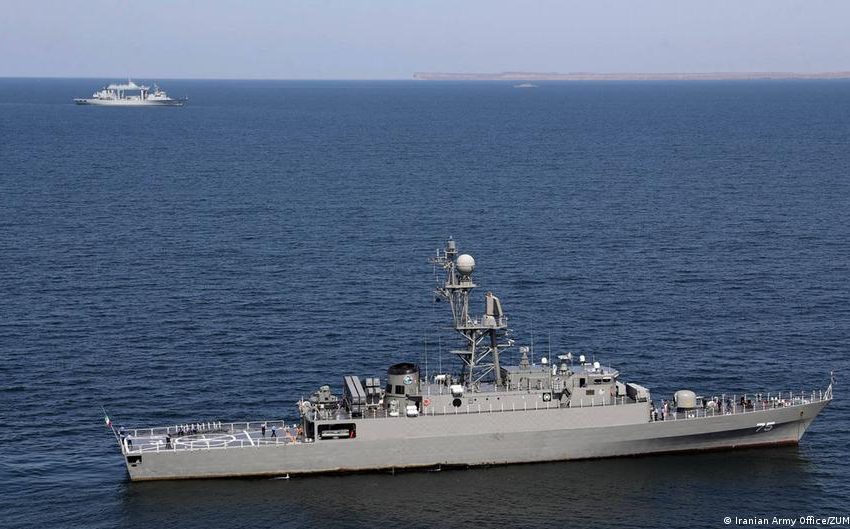
In the early hours of March 4, a US Navy attack submarine sank an Iranian navy frigate, the IRIS Dena, in international waters roughly 20 nautical miles (37 kilometers) off the southern coast of Sri Lanka.
The Iranian warship was returning from a multinational naval exercise, MILAN 2026, hosted by the Indian military.
At least 87 Iranian sailors were killed in the attack, which marked a major escalation in the conflict between the US and Iran outside of the Persian Gulf.
New Delhi: Sinking of Dena part of ‘reality of the Indian Ocean’
The incident sparked backlash in India, with many pointing out that the vessel had been a guest of the Indian navy. Also, while the sinking took place in international waters of the Indian Ocean, it was still in the area where India seeks to assert maritime leadership and primacy.
Prime Minister Narendra Modi and the Ministry of External Affairs initially maintained a complete silence on the attack.
Eventually, Foreign Minister S Jaishankar commented that the sinking was part of the “reality of the Indian Ocean.”
“When [Iranian sailors] set out and came here, the situation was totally different. They were coming in for a fleet review. And then they got, in a way, caught on the wrong side of events,” said Jaishankar.
US strike tests India’s stance on Iran war
The restrained public response reflects a familiar pattern in India’s foreign policy — avoiding direct criticism of strategic partners even when uncomfortable incidents arise. It also matches with India’s diplomatic course on the ongoing Iran war, with New Delhi avoiding taking sides and calling for restraint, de-escalation and a return to dialogue.
But some in India have presented Modi’s silence as weakness. Opposition parties say the government is vulnerable to regional crises and demanding condemnation of the US move.
“The conflict has reached our backyard, with an Iranian warship sunk in the Indian Ocean. Yet the Prime Minister has said nothing. At a moment like this, we need a steady hand at the wheel. Instead, India has a compromised PM who has surrendered our strategic autonomy,” Modi’s rival Rahul Gandhi said on X.
In turn, Foreign Minister Jaishankar pointed out that multiple major powers have long been present in the region, including the US military base at the tiny Diego Garcia island, the Chinese ships in Hambantota Port in Sri Lanka, and various foreign forces operating from East Africa.
Iran thanked India for sheltering its ships
India’s opposition leaders, including Gandhi and Mallikarjun Kharge, held demonstrations outside the parliament on Monday, carrying a banner that read, “India needs leadership, not silence.”
They demanded a parliamentary discussion over the economic fallout of the escalating Middle East crisis, including rising fuel prices in India. Many Indians are also left stranded in conflict zones in the Gulf region.
Jaishankar told lawmakers that India granted emergency docking to three Iranian vessels.
“The crew is currently in Indian naval facilities and we believe this was the right thing to do, and the Iranian foreign minister has expressed his country’s thanks,” he added.
Another Iranian vessel, the IRIS Bushehr, sought refuge at Trincomalee port in Sri Lanka.
The foreign minister also told the parliament that New Delhi was “making every effort” to bring stranded Indians home from the Middle East.
Who controls the Indian Ocean?
While New Delhi has no legal or operational mandate to police international waters near Sri Lanka’s southern coast, experts say the episode raises uncomfortable questions about India’s ability to manage security in its immediate neighborhood.
“Whatever the awkward diplomatic optics for India, the incident ultimately illustrates the reach of American undersea warfare,” security and strategic affairs expert Commodore Uday Bhaskar told DW.
In his view, the sinking of the Dena reinforces a basic reality of maritime power.
“Control of the oceans rests with those who wield the most advanced surveillance and underwater ordnance capabilities,” he said.
Bhaskar warned that — with President Donald Trump in charge — the US will continue to use this capability “unilaterally.”
In turn, Indian defense strategist Brigadier S K Chatterji said India has cards it could play as a naval power in case of a large-scale crisis, including interfering with the traffic headed east for the Strait of Malacca, a vital trade route passing between between Malaysia and Indonesia.
“We are a substantial force in the Indian Ocean, but we cannot dominate it with our current resources,” Chatterji told DW. “Our advantages are geographic. India juts out into the Indian Ocean like a floating deck.”
Iranian ship ‘essentially defenseless,’ with no ammo
The attack marked the first US submarine strike since World War II.
Veteran Indian diplomat and former foreign secretary Kanwal Sibal told DW that the strike appeared planned because the US knew the Iranian frigate had attended the exercise and it would be transiting the region afterward.
“The ship was essentially defenseless as protocol for such exercises typically dictates that participating vessels do not carry ammunition,” said Sibal.
“It is ironic that the naval exercise called ‘MILAN’ which essentially means ‘coming together’ and the US ignored India’s understandings as the ship was in these waters because of our invitation,” he added.
The incident also feeds into a quieter undercurrent in India’s strategic thinking — a sense of irritation with Washington that has been building for months.
Some of that frustration has centered on stalled negotiations over a bilateral trade agreement which is yet to be concluded.
Comments by US President Donald Trump claiming he had personally intervened to halt the India-Pakistan conflict last year have also raised eyebrows in New Delhi.
US ’embarrassed’ India by sinking Iranian frigate
“I am sure India’s displeasure would have been conveyed, especially after providing shelter to a landing ship in Kochi,” Tara Kartha, a former member of the National Security Council Secretariat, told DW.
Kartha points out that India has generally managed to shape events in the region, though often quietly and behind the scenes.
Agreements such as Logistics Exchange Memorandum of Agreement (LEMOA) between the US and India allow the two militaries to use each other’s facilities for supplies and support, reflecting the depth of their operational coordination.
“India, as a friendly country — though no longer a ‘consequential partner’ should not have been embarrassed in this fashion, especially if the US expects Delhi to cooperate in the Indian Ocean,” she added.
Edited by: Darko Janjevic
First Appeared on
Source link






