


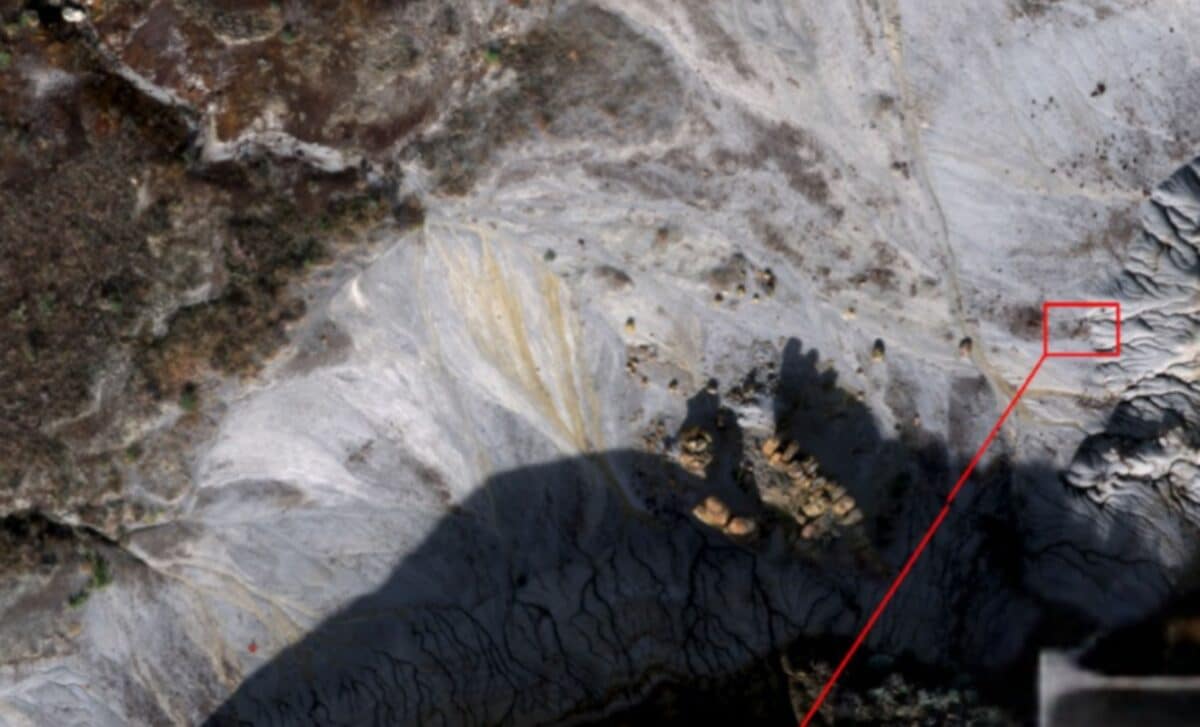
Using Drones, Scientists Made the Most Incredible Dinosaur Fossil Discovery Ever!
In Canada, scientists are using drones and lichens to find dinosaur fossils, a method detailed in a recent Current Biology study. Researchers have discovered that certain lichens colonize exposed dinosaur bones, helping paleontologists identify fossil-rich areas from above.
This new technique, which uses drones equipped with sensors to detect lichens, is especially valuable in the rugged and hard-to-navigate terrain of Dinosaur Provincial Park in Alberta. While the relationship between lichens and dinosaur bones is not new, this study is the first to quantify it, making it possible to locate dinosaur bones more efficiently.
A New Way to Find Fossils
Dr. Caleb Brown, from the Royal Tyrrell Museum of Palaeontology, explains that when encountering large bonebeds, the first thing often noticed isn’t the bones themselves, but the bright orange lichens that cover them. According to Dr. Brian Pickles from the University of Reading, this method could “revolutionize how paleontologists search for fossils”.
“It’s remarkable to consider that these lichens, essentially miniature ecosystems, are founded upon the remains of dinosaurs that died over 75 million years ago,” he added.
This innovative approach marks a huge shift in the way paleontologists do fieldwork. Instead of trudging through difficult terrain to find fossils, aerial robots allow scientists to survey large areas from above, quickly identifying areas that are rich in dinosaur remains. Traditional fossil hunting involves long hours of walking over hills and badlands, often without much success.
Remote-controlled Aircraft, on the other hand, can fly over areas that are hard to access, covering a large expanse in a short amount of time. With specialized sensors, they capture high-resolution images that reveal the telltale signs of lichen-coated bones.
Lichens: A Sign of Dinosaur Bones
Lichens are strange little organisms — a partnership between fungi and algae that thrive in all sorts of environments. But what’s really surprising is that these particular species of lichen seem to prefer growing on dinosaur bones. The study, published on November 03, 2025, showed that Rusavskia elegans and Xanthomendoza trachyphylla colonized up to half of the dinosaur bones exposed in the bonebeds. In contrast, these lichens were found on less than 1% of the surrounding rocks.
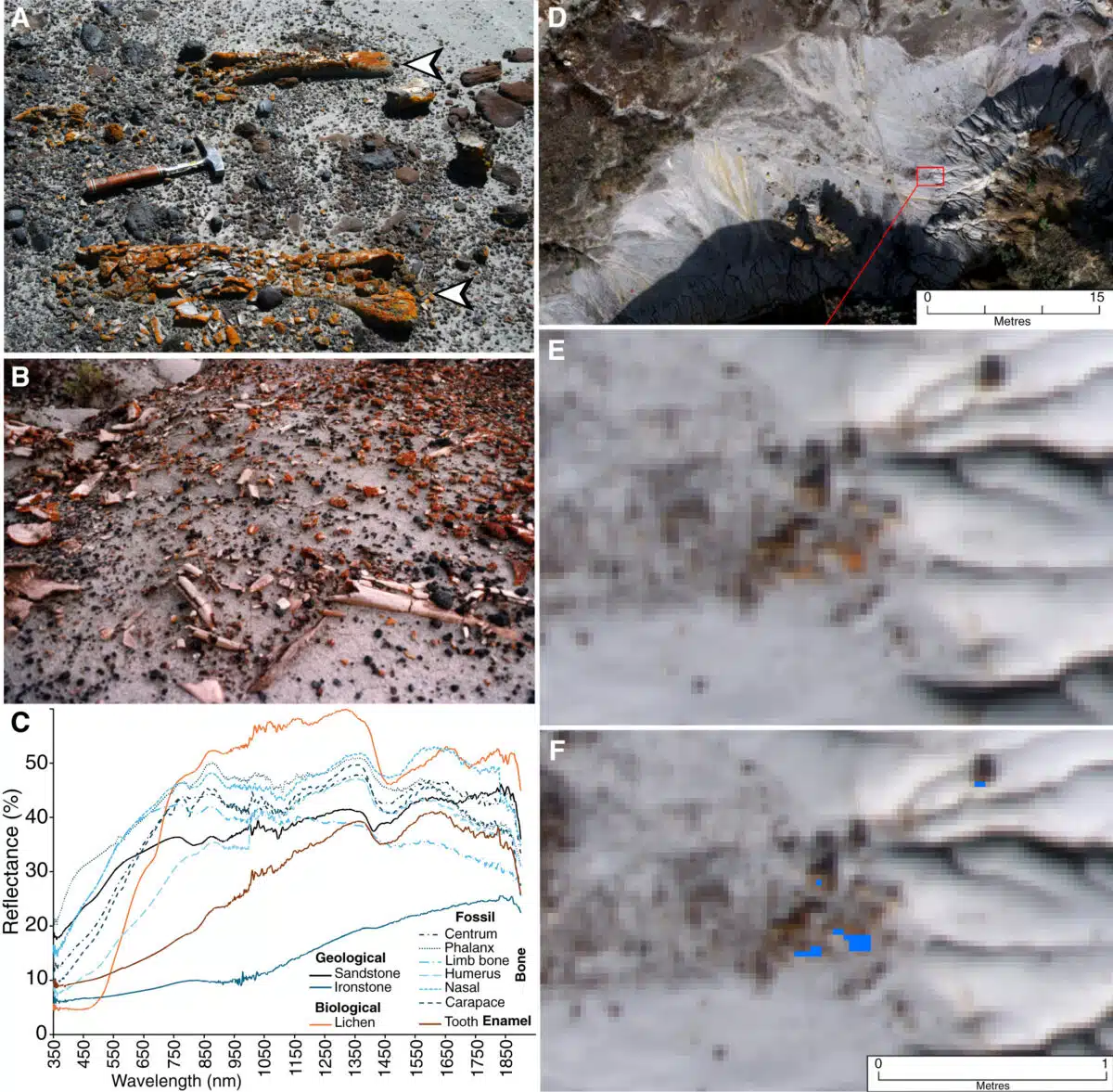
The researchers suggest that the bones’ alkaline, porous surfaces provide the perfect environment for the lichens to grow, which might explain why they’re attracted to these ancient remains. This relationship between the lichens and bones has been noticed for decades, but until now, it hadn’t been properly quantified.
Dr. Brown points out that, in a way, the lichens are a “warning sign” for paleontologists. When looking at a large bonebed, the first thing that catches the eye is often the vivid orange lichens, not the bones themselves. These bright patches of lichen are an indicator that there are likely fossils underneath, waiting to be discovered.
Drone Technology Meets Fossil Mapping
With drones, scientists can quickly cover large swaths of land that might otherwise be too difficult or time-consuming to reach on foot. The use of Unmanned Aerial Vehicles (UAVs) isn’t just limited to Dinosaur Provincial Park, it’s likely that this technique could be applied to other fossil-rich regions around the world, especially in dry areas like the Canadian Badlands, where bones are often exposed and the conditions are perfect for lichen growth.
According to Dr. Derek Peddle from the University of Lethbridge, this method of aerial mapping could eventually be scaled up to use aircraft and satellites, enabling scientists to search much larger areas for fossils.
“It’s exciting to combine our imaging technology with this international team’s expertise to advance dinosaur discovery through remote sensing of lichen.”
It’s still early days for this technique, but the potential is huge. The ability to spot fossils from the air, using nothing more than the distinctive pattern of lichens, could make fossil hunting faster, more efficient, and less invasive.
First Appeared on
Source link






