


Vulcan Centaur reaches orbit after booster anomaly • The Register
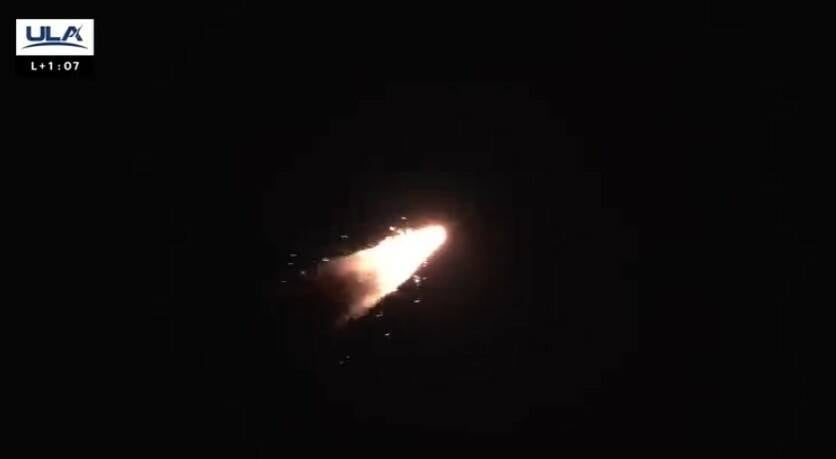
United Launch Alliance’s Vulcan Centaur reached orbit on February 12 despite “a significant performance anomaly” that saw one of its four solid rocket boosters burn through its nozzle during ascent.
Viewers of the launch from Cape Canaveral at 0422 EST (0922 UTC) were treated to some impressive fireworks as the part detached in a shower of fragments.
It was the fourth launch of ULA’s replacement for the Atlas V and Delta IV rocket, and the second in which an anomaly was noted with the booster. A nozzle was shed during the second launch of the rocket in 2024 in a configuration featuring twin solid rocket boosters, although all appeared to go well on the third in 2025.
Despite the anomaly, the mission was a success, and the US Space Force payload was carried directly to geosynchronous orbit.


ULA planned to ramp up Vulcan Centaur operations in 2026, with future launches including payloads for Amazon Leo (formerly Project Kuiper). It is not clear if those will need to be postponed while ULA investigates the cause of the burn-through and subsequent loss of at least part of the rocket nozzle.
Gary Wentz, ULA vice president of Atlas and Vulcan Programs, said in a statement: “We will conduct a thorough investigation, identify root cause, and implement any corrective action necessary before the next Vulcan mission.”
The Vulcan Centaur is a heavy-lift vehicle, with a pair of Blue Origin BE-4 engines powering the first stage and up to six GEM 63XL solid rocket boosters providing additional thrust.
The anomaly caused asymmetric thrust, which the rest of the rocket counteracted, allowing it to deliver the payload as planned.
ULA was not the only company launching a new-ish rocket on February 12. Arianespace conducted the launch of the first four-booster configuration of its Ariane 6 rocket at 1645 UTC. The launch went ahead without incident and the rocket deposited 32 Amazon Leo satellites into orbit. ®
First Appeared on
Source link






