


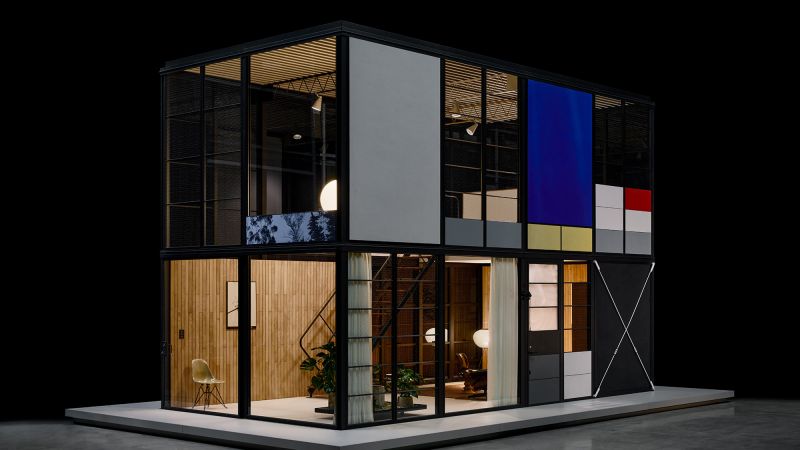
Want an Eames house? You’ll soon be able to order your own
One of architecture’s most famous modern icons will soon be available to buy as a new series of made-to-order designs.
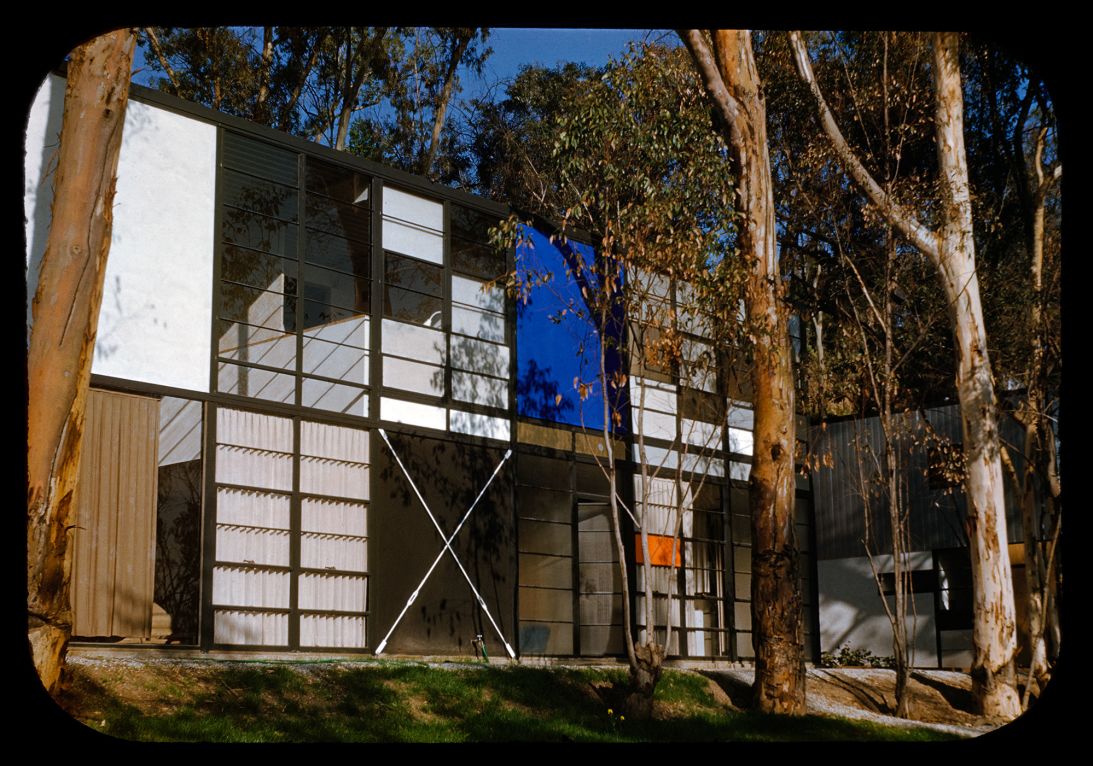
The Eames House, the former residence and studio of industrial designers Charles and Ray Eames, was one of the few residential buildings the married couple completed as part of their celebrated practice. Constructed with black beams and Mondrian-like color-blocked panels, and nestled within a grove of eucalyptus trees, the Los Angeles property was a jewel of the Case Study project, which challenged architects to modernize family living just after World War II.
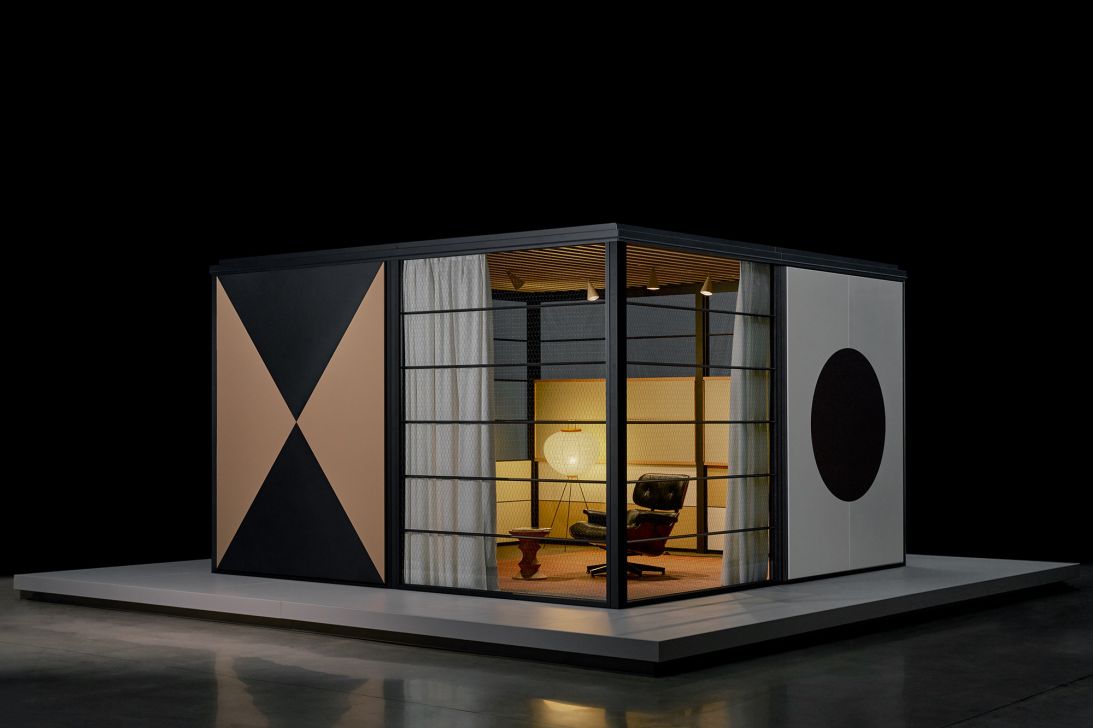
Now, the Eames Office has announced a new venture, the Eames Pavilion System, that will allow anyone to build their own Eames residence — or office, restaurant, retail store or exhibition space — based on the famed architects’ principles and visual language. The multi-year project took shape during a fraught time, as the Palisades Fire caused significant smoke damage to the Eames House in 2025, though the landmark structure survived and reopened after months of restoration.
“For many years, people have thought of the Eames House as a kind of singularity,” said the architects’ grandson, Eames Demetrios, in a phone call.
Demetrios has directed the Eames Office since Ray’s death in 1988, and both he and Eckart Maise — formerly chief design officer for renowned Swiss furniture company Vitra and a long-term collaborator of the Eames family – have long been interested in translating the designers’ work into prefab architecture. After all, Charles and Ray had based both furniture and residential designs on a scalable grid system, with modularity and off-the-shelf components in mind.
“With research, we’ve really proven that they were always thinking about this idea of a system,” Demetrios said. “In a way, the Eames House is a prototype.”
One of the architects’ modular concepts that they never built was the Shelter house, a one-story open-plan timber design with a curvilinear roof, meant to serve as a low-cost solution. They called it the “supermarket house,” Maise explained on the call with Demetrios.
“It was meant to be mass produced and shipped to different places where people would build it up with a local carpenter or with their own hands,” he said.
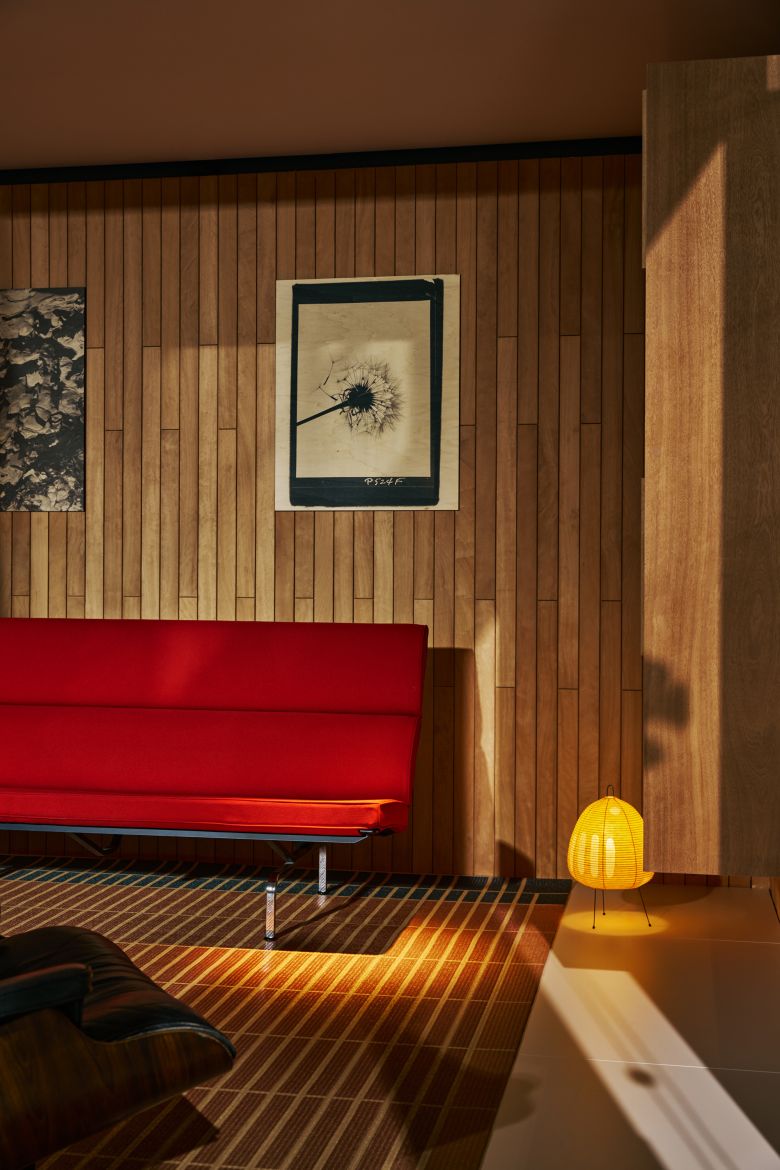
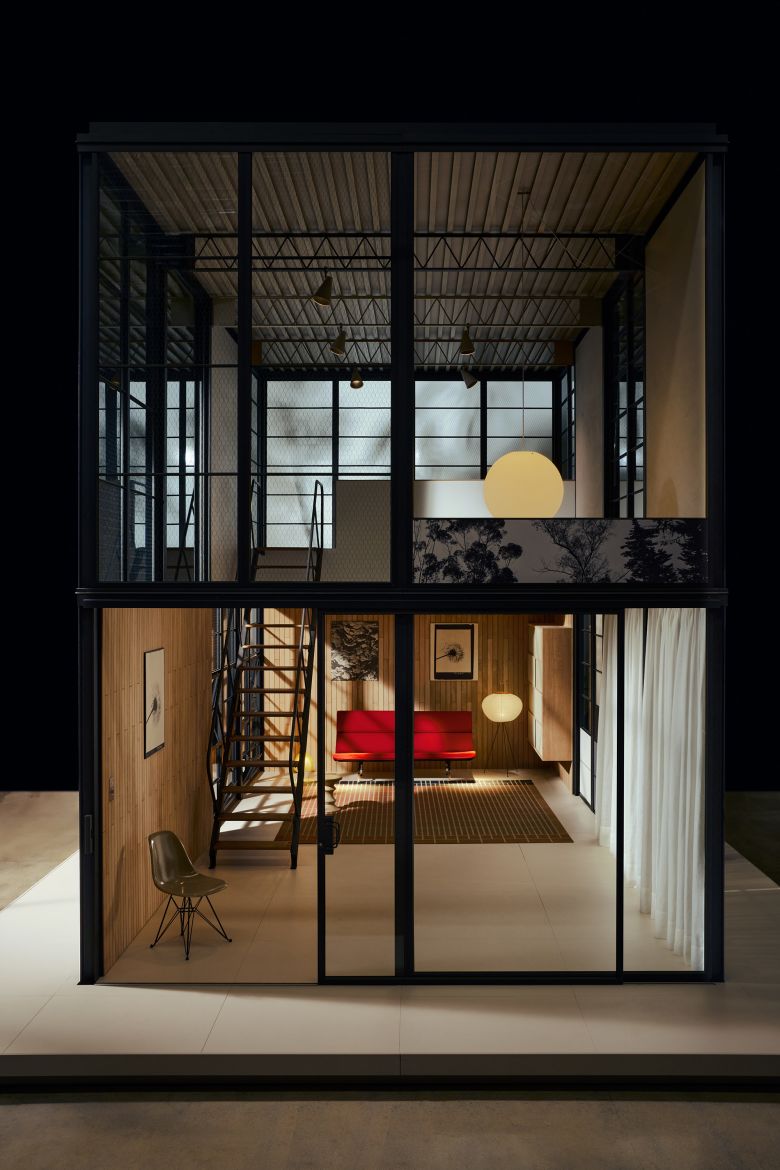
At this year’s Triennale di Milano, an exhibition held in Milan dedicated to architecture, design and craftsmanship, the Eames Office will present the new Eames Pavilion System featuring examples of one- and two-story builds that visitors can walk through. It’s part of a larger showcase that also features a trove of new research on both celebrated and previously unknown Eames designs.
The one-story prefab pavilions will be available for purchase this fall — with two-story options to arrive at a later date — built by the design brand Kettal and offered in more than 80 countries. At $2,800 per square meter, or just under $260 per square foot, as the starting price for a one-story build, that would put an average-sized 2,000-square-foot home at $518,000.
For decades, the idea of a prefabricated Eames house was somewhat of a unicorn, Maise and Demetrios explained. They struggled with finding a partner that could handle shipping and logistics globally, local architects and engineers for foundations and permits, and being able to customize to taste or necessary building codes (say, for earthquakes in Japan or hurricanes in Florida). It’s far from a DIY situation, they emphasized, with Kettal’s engineers on-site to assemble each pavilion.
“Having personally built a prefab airplane hanger as a garage, (this is) much better than people sending you random pieces and saying, ‘Don’t worry, you’ll figure it out,’” Demetrios said, laughing.
Though the Eames Pavilion System models resemble the Eames House, they are not a copy-paste of their most famous building. Instead they draw on various designs, including the Entenza House, located next door, and the unrealized home they conceptualized for filmmaker Billy Wilder, among others.
“I think it would be almost odd to only offer replicas of the Eames House, and instead, we’re trying to offer the core idea of that system to be helpful in more ways,” Demetrios said.
The pavilions feature the familiar black beams, sliding screens, and warm wood interiors of the architects’ home, with options to customize the exterior with windows, color-blocked or geometric panels and steel crossbars, as well as add extensions in the future. The smallest build could be a meeting room within a large workspace, while the largest is more open-ended. In Demetrios’ view, there’s no reason someone couldn’t request a low-slung pavilion tens of thousands of square feet wide, though it is limited to two stories tall. Kettal is still working on the engineering to bring double-height versions to market, explained Antonio Navarro, creative director of Kettal, on the same call.
Additionally, a new book, “The Eames Houses,” which expands the thinking around their architectural frameworks beyond their most famous structure, will be published by Phaidon later this spring. For Demetrios, bringing a modular system to market has meant extending his grandparents’ legacy in a way he believes they had always intended.
“They were always interested in this multiplication aspect — how can this effort be transformed?” Demetrios said. “They wanted to universalize. If you look at all the Eames’ work, you keep coming across that idea. So, this is magic for us.”
First Appeared on
Source link






